Finding the right potting soil for African violets (Saintpaulia) is essential for vibrant blossoms and healthy roots. This guide highlights five top options that balance pH, drainage, and moisture retention, helping different types of buyers choose confidently. Whether you’re a hobbyist growing a few plants or a dedicated indoor gardener, these soils are suited for steady flowering, robust root systems, and easy maintenance.
The table below compares the five selected products, focusing on best-use scenarios, key benefits, and notable limitations.
| Product | Best For | Key Benefit | Potential Limitation |
|---|---|---|---|
| Miracle-Gro African Violet Potting Mix, 8qt, 2-Pack | Beginners and home collectors | Feeds up to 6 months; promotes big blossoms with vibrant color | Contains proprietary blends; may not suit purist organic gardeners |
| African Violet Natural Potting Soil Mix (Made in USA) (4 Dry Quarts) | Organic-minded growers seeking ready-to-use mix | Excellent rooting and balanced aeration with peat, perlite, vermiculite | May require careful moisture monitoring for certain setups |
| Espoma Organic Natural and Organic Premium Potting Soil Mix (4 Quart) | Organic enthusiasts and year-round violets | Rich blend of sphagnum peat, humus, perlite; supports healthy growth | Organic materials may have variable nutrient release |
| Omitgoter African Violet Potting Soil Mix 1qt | Careful soil formulation with pH tuned for violets | Optimized pH 6.0–6.5; good drainage and moisture balance | Small quantity; may need more frequent replenishment |
| Doter Organic African Violet Potting Mix | Fine-textured mix for airier root zones | Slightly acidic pH supports nutrient uptake | Smaller scale product may be best for limited collections |
Miracle-Gro African Violet Potting Mix

Best for: Beginners and casual violet growers who want a worry-free, longer-lasting feed. Why selected: This mix is formulated specifically for African violets, with a feeder that lasts up to six months and a focus on large, color-rich blossoms. It provides a straightforward option for those who want less frequent feeding. Limitation: It relies on Miracle-Gro’s proprietary blend, which may not align with strictly organic gardening preferences.
African Violet Natural Potting Soil Mix (Made in USA) (4 Dry Quarts)

Best for: Organic-minded growers who want a professional-grade formula. Why selected: This mix mirrors professional grower formulations, emphasizing strong root growth and balanced aeration with peat, perlite, and vermiculite. It supports robust rooting and steady growth. Limitation: Being a natural mix, nutrient timing can vary; monitor plant response and avoid overwatering.
Espoma Organic Natural and Organic Premium Potting Soil Mix (4 Quart)
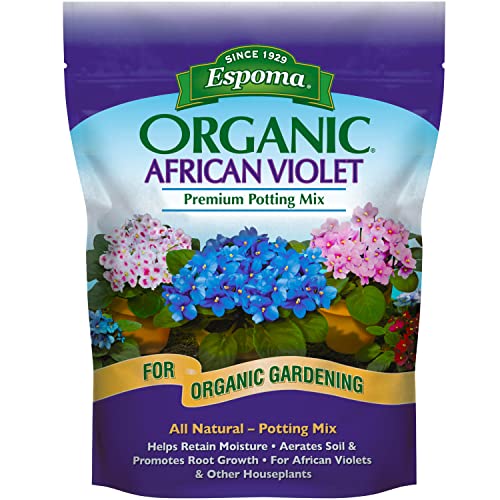
Best for: Organic gardeners seeking a versatile mix for all indoor flowering plants. Why selected: Espoma blends sphagnum peat moss, humus, perlite, and yucca extract for healthy growth and flowering. It’s widely compatible with African violets and other houseplants. Limitation: Organic components may show variability in nutrient release across batches.
Omitgoter African Violet Potting Soil Mix 1qt

Best for: Violet enthusiasts seeking a pH-optimized option. Why selected: It balances pH between 6.0 and 6.5, promoting nutrient uptake and vibrant blooms. It also emphasizes drainage and moisture balance for healthy roots. Limitation: The 1-quart size may require more frequent replenishment for larger collections.
Espoma Organic Natural and Organic Premium Potting Soil Mix for African Violets and All Indoor Flowering Plants
Best for: Organic enthusiasts seeking a reusable mix for violets and flowering houseplants. Why selected: A rich blend designed to promote healthy growth and flowering, suitable for multiple indoor plants. Limitation: Availability and packaging may vary; check batch specifics before planting.
Buying Guide: Potting Soil Considerations For African Violets
- pH and nutrient availability: African violets prefer slightly acidic to neutral soil. Choose mixes with pH in the 6.0–6.5 range for optimal nutrient uptake.
- Drainage vs. moisture retention: Good drainage prevents root rot, but the soil should retain enough moisture between waterings. Perlite, vermiculite, coco coir, and peat are common components that balance both needs.
- Aeration and root health: Loose, airy mixes promote healthy root growth and nutrient absorption. Look for blends that mention aeration and root development.
- Organic vs. synthetic blends: Organic mixes are preferable for gardeners avoiding synthetic fertilizers. Synthetic blends may offer longer-lasting feeds but are less aligned with organic preferences.
- Size and reuse considerations: For small collections, a 1–4 quart bag may suffice; larger setups benefit from 8 quart or larger packages for convenience and cost per plant.
- Consistency and batch variation: Some organic blends vary in nutrient release. Monitor plant response and adjust watering or feeding as needed.
- Specialty advantages: Some mixes are formulated specifically for African violets, offering optimized pH, moisture balance, and root support. Others are multi-plant blends suitable for indoor flowering plants.
FAQ
- What is the best soil for African violets? A slightly acidic, well-draining mix with good aeration, such as peat-perlite-vermiculite blends or specially formulated African violet potting soils.
- Should I use organic or synthetic potting soil for violets? Both can work; organic blends emphasize natural nutrients, while synthetic blends may provide longer-lasting feeds. Choose based on your gardening philosophy and feeding routine.
- How often should I fertilize African violets? Follow the product instructions; some mixes feed for up to six months, while others require regular but light feeding during the growing season.
- Can African violets grow in 100% peat moss? Pure peat is often too compact and holds water, reducing aeration. A balanced blend with perlite or vermiculite improves drainage and root health.
- Is there a risk of overwatering with these mixes? Yes. Use pots with drainage holes and monitor moisture. If the top inch feels dry, it’s typically time to water.
- Which soil should I choose for a beginner? Pick a ready-to-use mix marketed for African violets, such as Miracle-Gro or a Midwest Hearth organic blend, to simplify care and maintenance.