Answering the common question “which pressure reducer is best for a soaker hose system?” this guide lists top 25 PSI regulators that help protect drip lines, maintain uniform flow, and prevent overwatering. The selections below are well-suited for American gardens and small landscapes using standard 3/4″ hose threads. The buyers who will benefit most include hobby gardeners upgrading a drip system, homeowners setting up low-pressure irrigation, and landscaping enthusiasts seeking reliable regulators for consistent water delivery.
Summary table of selected products:
| Product | Best For | Why It Stands Out |
|---|---|---|
| Rain Bird HT07525PSI | All-around drip systems | Maintains 25 psi with broad compatibility and 20 GPM flow capacity |
| Vibrant Yard 25 PSI (Lead-Free Brass) | Brass regulator for durability | Solid brass body and standard 3/4″ fittings, reliable pressure control |
| 2-Pack 25 PSI Regulator (Breezliy) | Two regulators for multi-branch setups | Includes two regulators, durable ABS construction, 25 psi preset |
| Moistenland 25 PSI Regulator | Low-flow drip systems | Low-flow design with 25 psi target and durable build |
| Senninger 25 PSI PRLG | Landscape-scale or formal installations | Precise 25 psi output with wide GPM range, trusted brand |
Rain Bird HT07525PSI Drip Irrigation Regulator

The Rain Bird regulator is designed to keep a steady 25 psi output for drip lines and emitters. Best for standard drip systems that require reliable regulation and broad compatibility with 3/4″ male and female hose threads. It handles up to a 20 GPM flow, making it suitable for mid-size garden beds and multiple emitter runs.
Best for: homeowners creating a compact drip layout or upgrading a basic irrigation line that uses standard hoses. It’s suited for those who want a simple, durable regulator with predictable performance.
Why selected: The unit provides a fixed 25 psi output, which minimizes variations across emitters and maintains consistent wetting patterns. Its wide thread compatibility reduces setup friction when connecting to hoses, faucets, or components.
Caution: Outlet pressure can rise if downstream outlets are fully closed. Ensure emitters or valves are balanced to prevent pressure creep that could affect other zones.
Drip Irrigation 25 PSI Brass Regulator (Lead-Free)

This regulator uses lead-free brass and offers 25 psi nominal output with a ¾” FHT to ¾” MHT configuration. It’s a good pick for users who prefer brass components for durability and a clean look in irrigation lines. The device can be integrated with timers, backflow preventers, or filters as part of a broader irrigation system.
Best for: gardeners who value a robust brass body and compatibility with additional irrigation accessories. It’s particularly well-suited for installations that see frequent valve or timer integration.
Why selected: Brass construction tends to resist wear over time and exposure to sun and elements, ensuring more durable performance in exposed garden installations.
Caution: The regulator’s outlet pressure may slowly rise if the downstream outlet is fully shut; plan layout to keep valves accessible for quick pressure adjustments.
2-Pack Garden Hose Pressure Regulator, 25 PSI

This 2-pack includes two regulators preset to 25 psi, designed to reduce household pressure before it enters drip or micro irrigation lines. It’s compatible with standard ¾” hose threads and offers a practical solution for multi-branch systems that require consistent pressure across separate zones.
Best for: larger home gardens or small landscapes where two separate drip lines need identical regulation without purchasing single units separately.
Why selected: The twin-pack reduces overall project costs and ensures uniform pressure across branches, helping to prevent over- or under-watering in zones fed by different hoses.
Caution: Outlet pressure can creep above 30 psi if downstream outlets are fully closed; monitor outlets once setup is complete and keep partially open to maintain steady pressure.
GORILLA EASY CONNECT Brass Pressure Reducer for Soaker Hoses

This regulator features integrated quick-connect fittings and a 3/4″ GHT connection, with an integrated 1/2″ hose barb as an option. Brass construction emphasizes durability and consistent pressure for soaker hoses or drip lines. It aims to prevent high-pressure damage and to promote uniform water distribution.
Best for: users who want a compact, integrated connector system that reduces assembly steps in tight garden spaces. It works well where quick fittings simplify seasonal adjustments.
Why selected: The included quick-connect design and brass build provide practical convenience for frequent reconfigurations or seasonal watering layouts.
Caution: Complex fittings can require careful alignment to prevent leaks; ensure all threads are clean and properly tightened during installation.
Moistenland 25 PSI Regulator, 2-Pack

The Moistenland regulator offers a 25 psi nominal output with ¾” FHT to ¾” MHT connections. The two-pack option is ideal for parallel drip lines or multi-zone installations where consistent pressure across branches matters for even irrigation.
Best for: users managing multiple drip lines who want a simple, reliable regulator in a dual-pack for cost efficiency and uniform performance.
Why selected: The 25 psi target aligns with typical drip components, helping to ensure steady flow without overwatering sensitive zones.
Caution: Outlet pressure may rise if outlets are fully closed; plan layout to maintain balanced pressure across all zones.
Senninger Pressure Regulator 25 PSI
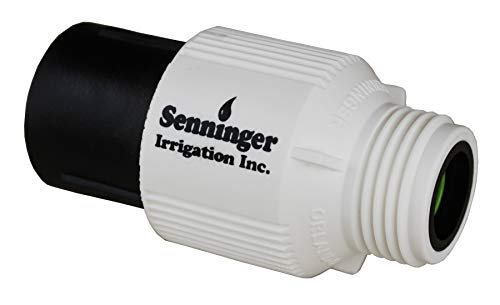
The Senninger regulator provides a constant 25 psi output with a broad 0.5 – 7 GPM flow range. It’s positioned for landscape-scale or professional-grade irrigation, yet remains accessible for residential use. The regulator supports standard 3/4″ hose fittings and assists in maintaining uniform distribution in solid-set systems, drip lines, and soaker hoses.
Best for: installations where precise 25 psi regulation and reliability are critical, especially in larger landscapes or commercial-style drip layouts.
Why selected: Senninger’s reputation for accuracy and stability under varying flow helps ensure consistent emitter performance and system efficiency.
Caution: This regulator is designed to maintain 25 psi across a flow range; verify that your total system demand stays within the specified GPM range to avoid drift in pressure.
Buying Guide
What to consider when choosing a pressure reducer
- Target pressure: Most drip systems perform best around 15–25 psi. Choose regulators with a fixed 25 psi output if your emitters are rated for that pressure.
- Inlet/outlet threading: Ensure compatibility with your hose threads (¾” FHT/MHT or ¾” MHT/FHT) and any existing components like timers or filters.
- Material: Brass regulators tend to be more durable in outdoor settings; ABS or plastic bodies can be lighter and cost-effective but may wear faster.
- Flow range: Check the regulator’s GPM rating to ensure it can feed all emitters across your zones without dropping pressure.
- Number of regulators: For multi-zone systems, consider packs or two-regulator kits to maintain uniform pressure across branches.
- Installation context: If you use automated timers or backflow preventers, confirm compatibility and whether the regulator supports inline integration.
How to install and maintain
- Install regulators near the water source or at inflow points in each branch to prevent pressure spikes.
- Keep fittings clean and hand-tight, then snug with tools to avoid leaks.
- Periodically inspect for leaks, especially at threaded connections and O-rings where applicable.
- Test emitters after installation to verify uniform distribution and adjust as needed.
Best practices for different setups
- Small gardens: A single regulator near the main hose can suffice, but consider a second regulator for parallel branches if uniformity is critical.
- Raised beds or containers: Use regulators with reliable low-flow performance to prevent overwatering in confined spaces.
- Garden beds with multiple lines: Use regulators in each line to balance pressure and maintain even moisture.
FAQ
- What pressure should I use for drip irrigation? Typically 15–25 psi, with 25 psi suitable for many drip emitters.
- Can I use regulators with a timer or filter? Yes, most regulators can be integrated with timers, filters, or backflow preventers.
- Will a regulator affect my sprinkler system? Regulators are designed for drip and soaker systems; sprinklers may require different pressure considerations.
- Do regulators wear out? With outdoor exposure, seals and fittings can degrade; inspect periodically and replace as needed.
- How many regulators do I need? It depends on the number of zones; multi-zone systems benefit from a regulator per line or a shared regulator with multiple outlets.
- Are brass regulators better than plastic? Brass offers greater durability and resistance to wear, though plastic is lighter and often less expensive.