If you have arthritis or limited hand strength, look for pruners with ergonomic handles, reduced cutting effort, and anti-slip grips. The five options below are selected for different arthritis needs—from stepless handles to ratchet mechanisms that multiply cutting force. They’re best for gardeners with weak hands, seniors, or anyone seeking smoother, less tiring pruning sessions. Each product is described with who it’s best for and why it stands out, plus a practical limitation when relevant.
| Product | Why It Matters For Arthritic Hands |
|---|---|
| MEPEREZ Premium Germany Pruning Shears | Ergonomic handle and durable build reduce hand strain during frequent pruning |
| Ultra Sharp Japanese Steel Pruning Shears — Craft911 | Lightweight feel and strong grip help seniors prune with less effort |
| Ratchet Pruning Shears for Gardening Heavy Duty — GEROSSI | 3-step ratchet mechanism multiplies force for thick branches |
| DECERK 8.5″ Professional Pruning Shears | Leverage-driven cutting to triple power, suitable for larger cuts |
| VOTREK Pruning Shears — Patented Stepless Handle | Universal fit and adjustable opening reduce pinch and fatigue |
MEPEREZ Premium Germany Pruning Shears

Best for: Gardeners seeking a sturdy, ergonomic pruner for frequent use. The handle is designed to fit different hand sizes, and the sharp blade with wear-resistant coating helps maintain performance with minimal force. Selection rationale: strong construction and a sharp edge make it effective for herbs, flowers, and light-wood pruning without excessive grip pressure. Limitation: may be heavier than ultra-light models, which could matter for very long sessions.
Ultra Sharp Japanese Steel Pruning Shears — Craft911

Best for: Seniors and arthritic users who need a light, comfortable grip and reduced effort. Features include a titanium-coated SK5 blade for lasting sharpness and a non-slip texture for wet conditions. Rationale: easier cuts with less hand fatigue, especially when pruning moist or slippery stems. Limitation: may not be ideal for very thick branches beyond everyday pruning.
Fiskars Bypass Pruning Shears
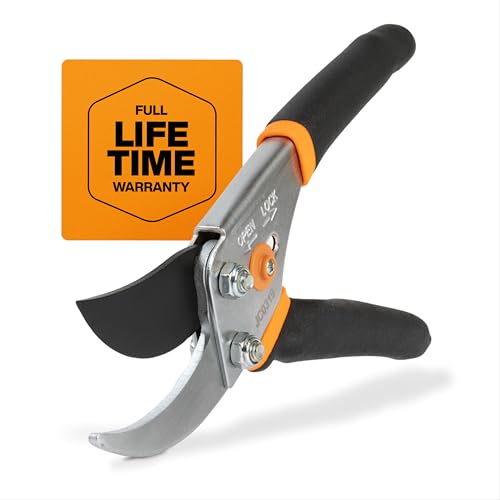
Best for: Gardeners who want precise cuts with smooth blade action and a non-slip grip. Rationale: bypass blade design focuses on live-growth pruning with minimal crushing, and the sap groove helps prevent sticking. Limitation: may require more grip strength than some ratchet models for thicker stems.
Ratchet Pruning Shears for Gardening Heavy Duty — GEROSSI
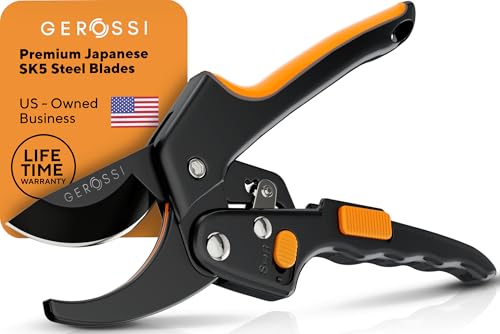
Best for: Those with limited hand strength who need extra cutting power. The two-in-one design includes a traditional cut and a three-step ratchet mode to tackle thicker branches with less hand strain. Rationale: the ratchet mechanism multiplies effort, making pruning easier over long sessions. Limitation: may be bulkier to maneuver in tight spaces or for small plants.
DECERK 8.5″ Professional Pruning Shears

Best for: Gardeners who prune larger branches and appreciate leverage-driven power. The Japanese SK5 steel blade with titanium coating, plus a 3-layer titanium alloy coating, supports durability and clean cuts. Rationale: a powerful lever cutting technology triples cutting force, enabling easier pruning of up to 1 inch branches. Limitation: heavier than some compact models; consider if portability matters in tight garden spots.
VOTREK Pruning Shears — Patented Stepless Handle

Best for: Users with very small hands or severe arthritis requiring adjustable handle width. The stepless handle opening accommodates varying grip styles and reduces pinch points. Rationale: universal fit and non-stick coating minimize effort and sap buildup. Limitation: stepless design may not suit users who need precise, fixed opening angles for certain plants.
Buying Guide: Key Purchase Considerations
Ergonomics matter most. Look for padded, contoured handles and non-slip grips. Ratchet mechanisms can dramatically reduce effort for thicker stems, but they add bulk. For smaller hands, seek adjustable or stepless handles that fit a range of grips. Blade material should be durable, with corrosion resistance and sharpness that lasts between uses. Consider weight: lighter tools reduce fatigue on long pruning sessions. A sap groove and non-stick coatings minimize sticking and cleaning time. Evaluate whether you prune mainly live growth or hardwood stems to pick a suitable model.
Pruning Scenarios and Recommendations
- Light, frequent pruning (flowers, herbs): Craft911 or Fiskars provide smooth cutting with comfortable grips.
- Thick branches and tougher wood: GEROSSI ratchet pruners or DECERK offer leverage and threefold cutting power.
- Very small hands or significant arthritis: VOTREK stepless handle provides adaptable fit and reduced pinch.
FAQ
- What should I look for in pruners for arthritic hands?
Look for ergonomic, non-slip handles, reduced force requirements, and options like ratchet mechanisms or adjustable grips. - Are ratchet pruners better for arthritis?
Yes, ratchet pruners can multiply cutting power, reducing hand strain when pruning thicker or tougher stems. - Can lightweight pruners be effective for all pruning tasks?
Lightweight tools are comfortable for long sessions but may be less durable for heavy-duty cuts; choose based on typical branch thickness. - Is a steel blade or titanium coating better for arthritis users?
Both can be durable; titanium coatings reduce friction and sap buildup, making cuts smoother and easier over time. - How important is handle width for arthritis?
Very important. A handle that fits the hand well minimizes grip pressure and fatigue during extended pruning. - Should I avoid pruning tools with complex mechanisms?
Not necessarily; if you have the strength limitations, ratchets and stepless handles can improve comfort, just ensure you can maneuver them in tight spaces.