The best pruners for small hands are lightweight, ergonomic, and provide clean cuts with minimal effort. This guide highlights five options ideal for users with limited hand strength, arthritis, or a need for comfortable grips. Each selection includes who it’s best for and why. Use the quick comparison table below to decide quickly, then explore detailed product sections to match your needs.
| Product | Best For | |
|---|---|---|
| Fiskars SoftGrip Bypass Pruning Shears | Right- or left-handed gardeners, general yard work | Ambidextrous design with SoftGrip handle for fatigue reduction. |
| FELCO F 14 Pruning Shears | Precise, comfortable cuts for small hands | Forged alloy, micro-adjustment, lightweight Swiss design. |
| Haus & Garten ClassicPRO 8.5″ Pruning Shears | Seniors, arthritis sufferers, regular pruning | Ergonomic, lightweight, titanium-coated blades for rust resistance. |
| Kynup 8.6″ Pruning Shears | Arthritis or weak hands, long use | SoftGrip, ultra-sharp SK5 blades, designed for comfort. |
| PrunePro Pruning Shears | Durable, precise cuts with anti-jam design | German stainless steel, Diamond-Teflon coating, reliable lock. |
Fiskars SoftGrip Bypass Pruning Shears

Best for ambidextrous use and everyday pruning. The SoftGrip handle reduces hand fatigue and enhances comfort, making it suitable for gardeners who prune frequently or in extended sessions. The bypass blade preserves live growth up to 5/8 inch in diameter, helping maintain plant health with cleaner cuts. Rust resistance and a sharp steel blade support long-term use.
Who it’s best for: Right- and left-handed gardeners seeking a comfortable, light tool for standard pruning. Why chosen: Balanced design, clean cuts, and fatigue-reducing grip. Caution: The 5/8 inch limit may not handle thicker branches without effort.
FELCO F 14 Pruning Shears

Best for precision and frequent use by gardeners with smaller hands. The F 14 features forged aluminum handles and carbon steel blades with a micrometric adjustment mechanism for blade replacement. This setup supports consistent, clean cuts and easy blade maintenance over time.
Who it’s best for: Gardeners seeking a durable, precise pruner with easy blade adjustment. Why chosen: Long-term edge retention and smooth operation. Caution: Higher price point may deter casual users seeking basic models.
Haus & Garten ClassicPRO 8.5″ Pruning Shears
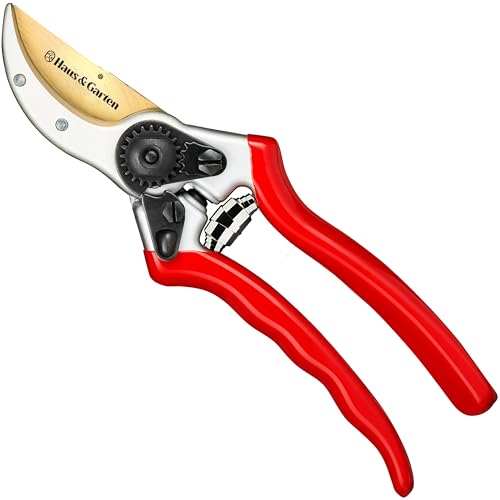
Best for seniors and arthritis-prone hands needing light to moderate pruning. Engineered from Japanese grade high-carbon steel with titanium-coated blades, the ClassicPRO emphasizes sharp, clean cuts and rust resistance. The ergonomic, non-slip grip reduces fatigue and wrist strain during longer sessions.
Who it’s best for: Pruners who value comfort and durable blade performance. Why chosen: Aluminum handle with corrosion protection and fatigue-friendly design. Caution: Some users may prefer a shorter handle for very small hands.
Kynup 8.6″ Pruning Shears

Best for arthritis or weak hands needing a comfortable, powerful cut. The SK5 stainless steel blades stay sharp, with a SoftGrip handle that absorbs pressure. Capable of cleanly cutting branches up to 1 inch, it supports vibrant plant health while reducing hand fatigue.
Who it’s best for: Gardeners seeking a high-comfort, durable option for regular pruning. Why chosen: Good balance of blade sharpness and grip comfort. Caution: Some users may find the 8.6″ length slightly long for very small hands.
PrunePro Pruning Shears

Best for durability and a smooth cutting experience. The 1.4031 German stainless steel blade offers high hardness with rust resistance, coated for low friction. The Diamond-Teflon blade treatment helps maintain sharpness, while the reinforced lock prevents jamming during use.
Who it’s best for: Gardeners needing robust, long-lasting pruners with reliable locking. Why chosen: Advanced materials and anti-jam design improve cutting consistency. Caution: Heavier than some ultralight options, which could affect one-handed use for very small hands.
Buying Guide: Key Purchase Considerations
- Hand size and grip: Look for soft-grip or ergonomic handles that reduce fatigue and fit comfortably in smaller hands.
- Cut capacity: Most small-hand pruners handle up to 3/4 inch; confirm your typical branch diameter before purchasing.
- Blade type: Bypass blades are ideal for live stems; anvil blades can crush thick live wood but may be better for tough deadwood.
- Material and durability: Stainless steel blades with protective coatings resist rust and sap buildup; consider titanium or coated blades for longevity.
- Weight and balance: Lightweight models reduce strain; test balance to ensure precise cuts without twisting the wrist.
- Maintenance: Prefer models with easy blade replacement and simple locking mechanisms to prevent jams.
- Ambidextrous features: If you or household members are left-handed, prioritize ambidextrous designs and reversible grips.
FAQ: Quick Answers For Shoppers
- Q: Which pruner is best for arthritis? A: Models with SoftGrip handles and ergonomic design, like Kynup or Haus & Garten ClassicPRO, are often favored for reduced hand strain.
- Q: Can small-hand pruners cut thicker branches? A: Many top options handle up to 1 inch; verify each product’s stated capacity and test with caution.
- Q: Are titanium-coated blades worth it? A: Yes for durability and rust resistance, especially in wet or sap-filled environments.
- Q: Is ambidextrous design important? A: For shared use or mixed-handed households, ambidextrous pruners enhance comfort and control.
- Q: What maintenance helps blades stay sharp longer? A: Regular cleaning, rust prevention, and occasional lubrication extend blade life.
- Q: Should I choose bypass or anvil pruners? A: Bypass pruners are best for live growth; anvil pruners suit tougher deadwood but may crush lighter stems.