Answering the question “which pruning shears are best for roses,” this guide identifies reliable, comfortable tools that deliver clean cuts on rose stems and can withstand regular outdoor use. Ideal buyers include hobby gardeners tending rose beds, rosarians, and those seeking ergonomic pruners that reduce hand fatigue. Below are five top options, chosen for blade quality, grip comfort, and durability, along with a practical buying guide to help compare features quickly.
| Product | Best For | Key Benefit |
|---|---|---|
| Fiskars Bypass Pruning Shears | General rose pruning | Low-friction blades and sap groove prevent sticking |
| DECERK 8.5″ Pruning Shears | Thick stems and tough roses | Lever cutting design boosts power |
| VOTREK Pruning Shears | Low-maintenance use | Jam-proof seal and rust resistance |
| gonicc 8″ Titanium Bypass | Durable, long-term pruning | Titanium-coated SK-5 blade |
| Haus & Garten ClassicPRO 8.5″ | Comfort for small hands | Ergonomic, rust-resistant design |
Fiskars Bypass Pruning Shears
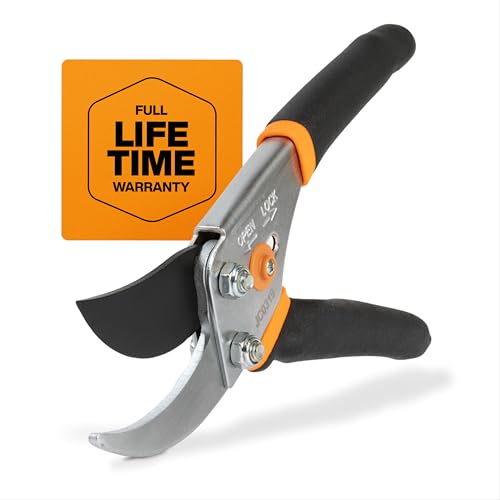
The Fiskars Bypass Pruning Shears use a bypass blade design ideal for pruning live growth and delicate rose stems up to 5/8 inch in diameter. The blades are precision-ground steel and stay sharp through regular use, with a non-slip, all-steel construction for durability. A sap groove helps prevent sticking, while a low-friction blade coating reduces sap buildup and rust risk. Best for gardeners who prune frequently and want reliable, clean cuts on green growth. A limitation is the 5/8″ diameter cap which may not suit thicker canes.
- Best for: Regular rose pruning with light-to-moderate stems
- Why chosen: Sharp, durable blades and sap-management features
DECERK 8.5″ Professional Pruning Shears

The DECERK pruning shears feature SK5 Japanese steel with a titanium coating, designed for high durability and sharp, consistent cuts. The 8.5″ model provides leverage to tackle thicker rose canes up to about 3/4 inch. The lever-cutting mechanism triples cutting power, making it easier to prune thicker, wet, or dry wood. Best for gardeners who need more cutting force and long-term edge retention. A potential limitation is heavier weight due to the upgraded mechanism.
- Best for: Thick rose canes and heavy pruning tasks
- Why chosen: High durability and easier cutting power
2-Pack stainless steel pruning set (Craft911)

This duo includes pruning shears and a pruning snip, offering dual cutting power for flowers and shrubs. The stainless steel blades have titanium coatings for durability and smoother cuts. The set is versatile for roses, shrubs, herbs, and indoor plants. Best for buyers who want a budget-friendly, multipurpose pruning option. A limitation is that the kit may not feature the same level of ergonomic design as single high-end pruners.
- Best for: Budget-conscious gardeners needing versatility
- Why chosen: Dual tools cover a wide range of pruning tasks
VOTREK Pruning Shears

The VOTREK pruning shears feature a jam-proof sealed spring and Ever-Sharp SK5 blades with dual coatings for rust resistance. The design focuses on ease of use for small hands, with soft grips and reduced effort. Best for gardeners seeking low-maintenance pruners that stay reliable over time and are arthritis-friendly. A caution is that the sealed spring may require occasional inspection to ensure seal integrity is preserved for long-term use.
- Best for: Small-handed users and low-maintenance pruning
- Why chosen: Jam-proof mechanism and rust resistance
gonicc 8″ Titanium Bypass Pruning Shears
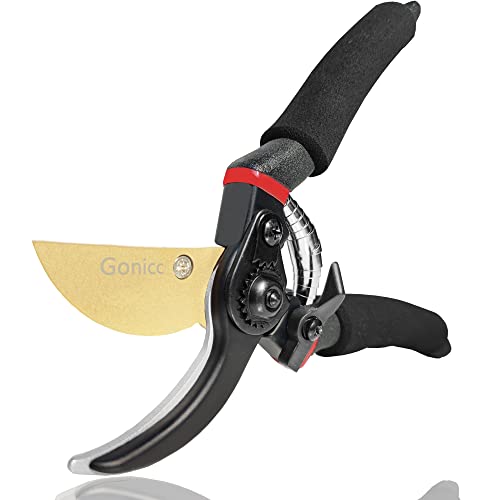
The gonicc GPPS-1003 uses drop-forged construction and a SK-5 blade with titanium coating for durability and corrosion resistance. Ergonomic aluminum handles reduce fatigue, making it suitable for extended pruning sessions. Best for enthusiasts who want a durable tool that stays sharp with regular use. A limitation is that some users may prefer a lighter model for single-handed use during long sessions.
- Best for: Long-term durability and smooth cuts
- Why chosen: Titanium-coated blade and robust build
Haus & Garten ClassicPRO 8.5″ Pruning Shears
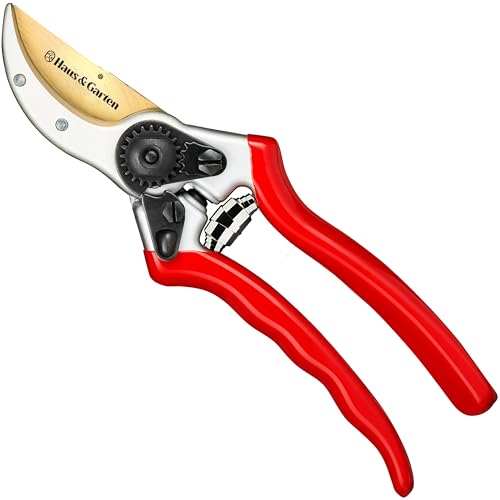
The ClassicPRO uses Japanese-grade high-carbon steel and titanium-coated blades for sharp, clean cuts that support healthy rose growth. Anodized aluminum handles with non-slip grips reduce wear and provide rust resistance. Best for users prioritizing precision and minimal maintenance in a lightweight, ergonomic pruner. A potential limitation is the higher price point compared to basic models.
- Best for: Precision pruning with long-lasting blades
- Why chosen: Sharp Japanese steel and rust-resistant design
Buying Guide: What To Consider When Choosing Rose Pruning Shears
- Cut capacity: Roses typically need pruning on stems up to 1/2 to 3/4 inch. Choose a model that handles at least 1/2 inch without struggle.
- Blade type: Bypass blades are ideal for live growth; anvil blades can crush stems. For roses, bypass is generally preferred.
- Blade material and coating: Titanium or ceramic coatings reduce friction and sap buildup, extending blade life.
- Grip comfort: Look for ergonomic, non-slip handles, especially if you prune for extended periods or suffer from hand fatigue.
- Maintenance: Sealed springs and rust-resistant materials lower maintenance needs. Consider ease of cleaning and blade tension.
- Weight and balance: Lighter models reduce fatigue; heavier ones provide more leverage for thicker canes.
- Durability: For frequent use, select models with solid construction (drop-forged bodies, reinforced joints).
- Left-handed or arthritis-friendly options: Some models offer easier grip or lever action to accommodate reduced hand strength.
FAQ
- What type of pruner is best for roses? A bypass pruner with a sharp, corrosion-resistant blade is generally best for roses to avoid crushing delicate stems.
- How thick a stem can pruning shears cut? Many good pruners cut up to 1/2 to 3/4 inch canes; check the product’s stated capacity before buying.
- Should pruning shear blades be oiled? Light oiling helps prevent rust and reduces sap buildup; wipe excess oil after use.
- Are ergonomic pruners worth it for roses? Yes, especially for gardeners with hand fatigue or arthritis, as they reduce strain during longer pruning sessions.
- How do I prevent pruning shears from sticking? Use blades with sap grooves and coatings that minimize sap buildup, and keep blades sharp.
- What maintenance is required for pruning shears? Regular cleaning, sharpening when needed, and storing in a dry place extend tool life.