Answer: A pull-behind rake or dethatcher is ideal for homeowners with large lawns who want faster, more thorough thatch and debris removal. The top picks below are best for large yards, uneven terrain, and riders with standard hitch connections. This guide highlights who each product is best for, why it’s selected, and any notable limitations.
| Product | Working Width | Best For | |
|---|---|---|---|
| Agri-Fab 48 In Tow Behind Lawn Dethatcher | 48 in | Large lawns, frequent thatch buildup | Wide coverage with easy height adjustment |
| YINTATECH 60″ Pine Needle Rake Tow Behind | 60 in | Spacious yards, pine needles and debris | Heavy-duty, anti-rust construction |
| Vlaeng 48″ Tow Behind Dethatcher | 48 in | Deep thatch removal, ballast-ready | 70 lb ballast tray for deeper tine penetration |
| AugFir 48-Inch Tow Behind Dethatcher | 48 in | Wide-area dethatching with adjustable height | Two-row independent tines, heavy-duty tray |
| BlumeTrec Tow Behind Dethatcher | 40 in | Large lawns, versatile hitch compatibility | 20 replaceable spring tines with ballast option |
Buyer’s note: If you have a smaller riding mower or a compact tractor, prioritize models with easy hitch compatibility and robust wheels for smoother towing. If your lawn has a lot of pine needles or leaves, a wider 60-inch model can save time, but ensure your mower can handle the ballast on some models.
Agri-Fab 48 Inch Tow Behind Dethatcher
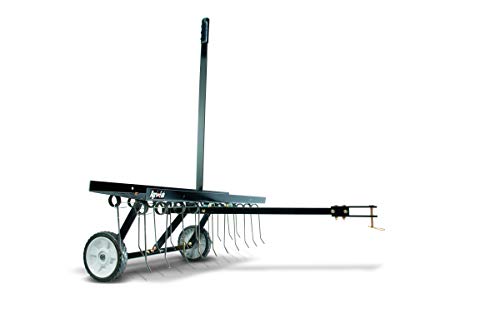
Features: 48 in working width; 24 durable spring steel tines; universal hitch; cantilever transport handle for easy height adjustment and transport.
Best for: Large lawns with frequent thatch buildup; homeowners who want quick coverage and adjustable tine depth.
Why selected: Combines broad coverage with practical height adjustment, enabling efficient dethatching and easier transport between areas.
Caution: Remove residue from steel tines after use to prevent buildup and corrosion over time.
YINTATECH 60″ Pine Needle Rake Tow Behind

Features: 60″ working width; powder-coated Q235+60Mn2Si construction; versatile use for pine needles, leaves, pinecones, and debris; attaches to ATV.
Best for: Very large yards or open spaces; users needing wide coverage for debris like pine needles and leaves.
Why selected: The widest option in this list with durable coating, designed for heavy debris beyond thatch; however, it’s best for riders with adequate hitch strength.
Caution: Ensure compatibility with your ATV or tractor hitch before use to avoid overloading the hitch.
Vlaeng 48″ Tow Behind Dethatcher

Features: 48 in width; 24 rust-proof spring tines; 70 lb ballast tray; adjustable height; heavy-duty alloy steel frame; two heavy-duty wheels.
Best for: Lawns that require deeper dethatching with added ballast for penetration; riders needing a sturdy, long-lasting build.
Why selected: The ballast tray and heavy construction enable deeper penetration and thorough thatch removal, especially in tougher lawns.
Caution: Remember to remove all residue from steel teeth after each use to maintain performance and prevent rust buildup.
Vlaeng 48″ Tow Behind Dethatcher (Black)

Features: 48 in working width; 24 rust-resistant spring tines; 70 lb ballast tray; adjustable height; heavy-duty wheels; similar design to the orange Vlaeng model with color variation.
Best for: Users who want a proven 48-inch dethatcher with ballast for deeper dethatching in larger yards.
Why selected: Provides consistent depth control via ballast and height adjustment for effective thatch removal across medium to large lawns.
Caution: As with other heavy-duty rakes, inspect for bent tines after use and clean debris to prevent plate wear over time.
BlumeTrec Tow Behind Dethatcher

Features: 40 in working width; 20 spring tines; heavy-duty carbon steel frame; universal pin-style hitch; ballast tray options; replaceable tines.
Best for: Large lawns where a 40-inch width balances coverage and maneuverability; riders seeking versatile hitch compatibility and durable construction.
Why selected: The compact 40-inch width can be advantageous on tighter spaces while maintaining strong dethatching performance with replaceable tines.
Caution: Avoid reversing while operating to reduce turf damage and wear to the tines or wheels.
LAKEROD 40″ Tow Behind Lawn Dethatcher

Features: 40 in working width; 20 heat-treated spring tines; heavy-duty steel frame; weight tray supports up to 70 lbs; lift handle and adjustable height.
Best for: Medium to large lawns where mounting a lighter dethatcher with weight options helps achieve deeper penetration without excessive width.
Why selected: It offers a balance of maneuverability, depth control, and ballast for deeper thatch removal without overloading the system.
Caution: Clean soil from tines after use to prevent rust and maintain efficiency over time.
VEVOR Drag Harrow

Features: 6 ft width; thickened angle iron with green powder coating; adjustable crossbars for added weight; compatible with ATVs, UTVs, tractors, and lawn tractors; 72 in chain included.
Best for: Lawn leveling, driveway grading, and light soil smoothing over large areas in one pass.
Why selected: Its wide coverage and strong construction make it a practical all-purpose leveling tool beyond dethatching.
Caution: Ensure proper chain tension to avoid binding or damage during towing.
Buying Guide: Key Considerations For Choosing A Pull Behind Rake Or Dethatcher
What working width do I need?
Wider models cover more ground, reducing passes but may require a larger tractor or mower. Choose based on your yard size and mower capabilities.
Should I add ballast?
Ballast trays add depth to the tines for deeper thatch removal. Use ballast only as needed and evenly distribute weight to avoid tipping or wheel strain.
How important is hitch compatibility?
Most pull-behind dethatchers use universal or pin-style hitches. Verify compatibility with your mower, tractor, or ATV before purchasing.
What maintenance is required?
Clean soil from tines after use; inspect for bent or damaged tines; lubricate moving parts as recommended by the manufacturer; protect against rust with proper storage.
Are there safety considerations?
Operate at moderate speeds, avoid reversing while in use, and never exceed the unit’s weight or width limits as specified by the manufacturer.
Frequently Asked Questions
- What is a pull-behind dethatcher best used for?
Best used for removing thatch, dead grass, and compacted soil over medium to large lawns, improving airflow and nutrient access to roots.
- Will a 60″ rake fit my riding mower?
Only if your mower can safely tow the wider implement and handle ballast. Check hitch compatibility and overall towing capacity.
- How deep should dethatching tines penetrate?
Depth depends on ballast and tine length. Deeper penetration helps remove thicker thatch but can risk turf damage if overdone.
- Can these tools be used on ATV or UTV?
Yes, many models are designed for ATV or UTV attachments. Confirm hitch type and weight limits before use.
Note: This article presents objective product descriptions and selection rationale. It aims to help buyers identify which pull-behind rake or dethatcher best fits their lawn size, equipment, and maintenance preferences. No prices are listed, and no warranties or third-party confirmations are provided.