Looking for real, kid-friendly gardening tools that are safe, durable, and fun for children? This guide aggregates top American picks that help kids learn by doing, from ages 2 to 8. Each product is designed for small hands, encourages outdoor exploration, and supports early STEM skills through hands-on play. Ideal buyers include parents, guardians, and educators seeking practical tools that teach responsibility and basic botany while keeping safety in focus.
| Product | Brand | Age Range | Why It Works |
|---|---|---|---|
| CHEERBANK 7PCS Kids Gardening Tools | CHEERBANK | 4-8 | Long, detachable tools for easy storage; durable steel heads with real wood handles |
| Kinderific Gardening Set | Kinderific | 3-8 | Full starter kit with tote bag and gloves; kid-friendly, lightweight |
| Dreamon Kids Gardening Tools & Bug Catcher Kit | Dreamon | 3-5 | 2-in-1 gardening and bug exploration; wheelbarrow for balance |
| Duckura Kids Gardening Tools Set | Duckura | 2-5 | 10-piece set with removable features; sturdy construction for outdoor play |
| Qtioucp Kids Gardening Set With Wheelbarrow | Qtioucp | 3-8 | 14-piece set; real metal heads and solid wood handles; wheelbarrow included |
CHEERBANK 7PCS Kids Gardening Tools

Best for: Families seeking a long-handle, scalable tool set that grows with kids. The 28″ long tools are easy to handle, and detachable components save space when stored.
Why selected: This set includes both long and short tools, covering soil digging, raking, and weeding. Steel heads offer real-tool feel, while wooden handles provide comfortable grip for young hands.
Limitations: The heavier weight and longer length may require adult guidance for the youngest children to ensure safe use.
Kinderific Gardening Set

Best for: Parents wanting a complete beginner kit with storage and gloves for safe, guided planting activities.
Why selected: The set includes a bright tote, a large watering can, gloves, plus essential hand tools with wooden handles. This promotes a full gardening routine—dig, water, and care for plants.
Limitations: The tote and gloves are lightweight; more aggressive outdoor use should be supervised to maintain durability over time.
Dreamon Kids Gardening Tools & Bug Catcher Kit

Best for: Kids who love both gardening and nature exploration. The bug habitat, magnifier, and net add a discovery angle to outdoor play.
Why selected: A 2-in-1 design encourages diverse activities—digging and bug catching—within one kit. Wooden handles and metal heads support real-world tool use while remaining child-safe. The detachable long tools aid storage and transport.
Limitations: The wheelbarrow is lightweight; younger children may need assistance when transporting heavier soil or sand.
Duckura Kids Gardening Tools Set

Best for: Families seeking a 10-piece comprehensive set with a wheeled element for balance and mobility on turf and soil.
Why selected: The kit includes a wheelbarrow, gloves, and multiple tool heads with pine wood handles. The design emphasizes safe handling, with detached components for easy storage.
Limitations: Some pieces may require adult assistance during assembly or for younger children learning how to use a wheelbarrow properly.
Qtioucp Kids Gardening Set With Wheelbarrow
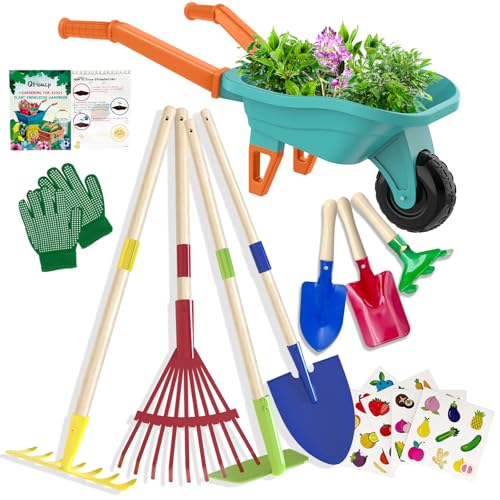
Best for: Kids who want a larger collection with a wheelbarrow for more ambitious outdoor play and gardening tasks.
Why selected: The 14-piece set features real metal heads and solid wood handles, plus a wheelbarrow. It’s designed for ages 3-8 and includes safety assurances like rounded edges.
Limitations: The range of tools can be more than casual beginners need; supervision helps maximize learning and prevent misuse.
Buying Guide: What To Look For In Kid-Friendly Gardening Tools
- Age-appropriate design: Look for tool lengths that fit your child’s height and grip. Long-handled tools should be easy to reach without overswinging.
- Materials and safety: Steel heads with wood handles are common; ensure smooth edges and non-toxic finishes. Non-sharp designs prevent accidental injuries.
- Storage and portability: Detachable components or included tote bags help keep gear organized and ready for outdoor play.
- Weight and balance: Lightweight sets encourage independence, while balanced tools prevent fatigue during longer gardening sessions.
- Learning features: Some sets include educational bonuses (gloves, watering cans, bug catchers) that broaden discovery and science exploration.
- Durability versus cost: Higher-quality materials may cost more upfront but withstand active use and last longer, providing better long-term value.
- Safety standards: Check for age-appropriate certifications and compliance with child-safety guidelines when available.
Frequently Asked Questions
- What should I consider when choosing kids gardening tools?
Consider age, tool size, weight, material quality, safety features, and whether the set includes storage or protective items like gloves. - Are wooden handles better than plastic for kids?
Wooden handles are generally more durable and comfortable for extended use, but ensure smooth finish to avoid splinters. - Is a wheelbarrow necessary for young gardeners?
Not always, but it helps teach balance and transport tasks as kids grow more confident in outdoor play. - How can I ensure safe use of real tools by kids?
Supervise initial use, teach proper grip and stance, and start with simple tasks like watering and light digging before progressing to heavier work. - What age range is best for a starter garden set?
Most sets are designed for ages 3-8, with some components suitable for younger children under supervision. - Do these sets encourage STEM learning?
Yes, by enabling hands-on activities that illustrate plant growth, soil science, and ecological exploration.