For indoor gardening enthusiasts, red and blue LED grow lights offer targeted spectra that can boost germination, vegetative growth, and flowering. This guide highlights five reliable options that balance spectrum, intensity, and ease of use. If you’re growing herbs, seedlings, succulents, or flowering plants indoors, these picks provide practical choices for different setups and budgets. The top products below are chosen for clear spectrum coverage, adjustable features, and user-friendly operation.
Summary table of selected products:
| Product | Best For | Key Benefit | Limitations |
|---|---|---|---|
| FREELICHT 2 Pack 4FT LED Grow Light | Seed starting and multi-plant setups | High light output with 40W per light and full red/blue spectrum | Longer installations may require mounting |
| RWNTAO Four Strip Growing Lamp | Compact grows and desk setups | Four strips, auto timer, full spectrum 380–800 nm | Requires proper gap setup for coverage |
| Hytekgro 225 LEDs Grow Light | All growth stages, larger area | Wide spectrum and cool operation | Bulkier panel, needs ceiling or shelf space |
| GHodec 6000K Foldable Light Strip | Desk plants and clamp-on use | Foldable design with adjustable timer | Lower power per unit than bigger panels |
| LEOTER 2-Pack Full Spectrum Lights | Multi-plant coverage and flexible mounting | 4 heads, 360° gooseneck, multiple spectrum options | Clamp strength may vary by desk surface |
FREELICHT 2 Pack 4FT LED Grow Light

Best for: Home gardeners who want a scalable setup with simple installation. These 4-foot units pair well with seed starting trays or multiple small pots. The red-blue spectrum targets photosynthesis and flowering while keeping energy use reasonable at 40W per fixture. The kit includes hanging and mounting hardware for flexible installation. Use this when you need reliable, extendable lighting across several plants without a large upfront investment.
Why selected: The combination of full spectrum coverage (660nm red and 460nm blue), low energy draw, and easy mounting makes this option a solid all-around choice for beginners and seasoned growers alike. The two-pack design supports larger growing areas or backup units. A practical caution: ensure adequate ceiling or wall space for mounting and manage wire length to avoid clutter.
RWNTAO Four Strip Growing Lamp

Best for: Smaller benches or desks where compact, customizable lighting is needed. This product uses four independent LED bars (red, blue, and yellow) to deliver a full spectrum from 380 nm to 800 nm. The auto-on/off cycle timer (3/9/12 hours) and 10 dimmable levels support crop cycles from seedlings to mature plants without constant manual adjustments.
Why selected: Its multi-bar design provides flexible coverage for several plants side by side, and the cycle memory timer improves ease of use for busy schedules. A limitation to note: placement height and distance should be tuned to avoid light spill on non-target areas and to ensure uniform intensity across plants.
Hytekgro LED Grow Light 225 LEDs
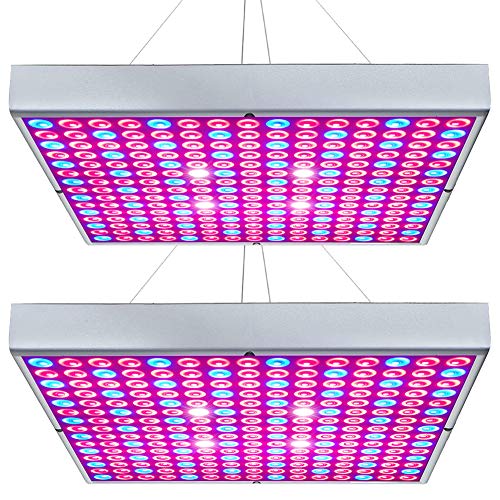
Best for: Indoor growers needing extensive coverage with a robust full-spectrum blend. The panel includes a mix of red, blue, and white LEDs to emulate natural sunlight and support all growth stages. The unit’s design emphasizes low heat and quiet operation, which is ideal for small grow tents or office setups.
Why selected: The wide spectral range and high-output capability help promote vegetative growth and flowering in a reasonable footprint. Choose this if you want a compact, single-panel solution for a medium-sized plant group. Limitation: the panel may require a stable mounting system to prevent sagging under longer use periods.
GHodec 6000K Foldable Light Strip

Best for: Desk plants, seedlings, and compact plant collections that need adjustable height and direction. The foldable, strip-form design includes a mix of red, blue, and white LEDs for a balanced spectrum. The 3 auto-timer modes and foldable structure help maximize space utilization.
Why selected: Folding design plus a timer makes it easy to tailor light cycles to plant needs without occupying much desk space. Caution: higher light intensity should be tested gradually with delicate plants to prevent light stress on sensitive species.
LEOTER 2-Pack Full Spectrum Lights

Best for: Home gardeners seeking flexible mounting and multi-head configurations. These lights offer 360-degree gooseneck flexibility and three brightness modes, with a 10-level dimming range. The 2-pack setup supports multi-plant arrangements and home workspaces.
Why selected: The 360° necks and multiple spectrum options enable precise targeting of individual plants, making them a good choice for varied plant types. A potential downside: clamp strength varies by desk material, so ensure a firm surface for secure mounting.
Buying Guide: Red And Blue LED Grow Lights For Indoor Plants
What should I consider when choosing red and blue LED grow lights?
- Spectrum balance: Look for lights that combine red (typically around 620–660 nm) and blue (around 450–460 nm) with a full spectrum for broader coverage. Some models add yellow or white LEDs to mimic natural sunlight and support a wider range of growth stages.
- Coverage and intensity: Determine how many plants you plan to grow and the space you have. Larger areas may benefit from multi-bar or higher-PPFD panels, while compact desks can use foldable strips or clip-on lights.
- Adjustability: Features like dimming, timing, and adjustable angles help tailor light to seedling needs and growth stages. Timers reduce run-time waste and support consistent schedules.
- Mounting and footprint: Consider whether you need clamp, tripod, hanging, or desk-mounted options. Ensure stability and easy access to power controls for daily use.
- Energy efficiency and heat: LED lights generally run cooler and more efficiently than traditional bulbs. Check heat output to avoid overheating sensitive plants.
Frequently Asked Questions
- What is the ideal light spectrum for most indoor plants?
Most indoor plants benefit from a full spectrum that includes red and blue wavelengths, with some white or yellow light to mimic natural sunlight and support photosynthesis across growth stages. - How many hours should grow lights be on daily?
Seedlings often do best with 12–16 hours of light per day, while mature plants may require 8–12 hours depending on species. Timers help keep consistent cycles. - Can I mix different brands of red and blue lights?
Yes, as long as the spectrum overlaps adequately and the total light intensity suits your plants. Avoid extreme intensity differences that may stress plants. - Is higher wattage always better?
Not necessarily. Efficiency, spectrum quality, and fixture placement matter more. Overly intense light at close distances can cause light burn on delicate leaves. - Do these lights work for all indoor plants?
Most can support common houseplants, herbs, and seedlings. For high-light tropical species, consider higher output or longer daily exposure with careful distance adjustments. - What maintenance is required for LED grow lights?
Keep fixtures clean from dust, check for loose connectors, and verify timers and dimming controls periodically to maintain consistent performance.