Answering your search for red aquarium plants, this guide highlights five top picks that bring vivid color, variety in height, and reliable growth for a range of beginners to intermediate hobbyists. Each entry explains who it’s best for, why it was chosen, and any practical caveats. This selection helps you compare color, size, and care needs at a glance to design a striking red-backed ecosystem.
| Product | Best For | Key Color/Feature |
|---|---|---|
| Canton Aquatics Ludwigia Repens (Dark Red) | Background filler with strong red accent | Deep red foliage; grows tall |
| CANTON AQUATICS Scarlet Temple (Alternanthera Reineckii) | Midground color pop and texture | Bright red-pink hues; compact |
| CANTON AQUATICS Alternanthera Rosanervig | Midground focal color with veining | Pink-veined magenta leaves |
| 6 Red Live Aquarium Plants Bundle | Low-maintenance color burst for variety | Red/Purple spectrum across several species |
| Marcus Fish Tanks Tiger Lotus Lily | Early color and dramatic focal plant | Tiger Lotus bulb; red-tinted leaves |
Canton Aquatics Ludwigia Repens (Dark Red) Live Plant

Best for beginners seeking a robust red stem plant, Ludwigia Repens (Dark Red) displays deep burgundy foliage under medium to high light. It thrives in a broad temperature range (68-82°F) with medium light and does not require CO2 injection, though supplemental CO2 enhances color and growth. It grows 12-20 inches tall, making it an ideal background plant that fills gaps quickly when trimmed for bushiness.
Who it’s for: newcomers needing a reliable red background and experienced hobbyists seeking easy color boost.
Caution: Avoid placing in low-light areas, which can dull color and slow growth.
CANTON AQUATICS Scarlet Temple (Alternanthera Reineckii)

Best for midground color patches with a compact form, Scarlet Temple thrives under medium-high light and requires no CO2 injection. Its versatile placement suits planted tanks, community tanks, shrimp setups, and breeding environments. Each plant is greenhouse-grown and inspected before shipping, useful for hobbyists seeking consistency.
Who it’s for: those wanting strong red highlights without crowding the foreground or too much height.
Caution: Moderate difficulty level—practices like consistent fertilization improve color but are not mandatory for basic care.
CANTON AQUATICS Alternanthera Rosanervig

Best for midground color and texture, Alternanthera Rosanervig showcases deep magenta leaves with striking pink veining. Under medium to high light, the plant intensifies to pink-red tones with iron-rich fertilization. It stays relatively short (4-12 inches) and bushy, making it ideal for compact color patches rather than tall coverage.
Who it’s for: aquarists wanting a dramatic focal point without blocking views of background plants.
Caution: Veining patterns can vary with lighting and nutrient levels; ensure balanced fertilizer to maintain color.
6 Red Live Aquarium Plants Bundle

Best for color variety and budget-conscious setups, this bundle includes multiple red or purple plants. It provides shelter and aesthetic appeal for smaller inhabitants and can quickly fill spaces with bold hues. Plants are randomly selected from the listed red varieties, offering a mix rather than a single-species focus.
Who it’s for: beginners or hobbyists who want diverse red tones without selecting each plant individually.
Caution: Randomized selection means exact species and proportions vary; plan layout accordingly to avoid overgrowth in small tanks.
Marcus Fish Tanks Tiger Lotus Lily
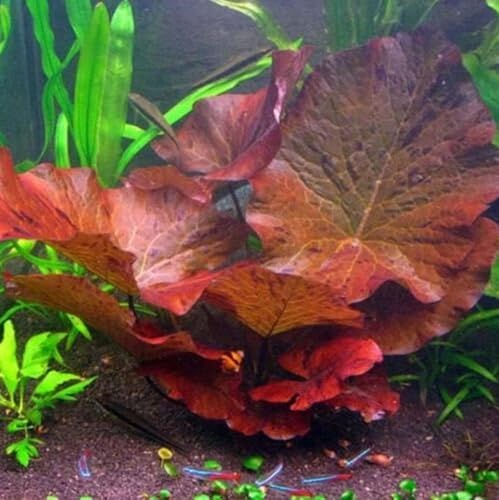
Best as a dramatic focal plant, Tiger Lotus Lily (Nymphaea Lotus) is sold as ready-to-grow sprouted bulbs. It adds bold red-tinted leaves and a striking center of interest. The supplier notes potential temperature sensitivity in extreme weather and emphasizes careful handling in winter to avoid plant stress.
Who it’s for: aquarists seeking a striking centerpiece with visible color impact in the mid-to-back area of the aquarium.
Caution: Fragile leaves can be damaged if bulbs are large or mishandled during shipping; smaller bulbs are preferred for sturdiness.
Buying Guide: Red Aquarium Plants — Key Factors To Consider
- Light needs: Red tones typically intensify under medium to high light. If light is insufficient, color dulls and growth slows.
- Plant height and placement: Tall red stem plants work best as backgrounds; compact varieties suit midground color patches without obscuring other scenery.
- CO2 and fertilization: CO2 injection is not always required, but supplemental CO2 can deepen red hues and boost growth for many red species.
- Tank size and temperature: Check mature height and temperature tolerance (68-82°F is common for many red stem plants). Small tanks may require more frequent pruning to maintain balance.
- Maintenance level: Some bundles use mixed species; consider whether you want uniform color or a mix of red shades for texture and dimension.
- Compatibility: Red plants vary in compatibility with fish and invertebrates; some may be more sensitive to nutrient shifts and lighting changes.
Frequently Asked Questions
- Do red aquarium plants need CO2? Not always, but CO2 can enhance growth and coloration for many red varieties.
- Which red plant is best for beginners? Ludwigia Repens (Dark Red) is described as easy to grow and forgiving of a range of conditions.
- Can red plants grow in low light? Their color may fade in low light; choose low-light red varieties or provide supplemental lighting.
- How tall do these red plants typically grow? Heights range from compact midground forms (about 4-12 inches) to background stems reaching 12-20 inches or more.
- Which plant is best for a focal point? Tiger Lotus Lily offers a dramatic centerpiece with bold leaves and high visual impact.
- Are red plants suitable for community tanks? Yes, several listed options work in community and shrimp tanks if lighting and nutrients are balanced.