Looking for a remote-controlled mower that confidently handles hills, slopes, and uneven terrain? This guide highlights five top options designed for steep inclines, heavy-duty trimming, and remote operation. Each model targets different user needs—from farms and orchards to large residential properties. The buyers best suited for these machines range from professional landscapers to homeowners with challenging terrain who want safer, distance-controlled mowing. Below is a quick summary of the featured products to help you compare at a glance.
| Product | Best For | Key Strength |
|---|---|---|
| FenkeYiHui 23HP Tracked Remote Control Lawn Mower | Heavy-duty farms or orchards | Extreme slope handling, wide deck, long remote range |
| AIWEIYA Remote Control Flail Mower | Rugged terrain with dense growth | High-power flail head, hybrid drive, strong remote control |
| FenkeYiHui 18HP Tracked Remote Control Lawn Mower | Medium to large yards with hills | Balanced power and reach, reinforced durability |
| Mowrator S1 4WD Remote Control Lawn Mower | All-season yard care on slopes | 4WD traction, adjustable height, modular accessories |
| INFRONT Remote Control Lawn Mower | Steep slopes and varied terrain | Long-range remote, zero-turn capability, all-terrain track design |
FenkeYiHui 23HP Tracked Remote Control Lawn Mower

The FenkeYiHui 23HP model pairs a 608cc engine with a 1600W brushless motor for heavy-duty mowing on steep terrains. Its 35.5-inch wide deck helps cover more ground per pass, and the machine can clear up to 1.5 acres per hour. This is a strong choice for farms, orchards, or large fields where reliability on slopes matters. The remote range reaches up to 1,640 feet, letting you control mowing from a safe distance while monitoring engine temperature and remote status. An automatic emergency stop adds safety if the signal is lost or power fails.
Best for: Professionals and serious property owners with large, uneven landscapes and up to 45-degree slopes. The wide deck and high torque are designed to maximize productivity on challenging terrain.
Why selected: Combines high horsepower with long-range control and slope capability, making it suitable for demanding hillside work where speed and safety are priorities.
Limitations: Higher power means greater initial cost and maintenance considerations. Remote reliability depends on battery and signal integrity over long ranges.
AIWEIYA Remote Control Flail Mower

The AIWEIYA flail mower uses a 459cc commercial engine and a professional flail head to mulch dense grass, weeds, brush, and light saplings in a single pass. Its remote control supports operation on varied terrain, including 55-degree slopes, with a hybrid crawler track system for strong traction. The smart hybrid drive coordinates gas power with electric drive for smoother handling and better fuel efficiency. This setup is ideal for areas where heavy vegetation and steep grades meet.
Best for: Tough, overgrown hillside properties where shredding capability and traction are critical.
Why selected: The combination of a high-power engine, robust rolling track system, and a smart drive system makes it well-suited for challenging landscapes and dense growth.
Limitations: Flail heads can produce more debris; ensure local disposal practices accommodate the mulched material.
FenkeYiHui 18HP Tracked Remote Control Lawn Mower
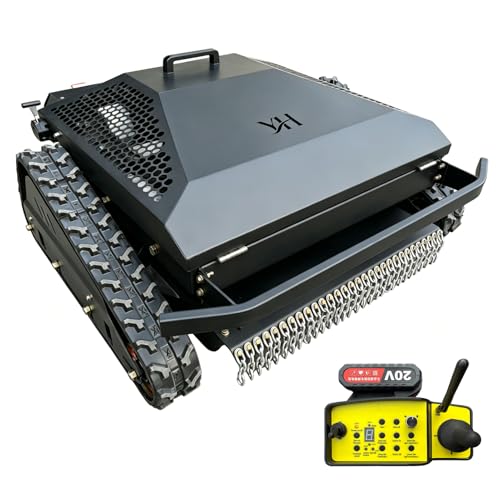
This model uses an 18HP, 452cc engine paired with a 1600W brushless motor. Its 31.5-inch deck is narrower than the 23HP version, but it still clears up to 1.2 acres per hour. The mower is built with durability in mind, featuring reinforced shell and 60 safety chains to guard against debris kickback and grass entanglement. The remote range matches others at up to 1,640 feet, with an automatic emergency stop on signal loss for safety on hills and uneven ground.
Best for: Homeowners and small farms that need a capable hillside mower without the widest deck.
Why selected: Balances power and maneuverability with a smaller footprint, making it easier to navigate tight spaces while still handling hills.
Limitations: The narrower deck means more passes on large slopes compared with wider-deck models; keep pace with terrain changes to maintain efficiency.
Mowrator S1 4WD Remote Control Lawn Mower
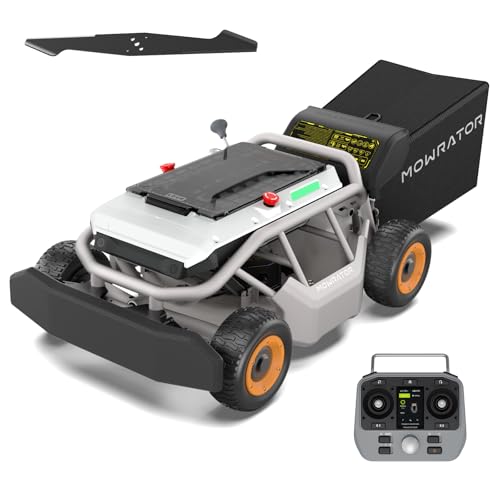
The Mowrator S1 provides full-year yard care with a strong 4WD drive system and a 1,000W blade power. It offers a 21-inch cutting width and adjustable cutting heights, with a climbing capability up to 37° (75%). The mower supports seasonal attachments such as a tow hitch, mulching blade, and snow plow for winter clearing. The platform includes an electronic brake (FOC E-Brake) for precise stopping and reliable hillside performance. It is well suited for multi-season properties where slope mowing is a regular task.
Best for: Property owners requiring all-season use and modular accessories for hills and varied terrain.
Why selected: Its 4WD capability and modular approach provide flexibility to adapt to changing seasons and hillside mowing challenges.
Limitations: Optional attachments may be needed for full seasonal versatility; the base mower emphasizes traction over the deepest grass clearance.
INFRONT Remote Control Lawn Mower
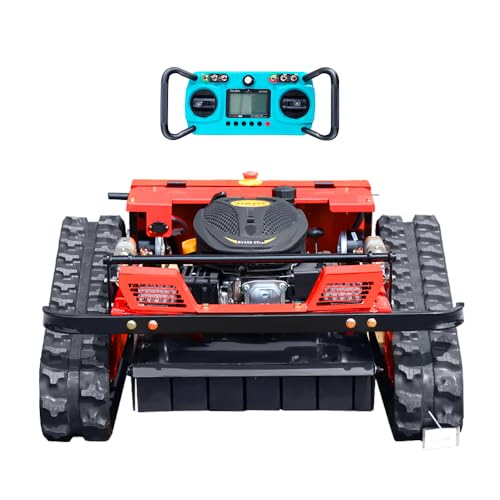
The INFRONT mower emphasizes a track design for all-terrain performance and a long-range remote. It supports operation on 45-degree slopes with a zero-turn radius that enhances maneuverability in tight spots. Its track system helps maintain traction on uneven ground, making it a good fit for steep yards and complex landscapes where precision trimming matters.
Best for: Large landscapes with varied terrain and significant slope challenges that require precise remote control from a distance.
Why selected: The combination of long-range control and tracked stability offers predictable mowing on steep grades and irregular layouts.
Limitations: The emphasis on terrain capability means users should verify remote range in their actual work area to ensure consistent control.
Buying Guide: Remote Mowers For Hills
- Power and slope rating: Look for engines with enough horsepower to handle dense grass and slopes. A higher hill-climb angle rating generally correlates with better traction systems like tracks or 4WD.
- Deck width and cutting height: Wider decks cover more area per pass but can reduce maneuverability on narrow paths. Adjustable cutting height helps adapt to tall grass and uneven ground.
- Remote range and safety features: Consider how far you need to control the mower from and ensure there is automatic stop or fail-safes if the remote signal is lost.
- Traction system: Tracks provide superior grip on slopes compared with wheels. For very steep properties, prefer tracked models.
- Durability and safety: Durable shells, protective guards, and safety chains reduce debris kickback. Check for reinforced frames on units intended for heavy hillside mowing.
- Seasonal versatility: Some models support additional attachments (mulchers, snow plows). If you need year-round performance, review available upgrades.
- Maintenance considerations: Higher-powered engines require regular service. Confirm parts availability and ease of service in your region.
Frequently Asked Questions
- What makes a remote mower better for hills? Tracks or 4WD systems, higher torque, and a robust remote control range contribute to safer, more reliable operation on slopes.
- Is a wider deck always better on hills? Not always. A wider deck reduces the number of passes but can be harder to maneuver in tight terrain. Balance width with access space.
- What safety features should I expect? Automatic emergency stop on signal loss, temperature monitoring, and reinforced debris guards are important for hillside mowing.
- Can these mowers handle dense brush? Some models with flail heads or high-torque engines handle dense growth better; verify blade type and clearance for your vegetation.
- Do remote mowers require special maintenance? Yes. Regular engine service, track or wheel maintenance, and battery health for remote controls are essential for consistent hillside performance.
- What should I consider before buying? Terrain steepness, typical grass density, desired mowing speed, and whether you need seasonal attachments all influence the best pick.