Finding the right root-friendly bags helps promote healthy root growth, better drainage, and easier plant care. This guide highlights five practical options that fit common gardening scenarios—from container gardens to raised beds and outdoor plots. Each product targets different needs, such as heavy-duty materials, reinforced handles, or enhanced root protection. The buyer’s guide below helps you decide which bag best suits your plants, climate, and lighting conditions.
| Product | Best For | Why It Stands Out |
|---|---|---|
| Cavisoo 5-Pack 10 Gallon Potato Grow Bags | Vegetables and fruits in home gardens | Reinforced handles and 300g nonwoven fabric provide durability and good drainage. |
| FEED GARDEN 10 Gallon Grow Bags 4 Pack | Multi-season vegetable gardening | Thickened fabric with double-stitched handles for easy moving and longevity. |
| Gardzen 10-Pack 10 Gallon Grow Bags | Outdoor and indoor vegetable setups | 300g material with air-pruning design minimizes root circling. |
| Gardzen 10-Pack 5 Gallon Grow Bags | Smaller-space or starter plants | Similar thickened fabric and reinforced stitching in a compact size. |
| Aulock 5 Gallon Plant Root Protector | Root protection from burrowing animals | 304 stainless steel baskets provide durable underground root guarding. |
Note: This summary helps compare top features at a glance. For each product, the detailed sections explain who benefits most and why the bag type matters for root health and overall plant performance.
Cavisoo 5-Pack 10 Gallon Potato Grow Bags
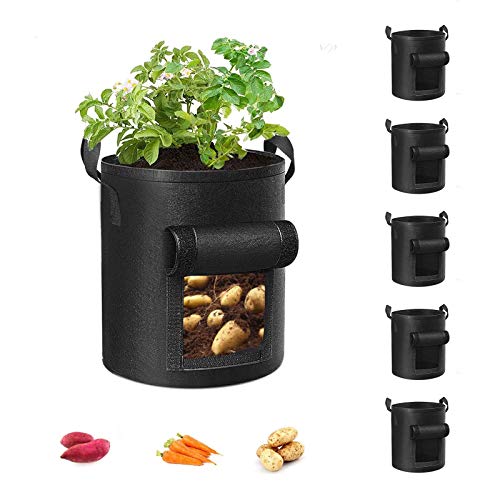
- Durable Material: 300g thick non-woven fabric; reusable for more than 3 years.
- Excellent Drainage: Breathable fabric supports rapid drainage and ideal growth conditions.
- Reinforced Handle: Strong polypropylene webbing with X-shaped stitching.
The Cavisoo bags are best for home vegetable growers who want sturdy, reusable planters that stay portable. The reinforced handles make it easy to move heavy soil as plants grow. A potential limitation is longer-term wear at high-stress points after multiple seasons.
FEED GARDEN 10 Gallon Grow Bags 4 Pack

- Superior Drainage & Root Health: 300G thickened non-woven fabric for airflow and fast drainage.
- Heavy-Duty Fabric: Upgraded material resists tearing; designed for multi-season use.
- Reinforced Double-Stitched Handles: Safe lifting of heavy soil and plants.
FEED GARDEN bags suit gardeners who value resilience and longevity, especially for outdoor beds and containers with heavy soil. A caveat is that the thick fabric can be slightly stiffer when empty, which may affect initial setup in tight spaces.
Gardzen 10-Pack 10 Gallon Grow Bags

- Thickened Nonwoven Fabric: 300G for balanced permeability and root respiration.
- Superior Drainage: Prevents excess water retention while enabling air pruning.
- Reinforced X-Shaped Stitching: Handles are cross-stitched for durability during moves.
Choose Gardzen 10 Gallon for versatile outdoor and indoor use with reliable airflow. The best-fit scenario is plants that benefit from air pruning to discourage root circling; avoid if you need ultra-flexible, ultra-light containers for very small spaces.
Aulock 5 Gallon Plant Root Protector

- Durable Stainless Steel Material: 304 stainless steel baskets for long-lasting use.
- Strong Root Protection: Guards roots from burrowing animals like voles and moles.
- Sufficient Quantity: 6-pack suitable for multiple 5-gallon pots.
This option is best for gardeners facing garden pests or ground-dwelling animals. The stainless steel design offers long-term protection but requires careful placement and may be less flexible than fabric bags for root exploration.
Buying Guide: Key Purchase Considerations
- Material and durability: Thick 300G nonwoven fabric provides breathability and longevity; stainless steel baskets offer sturdy underground protection. Choose based on whether you prioritize root health or pest protection.
- Drainage vs. water management: Fabric grow bags facilitate drainage and air pruning. If you have heavy soils or frequent watering, these are advantageous.
- Size and capacity: Select gallon size that matches your plant type, space, and expected root mass. Larger bags support bigger plants but require more soil and water.
- Handles and portability: Reinforced stitching and sturdy handles aid in moving heavy bags; this is helpful for seasonal repositioning or balcony gardens.
- Longevity and reuse: Look for multi-season use and easy cleaning. Reusable options reduce waste and cost over time.
- Underground protection: If burrowing animals are a concern, consider root guards or protective baskets to shield roots without restricting growth.
- Climate considerations: In hot climates, breathable fabric helps prevent overheating and root stress; in cooler climates, ensure the fabric provides adequate insulation for longer growing seasons.
Frequently Asked Questions
- What size grow bag should I choose for tomatoes?
Answer: For tomatoes, 10 gallon or larger bags work well to accommodate vigorous root systems and fruit production. - Are fabric grow bags good for all vegetables?
Answer: Yes, fabric bags support root pruning and air drainage, which helps many vegetables develop strong root systems and prevent root rot. - Do root guard baskets interfere with plant growth?
Answer: Root guards protect roots from pests and can be used without hindering water and nutrient penetration when properly installed. - Can I reuse fabric grow bags after a season?
Answer: Most 300G fabric grow bags can be reused for multiple seasons if handled with care and stored properly. - Which option is best for small spaces?
Answer: The 5-gallon and 10-gallon bags in compact formats are ideal for balconies, patios, or vertical gardens. - Do I need drainage holes?
Answer: Yes, fabric bags rely on breathable materials and drainage; ensure bags have adequate openings to prevent waterlogging.