When choosing a root booster, look for products that promote rapid root development while minimizing transplant shock across common indoor plants. These selections are best for home gardeners who propagate cuttings, relocate plants between containers, or want healthier new roots in water, soil, or alternative substrates. The top picks below cater to different propagation styles and plant types, from pothos and monstera to philodendron and herbs.
| Product | Brand | Best For | Why It Stands Out |
|---|---|---|---|
| Root Drops Liquid IBA Rooting Hormone | WJunHua | Water, soil, and LECA propagations | Dual-action formula supports roots and reduces transplant shock |
| Root Drops Liquid Propagation Drops | Southside Plants | All indoor plants, including water and soil setups | All-natural blend, versatile across substrates |
| Houseplant Prop Drops | HOUSEPLANT RESOURCE CENTER | Water and soil propagation for common houseplants | Seaweed extract and humic acid for natural nourishment |
| Garden Safe TakeRoot Rooting Hormone | Garden Safe | Houseplants, transplants, ornamentals | IBC-style rooting powder, easy to apply |
| Clonex Clone Solution | Clonex | Seedlings and cuttings | Vitamin B1 and root-promoting agents for rapid roots |
Root Drops, Dual-Action Rooting Hormone by WJunHua

This liquid rooting hormone features a dual-action formula designed to nourish roots during critical growth phases. It provides essential nutrients and reduces transplant stress for cuttings in the rooting stage, creating an optimal environment for root development.
Best for: Home propagators who want a simple, water- or soil-based solution that supports early root growth and minimizes shock during repotting. Not ideal for those who prefer powder or gel over liquids.
Caution: Use a full dropper per quart of water during hydroponic setups for the first two months to maintain robust root health; avoid over-dilution, which can reduce effectiveness.
Bonide Bontone II Rooting Powder

Bonide’s Bontone II uses rooting hormone powder to promote quick root development once applied to cut ends. It’s suitable for ornamental plants, vegetables, fruit trees, and berries, and can also coat seeds or bulbs for early rooting.
Best for: Gardeners who prefer a quick-dip powder method for cuttings and want a versatile option that can be used on various plant types. May be messier to apply than liquid formulas.
Limitation: Powder can clump if exposed to moisture before use; ensure the container is tightly sealed and kept dry between applications.
Root Drops Liquid Propagation by Southside Plants

The ultimate liquid booster combines natural rooting hormone and vitamins to speed root development and strengthen plants from delicate cuttings to mature houseplants. It works across water, soil, and substrates like LECA or moss.
Best for: Propagation enthusiasts seeking a single formula that performs well in multiple propagation contexts. Better for those who want a clean, liquid alternative to powders and gels.
Limitation: For water propagation, you’ll need to refresh the solution every 4–5 days during water changes to maintain effectiveness.
Houseplant Prop Drops

Houseplant Resource Center’s Prop Drops mix seaweed extract with humic acid to nourish cuttings and support robust root growth. It’s designed to work in both water and soil propagation, with shelf stability of up to two years.
Best for: Indoor gardeners who prefer natural ingredients and a formula that doubles as a soil and water propagator. Choose this if you value a plant-guide included with the product.
Limitation: Some users may prefer a purely synthetic root hormone for consistent, rapid results; non-chemical options may vary in effectiveness across plant species.
Garden Safe TakeRoot Rooting Hormone
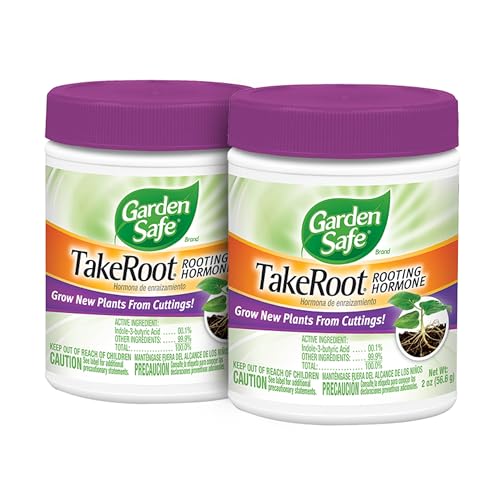
TakeRoot is a practical rooting powder that uses indole-3-butyric acid (IBA) to stimulate root formation in cuttings, helping plants establish quickly in new containers.
Best for: Gardeners who prefer a traditional powder rooting hormone for easy dipping of cutting ends. Avoid this if you need a liquid option for water propagation or delicate seedling transplants.
Limitation: Powder application can be messier and may require careful tapping to remove excess hormone before planting.
Clonex Clone Solution

Clonex Clone Solution provides a nutrient-rich formula with Vitamin B1 to reduce transplant shock and promote rapid root development. It is designed for clones, seedlings, and general use to nourish young plants and roots.
Best for: Propagation projects that involve cuttings and seedlings where minimizing transplant shock is a priority. Choose this when you want a trusted brand with growth-focused ingredients.
Limitation: Availability may vary; some users prefer higher concentrations or different carrier substances for specialized substrates.
Buying Guide: Rooting Hormones And Propagation Boosters
- Propagation method: Liquid formulas work well for water propagation and LECA, while powders are easy for cuttings. Choose based on your setup.
- Plant type: Some products are versatile for many houseplants; others target specific species. Match the product’s claims to your plants.
- Substrate compatibility: If you use water, soil, moss, or LECA, confirm the product supports that substrate.
- Transplant shock reduction: Look for formulas that mention stress reduction or quick establishment to minimize plant loss during repotting.
- Concentration and usage: Higher-concentration formulas last longer; follow recommended dosing per cup of water or per cutting to avoid over-application.
- Natural vs synthetic: Natural ingredients (seaweed, humic acid) offer gentle nourishment; synthetic hormone-based products may deliver faster results in some cases.
Frequently Asked Questions
- What is rooting hormone and why is it used?
Rooting hormone contains growth regulators that stimulate root initiation and development, helping cuttings establish faster and with less stress.
- Can I use rooting hormone on all plant types?
Most common houseplants respond well, but some species may require gentler or different formulations. Always follow product directions and test on a small cutting first.
- Is liquid rooting hormone better than powder?
Liquid formulas are often easier to use across water and soil propogation; powders are traditional and work well for cuttings with a quick-dip method.
- How often should I apply rooting hormone during propagation?
For liquids, refresh according to product guidelines, typically every 4–5 days during water changes. For powders, apply at the time of cutting and plant promptly.
- Will rooting hormone affect plant health long term?
When used as directed, rooting hormones primarily influence initial root formation and transplant readiness, helping young plants establish more reliably.
- Are natural rooting boosters as effective as synthetic hormones?
Natural formulas with seaweed extract and humic acids can provide strong nourishment and support, especially for organic or chemical-free setups, but results may vary by plant and environment.