Answer: For quick, reliable rooting of cuttings, choose products that deliver hormones or growth stimulators in forms you prefer—powder, gel, or liquid. This guide highlights five top options suited to common cuttings, houseplants, and small garden transplants. Ideal buyers include: home gardeners seeking easy, ready-to-use solutions; beginners needing straightforward application; and experienced propagators wanting stronger or more versatile formulas. Below is a quick product table to compare key points before diving into detailed sections.
| Product | Brand | Format | Best For |
|---|---|---|---|
| Bonide Bontone II Rooting Powder | Bonide | Powder | Hardwood and softwood cuttings, ornamentals and fruit trees |
| Garden Safe TakeRoot Rooting Hormone | Garden Safe | Powder | General cuttings; easy for beginners |
| Miracle-Gro Liquid Root Starter Gel | Miracle-Gro | Liquid Gel | Leaf and stem cuttings; houseplants |
| Hormex Rooting Powder #8 | Hormex | Powder | Semi-hardwood cuttings; woody plants |
| Root Drops by Southside Plants | Southside Plants | Liquid Drops | Water propagation and soil transplants; various substrates |
Bonide Bontone II Rooting Powder

Bonide Bontone II Rooting Powder promotes quick root development when applied to cut ends. To use, dip the clipping into the powder and plant in moist soil. It is suitable for ornamentals, vegetables, fruit trees, and berries. Best for growers who prefer a traditional powder application and want a fast rooting boost for multiple plant types.
Best for: hobbyists and experienced propagators seeking a straightforward, ready-to-use powder that works across a range of cuttings.
Caution: Powder dusting can be messy; wipe excess off before planting to avoid residue on soil surfaces.
Garden Safe TakeRoot Rooting Hormone
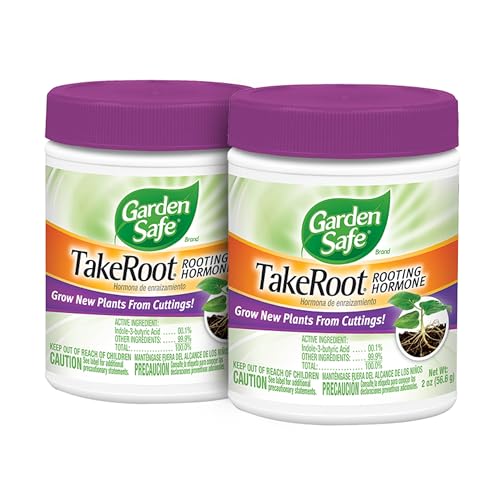
Garden Safe TakeRoot Rooting Hormone is a powder-based rooting hormone designed to promote rooting in cuttings. Its active ingredient, indole-3-butyric acid, mirrors natural root hormones to help establish new root systems. Best for beginners who want a simple dip-and-plant method and for a broad range of home, garden, and greenhouse varieties.
Best for: users seeking a reliable, beginner-friendly rooting hormone with a familiar powder format.
Caution: Ensure even coating; tap off excess powder before planting to prevent clumping in the soil.
Miracle-Gro Liquid Root Starter Gel

Miracle-Gro Liquid Root Starter Gel is a propagation gel that promotes thicker, healthier roots for a variety of houseplants. It is designed for easy propagation of leaf and stem cuttings, offering an option that avoids the dust associated with powders. Best for users who prefer a gel format with targeted application to cutting ends.
Best for: those propagating indoors with a preference for gel-based products and that want to minimize powder mess.
Limitation: Gel products can be more expensive per cutting and may require more careful dipping to avoid excess gel on foliage.
Hormex Rooting Powder #8

Hormex Rooting Powder #8 offers a high-strength rooting option ideal for semi-hardwood cuttings. It uses indole-3-butyric acid (IBA) and comes in multiple strengths to fit softwood, semi-hardwood, and hardwood cuttings. Best for propagators working with woody plants and those who need a robust rooting stimulus to overcome tougher cuttings.
Best for: experienced propagators handling woody plants or difficult cuttings and who need a stronger IBA concentration.
Caution: Higher strength requires careful handling to avoid excessive rooting or tissue damage in sensitive species.
Root Drops – Liquid Rooting Hormone

Root Drops from Southside Plants provide a liquid rooting hormone form with vitamins for faster root development and stronger roots. It supports water propagation, soil transplants, and substrates like leca or moss. Best for versatile propagation methods and for growers who want a flexible, all-in-one liquid solution.
Best for: propagators using multiple substrates or those who prefer a liquid, dropper-based application for quick dosing.
Caution: Liquid formulas can require more frequent refreshing in water propagation to maintain optimal hormone levels.
Buying Guide
- Propagation method: Powder works well for dipping cut ends; liquids are effective for water propagation and broad substrate compatibility; gels offer neat, minimized mess for indoor use.
- Plant type and cuttings: Woody or semi-hardwood cuttings may benefit from higher-strength powders (like Hormex #8); herbaceous and delicate cuttings may respond better to milder formulations and gels.
- Ease of use: Beginners often prefer dip-and-plant powders; experienced propagators may opt for concentrated liquids or gels for precise control.
- Storage and shelf life: Store unopened products in a cool, dry place. Liquid formulas typically have longer shelf life when tightly capped; powders may clump if exposed to moisture.
- Safety and handling: Use protective gear as needed during handling, especially with powders; avoid inhalation and contact with skin or eyes.
Frequently Asked Questions
- What is rooting hormone used for? It stimulates root development in cuttings to improve propagation success and reduce transplant shock.
- Which format is best for beginners? Powder rooting hormones or gels with straightforward dip-and-plant methods are typically easiest for beginners.
- Can I mix rooting hormone with soil directly? Most products are designed for dipping cut ends before planting; follow label instructions to avoid over-application or soil contamination.
- Is there a risk of harming cuttings with high-strength formulas? Yes. Higher concentrations can cause damage if misapplied; apply sparingly and target healthy tissue only.
- Do these products work for all plant species? Most are versatile, but some rare or highly recalcitrant species may respond differently; test on a small cutting first when needed.
- How long does rooting typically take? Time varies by species, cultivar, and environment; follow product guidelines and monitor for new root growth over weeks.