Root stimulators help establish roots faster during transplanting or propagation. This guide matches each product to the buyer’s needs, from home gardeners starting cuttings to serious transplant projects. Best for new transplants and cuttings, these options emphasize early root formation, reduced transplant shock, and healthier growth. The top picks below highlight products that are widely used for houseplants, vegetables, fruit trees, and ornamentals, with practical notes on ideal use and limitations.
| Product | Best For | Why It Stands Out | Limitations |
|---|---|---|---|
| Bonide Garden Rich Root & Grow (32 oz) | Transplants and new plantings | IBC root stimulator with IBA supports early root formation | Concentrate requires proper mixing |
| Bonide Bontone II Rooting Powder (1.25 oz) | Cuttings and seeds | Quick, powder-based rooting for cuttings | Powder handling may be messy |
| Bonide Garden Rich Root & Grow (128 oz) | Large transplant projects | Same IBA-based formula, larger volume | Higher upfront cost |
| Fertilome Root Stimulator & Plant Starter (1 gal) | General transplanting | 4-10-3 formulation for growth and establishment | Bulk concentrate requires mixing |
| Garden Safe TakeRoot Rooting Hormone (2 pack) | Cuttings and home propagation | Powder-based rooting with moisture aid | Two-pack may be more than needed for casual users |
Note: This article focuses on five products commonly used for rooting and transplanting. Each entry includes who it’s best for, why it’s selected, and practical cautions to help buyers compare options easily.
Bonide Garden Rich Root & Grow 32 oz

This product is ideal for transplants and a wide range of plants including houseplants, vegetables, fruit trees, and ornamentals. It contains IBA, a rooting hormone that stimulates early root formation and helps reduce transplant shock. Best for gardeners who want a ready-to-use concentrate for seedling starts or transplanting.
Best for: Home growers starting new plants or transplanting established transplants. Why selected: IBA-based root stimulator supports robust root systems and quicker establishment. Caution: As a concentrate, measurements must be precise to avoid over-application.
Bonide Bontone II Rooting Powder 1.25 oz

Bontone II is a ready-to-use rooting powder designed for cuttings and transplants. Best for cuttings and bulb or seed coating when quick root initiation is desired. It’s particularly useful for ornamentals and fruit trees that propagate easily from cuttings.
Best for: Propagation via cuttings. Why selected: Powder form speeds root development when dipped into cut ends. Caution: Powder can be messy and requires tapping off excess before planting.
Bonide Garden Rich Root & Grow 128 oz

This larger-volume variant is designed for bigger transplant projects or frequent use in gardens with many plants. It shares the same IBA rooting hormone and 4-10-3 fertilizer balance as the smaller bottle. Best for serious gardeners or small farms needing bulk stock.
Best for: Large transplants and ongoing propagation. Why selected: Volume offers cost efficiency for frequent use. Caution: Store properly to avoid clumping and ensure correct dilution with water.
Fertilome Root Stimulator & Plant Starter 1 gal

Fertilome Root Stimulator provides early root formation support through Indole-3-butyric acid (IBA). It is suitable for a broad range of transplants, including vegetables, fruit trees, berries, and ornamentals. Best for: Versatile use in standard transplanting jobs.
Better for: Gardeners needing a single gal container for multiple projects. Caution: As with other concentrates, follow dilution directions to avoid stressing plants.
Garden Safe TakeRoot Rooting Hormone 2 Count
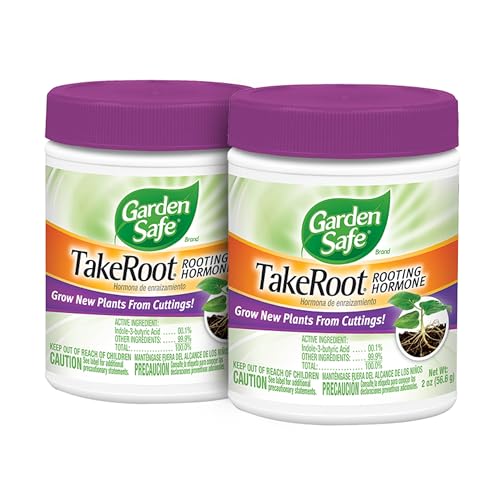
TakeRoot promotes rooting for cuttings and is suitable for home gardening across many varieties. Best for: Home propagation where quick rooting is desired. Caution: Powder form requires careful handling to avoid inhalation or spill.
Better for: Cuttings and propagation in standard indoor or outdoor setups. Avoid this if you prefer liquid formulations or need rapid application in water propagation only.
Buying Guide: Root Stimulators For Plants
What to consider when choosing a root stimulator:
- Type: Powder vs. liquid vs. concentrate. Powder works well on cuttings; liquids suitable for water propagation or soil mixing; concentrates require dilution.
- Active ingredients: The common active ingredient is Indole-3-butyric acid (IBA). This hormone supports root initiation and growth.
- Plant type compatibility: Some products are designed for cuttings, others for transplants or a broad range of ornamentals. Match to your project.
- Volume and cost: Larger volumes offer bulk savings for frequent use; consider storage and shelf life.
- Application method: Dipping, mixing in soil, or adding to water. Choose according to your propagation method.
Practical Tips For Using Root Stimulators
- Do not over-apply concentrated formulas; follow label directions to avoid root burn.
- For cuttings, ensure ends are cleanly trimmed and moistened before applying rooting hormone.
- Water correctly after applying to support uptake without oversaturation.
FAQ
- Q: Are root stimulators safe for all plants? A: Most are suitable for a wide range of transplants and cuttings, but always check label guidance for specific plant types.
- Q: Can I use rooting powder and liquid together? A: It is generally not necessary to combine products; select the method that matches your propagation approach.
- Q: How soon will roots appear after treatment? A: Root development timing varies by plant species and conditions; consider consistent moisture and proper light.
- Q: Is a higher concentration better? A: No. Follow dilution instructions; excessive hormone can stress plants or hinder growth.
- Q: Can root stimulators prevent transplant shock? A: They can support early root establishment, which helps reduce transplant shock when used properly.