Looking for rubber liners that protect your pond from soil seepage and keep fish and plants safe? This guide highlights top durable liners ideal for koi, fountain basins, streams, and water gardens. It covers a mix of HDPE and EPDM options, focusing on easy cutting, UV resistance, and puncture resistance. The best fits cater to small to medium backyard ponds and DIY projects. Each entry includes who it’s best for and practical buying tips to help you choose confidently.
| Product | Size | Material | Best For |
|---|---|---|---|
| ToLanbbt Pond Liner | 7 x 10 ft | HDPE | Koi and water gardens |
| UWIOFF Pond Liner (7 x 10 ft) | 7 x 10 ft | HDPE | Small ponds up to 200 gallons |
| Adroiteet 10 x 15 ft Liner | 10 x 15 ft | HDPE | Medium outdoor ponds |
| UWIOFF 10 x 13 ft Liner | 10 x 13 ft | HDPE | Medium ponds up to 500 gallons |
| Garvee 15 x 20 ft Liner | 15 x 20 ft | EPDM | Larger outdoor ponds and waterfalls |
ToLanbbt Pond Liner 7×10 Ft (HDPE)

Best for: Small to mid-sized koi ponds and water gardens that need a flexible, easy-to-cut liner. This 20 mil HDPE liner offers UV resistance and puncture protection while staying soft enough to bend around curves. It’s a straightforward option for DIY projects and shallow installations.
- Safety features: HDPE with no plasticizers, suitable for outdoor use.
- Installation: Easy cutting to fit irregular shapes; durable yet lightweight.
- Protection: Blocks soil contaminants from entering the pond and helps maintain water quality.
Caution: 20 mil thickness may not be ideal for very deep or high-traffic installations where extra puncture resistance is required. Consider layering or upgrading to a thicker liner for larger ponds.
UWIOFF Pond Liner 7 x 10 ft (HDPE)

Best for: Very small to small outdoor ponds where a simple, user-friendly install is valued. This liner is UV- and puncture-resistant, designed for longevity in sunny or variable climates.
- Size and capacity: 7 x 10 ft suits ponds up to about 200 gallons.
- Ease of use: No tools required for installation; flexible enough to shape around features.
- Material benefits: HDPE offers leak resistance and durability; safer for aquatic life than lower-grade plastics.
Limitation: Ideal for smaller ponds; larger projects may benefit from a bigger or thicker liner.
Adroiteet 10 x 15 ft Liner (HDPE)
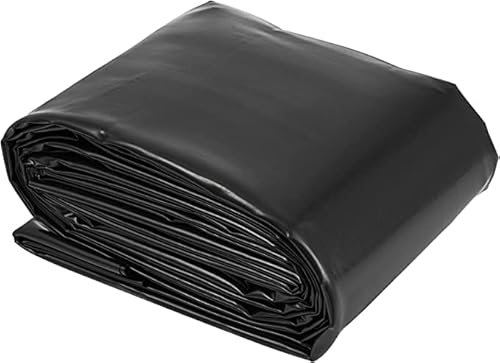
Best for: Medium outdoor ponds where a sturdy, puncture-resistant liner is needed. Thick 20 mil HDPE provides reliable protection for plants and fish with a wider surface area.
- Durability: HDPE is noted as more leak-proof than LDPE, suited for larger outdoor installations.
- Protection: Reduces soil penetration and keeps the pond environment cleaner.
- Longevity: Designed for long-term outdoor use with sun exposure in mind.
Limitation: Some phrasing in the product description is a bit repetitive; verify exact dimensions and cutline to ensure fit for your pond geometry.
UWIOFF 10 x 13 ft Liner (HDPE)
Best for: Medium ponds that require flexibility for custom shapes and potential expansion. The 20 mil liner balances durability with ease of handling during installation.
- Capacity compatibility: Suitable for ponds up to about 500 gallons.
- Material: HDPE provides improved leak resistance over LDPE alternatives.
- Installation: Lightweight and easy to cut; supports creative layouts like streams or waterfalls.
Limitation: While durable, very large or heavily-used systems may benefit from an EPDM alternative for greater elasticity over time.
Garvee 15×20 ft EPDM Pond Liner

Best for: Larger outdoor ponds, waterfalls, and landscaped water features where long-term flexibility and fish safety matter. The 45 mil EPDM provides robustness against UV, punctures, and weather cycles.
- Material strength: EPDM is fish-safe and highly durable; flexible enough to shape around complex features.
- Thickness: 45 mil offers strong puncture resistance and resilience against sun exposure.
- Usage: Ideal for long-term installations where performance and reliability are priorities.
Caution: EPDM can be heavier and more challenging to work with than HDPE during installation; plan cutting and fitting accordingly to minimize seams.
Buying Guide
What pond size and shape should guide my liner choice?
Smaller ponds (under 200 gallons) often suit 7 x 10 ft liners in HDPE, offering ease of handling. Medium ponds (200–500 gallons) can benefit from 10 x 13 ft or 10 x 15 ft liners, with HDPE or the occasional EPDM option for flexibility. Larger ponds and waterfalls benefit from EPDM liners at 45 mil for superior durability.
HDPE vs EPDM: which is better?
HDPE liners are lightweight, easy to cut, and resist punctures well, making them a practical choice for DIY projects. EPDM liners are highly flexible, UV resistant, and long-lasting in extreme conditions, but can be heavier and slightly harder to install. Choose HDPE for simpler installs; choose EPDM for long-term, high-stress outdoor environments.
How important is thickness?
Thickness affects puncture resistance and durability. Common thicknesses are 20 mil for HDPE and 45 mil for EPDM. In busy outdoor settings or under heavy use, the thicker option generally performs better against wear and weathering.
What installation considerations matter?
Plan for adequate clearance around edges, consider ground prep and underlayment, and account for overlaps at seams. Non-toxic materials are essential for ponds with fish and plants. Some liners are easier to cut and shape; others offer stronger seam integrity for larger projects.
Longevity and maintenance
UV resistance, puncture resistance, and chemical stability influence longevity. Regular inspection for tears or punctures and prompt repair will extend liner life. If you anticipate frequent seasonal changes or heavy rainfall, EPDM’s elasticity can be advantageous.
Best practice quick tips
- Choose a liner that leaves room for expansion around irregular pond shapes.
- Consider pre-cut or reinforced edges if you have tricky contours.
- Use a protective underlayment to minimize punctures from rocks or roots.
FAQ
- Q: What is the main difference between HDPE and EPDM liners? A: HDPE is lighter and easier to cut; EPDM is more flexible and UV-resistant for long-term outdoor use.
- Q: Is 20 mil thickness sufficient for all ponds? A: It depends on usage and pond environment; for larger or high-traffic ponds, thicker liners or EPDM may be better.
- Q: Can I install a liner myself without tools? A: Many HDPE liners are designed for tool-free installation, but some sizes may benefit from simple tools like utility knives and measuring tape.
- Q: How do I prevent soil contamination in the pond? A: The liner acts as a barrier; ensure a proper underlayment and seal seams well to minimize seepage.
- Q: Which liner is best for a waterfall feature? A: EPDM liners are often preferred for complex shapes and long-term flexibility around rocks and edges.
- Q: How long will a liner last outdoors? A: Longevity depends on material, thickness, sun exposure, and installation; EPDM generally lasts longer under harsh conditions.