Looking for the best seeds to grow fresh bean sprouts at home? This guide highlights five reliable options ideal for beginners and seasoned sprouters alike. Each product is evaluated for ease of use, germination potential, and suitability for sprouts or microgreens. Whether you want crisp mung bean sprouts for salads or nutrient-dense microgreens for sandwiches, these seeds offer dependable indoor growing results.
| Product | Best For | Key Benefit |
|---|---|---|
| HOME GROWN Mung Beans Seeds Pack | Beginners and high-output sprouters | Over 15,000 seeds in a 1.5 lb pack for steady production |
| Nature Jim’s Sprouts Mung Bean Sprouting Seeds | Budget-friendly, natural seeds | Non-GMO mung beans with vitamins and fiber |
| Organic Mung Bean Sprout Seeds (Sereniseed) | Organic, high germination | USDA organic, organic certification, tested for pathogens |
| Organic Mung Bean Sprout Seeds (TitaniX) | High germination, reliable yields | 95% germination rate, easy to harvest in days |
| Survival Garden Seeds Mung Bean Seeds | High-protein sprouts | Indoor-friendly, soil-free sprouting |
HOME GROWN Mung Beans Seeds Pack 1.5 lb

Best for high-volume sprouting, this 1.5 lb bag contains over 15,000 mung bean seeds. The seeds are suited for both sprouting and microgreen production, delivering consistent, high-yield results for daily meals. The sprouts are ready in 2–5 days with minimal equipment—perfect for busy kitchens. Best for families or home cooks who want a steady supply of fresh sprouts and quick microgreens. A note: larger batches require proper rinsing to prevent mold in humid environments.
Nature Jims Sprouts Mung Bean Sprouting Seeds

Best for those seeking a natural, non-GMO option with nutrient-rich sprouts. These mung bean seeds offer a natural source of fiber, vitamins, minerals, enzymes, and protein when sprouted. The resealable 16 oz bag helps maintain freshness and is ideal for individuals who sprout in small batches or want budget-friendly refills. Choose this for straightforward sprouting with minimal processing, though be mindful of storage to preserve germination potential over time.
Organic Mung Bean Sprout Seeds (Sereniseed)
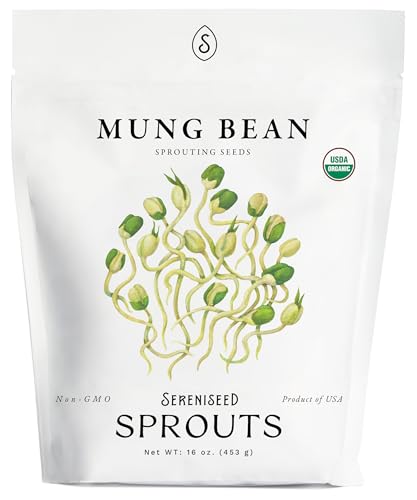
Best for organic-focused growers, Sereniseed’s mung bean sprout seeds are certified organic by Oregon Tilth and non-GMO. They’re open-pollinated and tested for pathogens, offering reassurance for health-conscious kitchens. Data indicates strong germination in favorable conditions, making them a reliable choice for consistent sprouts. A caution: organic certification may come with longer lead times for shipping from some sellers.
Organic Mung Bean Sprout Seeds (TitaniX)

Best for growers who want high germination rates and quick harvests. TitaniX seeds claim a 95% germination rate, enabling thick, crunchy sprouts in just 5–9 days. The organics-focused labeling and non-GMO status support clean, homegrown nutrition. Choose this if you prioritize dependable germination and faster yields, but be aware that batch results can vary with temperature and humidity.
Mung Bean Seeds For Sprouting – Survival Garden Seeds

Best for protein-forward sprouts, these mung bean seeds emphasize high-protein microgreens and easy indoor sprouting without soil. They germinate quickly, producing crunchy sprouts suitable for salads, wraps, and stir-fries. A limitation: results may vary if humidity is too high or jars are not rinsed consistently, which can affect germination quality in some environments.
Nature Jim’s Sprouts 3-Bean Seed Mix

Best for variety, this mix includes organic green peas, lentils, and adzuki beans. It offers a balanced flavor profile and a range of textures for sprouts and microgreens. The mix emphasizes non-GMO seeds and quick sprouting. Caution: flavor and texture vary among beans, so expect some batches to produce different crunch levels.
NATURAL ROOTS Variety Pack Sprouting Seeds

Best for starter kits seeking a mix of flavors, this variety pack includes broccoli, alfalfa, radish, and mung beans. Each pack is one-quarter pound and non-GMO. They’re easy to grow with minimal equipment and no soil. The caveat is that single-bean flavor profiles will differ, so use the mix to diversify rather than rely on a uniform taste.
Buying Guide: How to Choose Bean Sprout Seeds
- What is your primary goal? Sprouting for nutrition, quick harvests, or gourmet microgreens?
- Are organic or non-GMO seeds important to you?
- What is your setup? Jar sprouting, trays, or soil-based systems affect seed choice.
- How much space do you have? Larger packs are suitable for steady, high-volume sprouts.
- What is your climate and storage capability? Some seeds store better in cool, dry places.
Seed Quality And Germination
Look for seeds that specify germination rates or third-party testing. Certified organic seeds are preferable for health-conscious kitchens. Non-GMO labeling can help in choosing seeds that avoid genetic modification, while open-pollinated options support long-term seed saving. For indoor sprouting, seeds that are processed for uniform germination typically perform better in jars or trays.
Storage And Freshness
Store seeds in a cool, dry place and keep them in airtight containers or resealable bags. Light exposure and humidity can reduce germination. Resealable bags and temperature-controlled storage help maintain freshness, especially for extended sprouting projects.
Practical Tips For Successful Sprouting
- Rinse sprouts regularly to prevent mold and ensure even moisture.
- Begin with a small batch to learn your sprouting routine before scaling up.
- Use clean jars, trays, and lids to minimize contamination risk.
- Harvest sprouts when they reach the desired size for your recipe.
Frequently Asked Questions
- What seeds are best for beginners? Mung beans and mixed organic sprout seeds are ideal for beginners due to fast germination and forgiving growing conditions.
- How long do mung bean sprouts take to grow? Sprouts typically reach harvestable size in 2–5 days for the initial sprouts, with microgreens ready in 5–10 days depending on conditions.
- Do organic seeds guarantee organic sprouts? Organic seeds comply with organic standards, but sprouts must be handled in clean environments to maintain organic integrity.
- Can I reuse sprouting equipment? Yes, after thorough cleaning, jars, trays, and screens can be reused for multiple sprouting cycles.
- Are sprouting seeds safe for salads? Yes, when grown and stored properly, mung bean sprouts provide a crunchy, nutrient-rich addition to salads.
- Is non-GMO important for sprouts? Non-GMO seeds reduce the likelihood of genetic modification in the sprouting process and align with certain dietary preferences.