Answering the question “which seeds produce the best sprouts at home?” this guide highlights five reliable seed blends ideal for beginners and seasoned sprouters alike. The top picks cover common microgreen mixes, broccoli sprouts, and varied seed packs that fit small spaces, kitchens, and indoor setups. Each product is chosen for high germination, versatility, and clear growing guidance. Best for apartment dwellers, beginners, health-minded cooks, and anyone seeking quick, nutrient-dense greens in under a week.
Buyer overview table
| Product | Best For | Why Pick It | Notes |
|---|---|---|---|
| Seedboy Organic Non-GMO Sprouting Seeds, Salad Blend | Health-focused starters | Multi-seed mix with alfalfa, broccoli, radish, mung bean, lentil | USA-grown, organic, high germination |
| Nature Jim’s Sprouts Organic Salad Mix | Beginners and busy cooks | 4-seed blend, quick 5-day harvest | Organic and non-GMO |
| Todd’s Seeds Broccoli & Friends Sprouting Mix | Balanced deli-style sprouts | Four-seed mix, crisp and mild | USA-grown, chemical-free |
| Organo Republic Broccoli Sprouting & Microgreens Seeds | Volume growing | 1 lb pack, great germination, versatile systems | Heirloom, non-GMO |
| Microgreen Seeds Variety Pack – 10 Heirloom Types | Flavor and color variety | Assorted microgreens for diversity | High germination, indoor-friendly |
Seedboy Organic Non-GMO Sprouting Seeds, Salad Blend

This 8-ounce bag blends alfalfa, broccoli, radish, mung bean, and lentil seeds. Best for: health-conscious individuals who want a nutrient-dense, versatile mix for salads, sandwiches, and bowls. Selected for high germination rates and USA-grown organic seeds. Caution: sprouting jars and proper rinsing are essential to minimize spoilage and ensure safety. The package includes seeds and growing instructions; jars sold separately.
Nature Jim’s Sprouts Organic Salad Mix
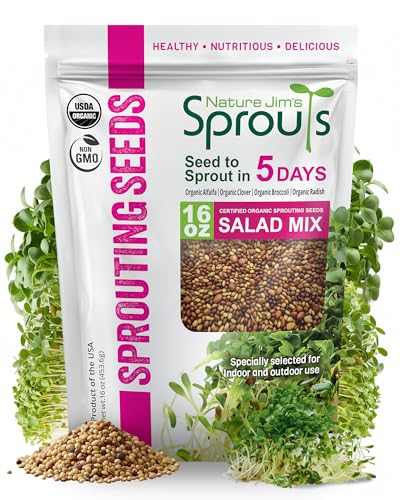
This 1-pound mix combines broccoli, alfalfa, radish, and clover. Best for: newcomers who want a quick 5-day harvest with organic, non-GMO seeds. The blend is designed for easy indoor or outdoor sprouting, offering a balanced flavor profile suitable for salads and garnishes. Note: grow in a clean setup and follow simple daily rinsing for crisp sprouts.
Todd’s Seeds Broccoli & Friends Sprouting Mix

Four-seed deli blend with broccoli, alfalfa, radish, and clover. Best for: those who want a mild, crunchy mix ideal for sandwiches and salads. Selected for its balance—no single seed dominates. Grown in the USA and non-GMO with chemical-free cultivation. Caution: adequate drainage and consistent rinsing support crisp sprouts.
Organo Republic Broccoli Sprouting & Microgreens Seeds

Non-GMO, heirloom broccoli seeds offered in a 1 lb bag. Best for: growers seeking volume for multiple trays, with potential for soil, coconut coir, aerogarden, or hydroponic setups. This pack supports growing up to many microgreen trays due to seed count. Limitation: data emphasizes volume and guides rather than specific germination metrics; follow the included growing guide for best results.
Microgreen Seeds Variety Pack – 10 Heirloom Types

Includes broccoli, pea, sunflower, radish, kale, arugula, beet, cabbage, buckwheat, and alfalfa microgreen seeds. Best for: culinary variety and color in home meals. Data notes high germination and suitability for indoor trays, windowsills, or grow lights. Caution: some varieties may require different light or moisture levels; follow the booklet for best scheduling.
Buying Guide: Key Considerations For Seed Sprouts
- Germination rate and seed quality: Look for organic, non-GMO seeds from reputable sources to maximize sprout yield and flavor.
- Growing method: Decide between jar sprouting, tray sprouting, or hydroponic setups. Some blends work better with jars; others thrive in soil or coir.
- Space and equipment needs: For small spaces, consider compact blends and single-bag kits. Ensure you have a clean, moisture-controlled area.
- Flavor, texture, and nutrition: Mixes with alfalfa, broccoli, radish, and leafy greens provide varied textures and nutrients; radish adds a spicy kick, while broccoli boosts sulforaphane content.
- Shelf life and storage: Keep seeds in a cool, dry place; organic seeds often have shorter shelf lives but fresher germination.
- Safety and cleaning: Rinse sprouts thoroughly to reduce potential bacterial growth. Use clean jars, lids, and water sources.
FAQ
- Q: How long do sprouts take to grow from these seeds? A: Most mixes yield greens in about 5–7 days, depending on variety and growing method.
- Q: Can these seeds be grown in small apartments? A: Yes. Many blends are designed for indoor sprouting with jars or small trays.
- Q: Are these seeds organic and non-GMO? A: Several options in this list are labeled organic and non-GMO; verify per-product details.
- Q: Do I need specialized equipment? A: Basic sprouting jars, trays, and a clean workspace are usually sufficient; some products specify jar compatibility.
- Q: How should I store the seeds before sprouting? A: Keep in a cool, dry place away from sunlight to maintain viability.
- Q: Are there health considerations when sprouting at home? A: Follow food-safety practices, rinse regularly, and discard sprouts if they appear moldy or off-smelling.