If you’re seeking low-effort plant care that keeps soil consistently moist, self-watering stakes are a smart choice. These devices deliver water directly to roots, reducing waste and freeing you from daily watering chores. This guide highlights five reliable options and explains who each is best for, from beginners to seasoned gardeners managing multiple pots. The quick reference table below helps you compare key points at a glance.
| Product | Best For | Notes |
|---|---|---|
| MOONSOUND Self Watering Globes | Indoors and outdoors, busy schedules | Set-and-forget watering with globes |
| Singhoow 8 Pack Self Watering Spikes | Versatile DIY setups | Wick-based system for steady moisture |
| Blumat Classic Self-Watering Stakes | Consistent hydration with flexibility | Ceramic/cone design, adaptable |
| Tcamp Terracotta Watering Spikes | Travelers and large pots | Terracotta, slow release |
| TKSCUSR Plant Self-Watering Stakes | Indoor/Outdoor mix, easy setup | 15-pack option, simple siphon |
These options cover a range of watering styles—globes, spikes with wicks, and terracotta cones—so you can choose based on your plant sizes, bottle compatibility, and travel plans. Each product below includes who it’s best for, why it was selected, and a practical caveat to keep in mind.
MOONSOUND Self Watering Globes

Best for: Busy households and vacation setups. The MOONSOUND globes provide a simple, direct watering method that can sustain plants for several days to a week, depending on pot size and plant water needs. They are easy to use: fill, insert near the root zone, and let water release gradually.
Why selected: The set of 10 globes offers ample coverage for multiple pots and spaces, reducing daily maintenance while supporting steady hydration.
Limitation: Water release rates vary with soil type and plant demand, so test a few pots to calibrate timings before extended trips.
Singhoow 8 Pack Self Watering Spikes

Best for: DIY setups and small-to-medium planters. These spikes come with a capillary wick system that delivers water through built-in wicks, helping maintain steady soil moisture without overwatering.
Why selected: The 8-pack and capillary wick design make it easy to reuse containers and tailor a consistent irrigation strategy across several pots.
Limitation: A common caveat is ensuring the pot has a reliable water source and that you maintain proper spacing (typically four spikes per standard pot) for even hydration.
Blumat Classic Self-Watering Stakes

Best for: Plants that require consistent hydration with flexible layout. Blumat stakes use a ceramic cone siphon to draw water from a reservoir, providing steady moisture to indoor or outdoor plants.
Why selected: The ability to tailor a custom layout with adapters makes this set adaptable to various pot shapes and garden arrangements, reducing the risk of underwatering or overwatering.
Limitation: The system relies on proper setup and a compatible water source; ensure the reservoir is accessible and refillable between trips.
Tcamp Terracotta Watering Spikes
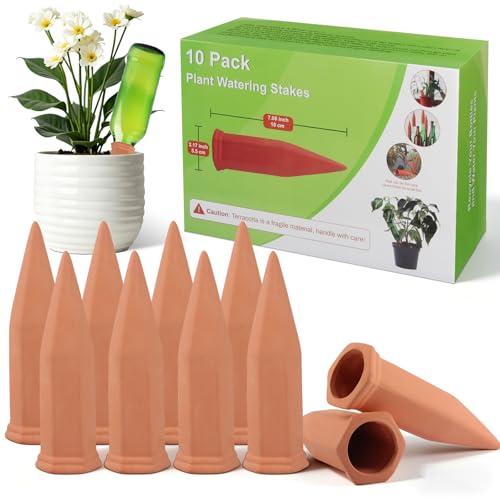
Best for: Travelers and larger planters. Terracotta spikes offer slow, natural water release as the soil dries, making them suitable for longer gaps between watering.
Why selected: The terracotta material provides good permeability, and pairing multiple spikes with larger pots helps maintain consistent moisture over extended periods.
Limitation: Fragility is a concern; spikes can break if mishandled during insertion or when used with very heavy bottles. Pre-soak and test before long trips.
TKSCUSR Plant Self-Watering Stakes

Best for: Indoor and outdoor use with a larger pack option. The 15-pack setup offers a straightforward siphon-based irrigation that waters plants when a water source is available nearby.
Why selected: A higher pack count makes it easy to outfit many pots, ensuring uniform moisture control across a balcony garden or interior collection.
Limitation: As with terracotta-based systems, protect against breakage during handling and ensure all connections are secure to avoid leaks.
Buying Guide: How To Choose The Right Self-Watering Stakes
What watering method fits your plants? Globes are simple and visible, while spikes with wicks deliver a steady, gravity-driven flow. Terracotta spikes provide natural seepage and can last longer with proper handling. Consider your bottle compatibility, pot size, and whether you want a large multi-pack for a greenhouse or balcony.
- Water source compatibility: Do you have long-neck bottles, plastic containers, or wine bottles? Some spikes require specific bottle necks for best performance.
- Pot size and number of plants: Larger collections benefit from multi-pack options to ensure even moisture across all pots.
- Soil type and drainage: Sandy soils dry faster; clay soils hold moisture longer. Choose spikes that align with soil conditions.
- Travel duration: For longer vacations, use multiple spikes per plant or consider a dual-system approach (globe plus spike) for redundancy.
- Durability and care: Terracotta spikes are effective but fragile. Plan for replacement parts or spare spikes when you order.
FAQ
- Do self-watering stakes work for all plant types? Most work for common houseplants, herbs, and small flowering plants. Very large or deep pots may require additional spikes or alternative irrigation methods.
- How long can stakes keep a plant hydrated away from home? It depends on pot size, soil, and plant water needs. Test beforehand; many setups last about 7-10 days for typical indoor pots.
- Will these cause overwatering? When used correctly, they release water gradually as the soil dries. Check soil moisture after installation to avoid overly damp conditions.
- Can I reuse the stakes with different water sources? Yes, most stakes are adaptable, but ensure you clean and dry them between uses to prevent mold or mineral buildup.
- Are there safety concerns with terracotta spikes? They are generally safe but can break if mishandled. Soak before use and insert gently to minimize risk.
- What maintenance is required? Inspect connections, refill bottles as needed, and monitor soil moisture to maintain balanced hydration across pots.