Direct answer: for healthy outdoor plant growth, choose shade tents that balance UV protection, airflow, and ease of use. The top picks below fit common buyers’ needs—potted ornamentals, vegetables, and small raised beds alike. If you want portability, look for pop-up designs; if you need robust wind resistance, prefer tents with stakes and a structured frame. The summary table highlights the standout points of five strong options.
| Product | Best For | Shade Level | Key Benefit |
|---|---|---|---|
| Fantang 2 PCS Pop up Plant Cover Tent | Small pots and shrubs | 80% | Pop-up ease with zipper door |
| Wesnoy 4 Pack Pop up Tent | Multiple beds or plants | UV Top + breathable mesh | Value pack for several areas |
| PURPLE STAR 2 Pcs Plant Shade Covers | Garden rows and shrubs | Top+mesh dual layer | 2-in-1 sun and insect protection |
| Voccos Outdoor Plant Enclosure | Tall plants and variable layouts | 80% shade | Versatile 2-way use with 3 zippers |
| MJZ 2 Pack Plant Shade Tent | Flower beds and potted plants | 50–80% options | Two sizes, easy setup |
Fantang 2 Pieces Pop Up Plant Cover Tent

The Fantang set includes two green garden nets with frames measuring 28 x 28 x 32 inches. Each tent provides 80% shading while still allowing air and moisture to circulate, supporting a comfortable microclimate for potted plants and small shrubs. A zipper entrance allows easy access for watering, pruning, and inspections. Included stakes and a storage bag simplify deployment and storage. Best for: gardeners with a few potted plants or compact plantings who want quick setup and reliable shade. Limitations: the size is fixed, so it may not fit larger containers or sprawling beds.
Wesnoy 4 Pack Pop Up Plant Shade Tent

This set includes four pop-up tents with 16 stakes, designed to protect multiple beds or groups of potted plants. The UV-top and breathable sides balance shade with airflow, helping vegetables, flowers, and shrubs stay cooler in hot climates. A zipper door allows easy access for watering and maintenance. Best for: households with several planting areas needing uniform shade. Caution: windier locations may require extra securing measures beyond the included stakes.
Voccos Outdoor Plant Enclosure Pop Up Tent

This enclosure supports both vertical and horizontal use, fitting tall potted plants or wider beds. It offers up to 80% shade and features three zipper panels for easy access and inspection. Best for: gardeners who need flexibility in layout and easy transitions between standing and laid-flat configurations. Limitation: if you have very large beds, this tent’s footprint may be too small, requiring additional coverage.
MJZ 2 Pack Plant Shade Tent (28x28x33Inch)
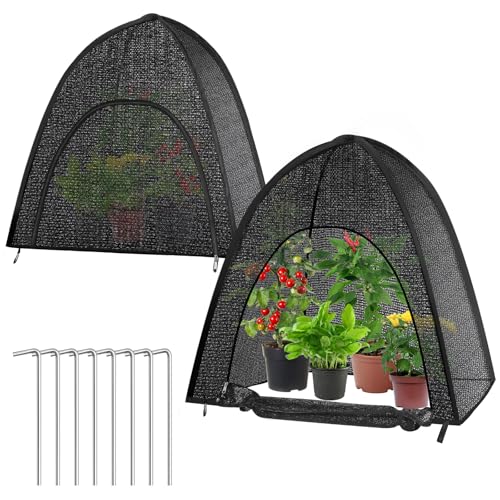
MJZ offers two packs of 28x28x33 inch tents with 50% and 33% shade options. Features include a door curtain design with a zipper, easy setup, and included stakes for stability. Best for: gardeners who want a compact, versatile shade solution for flowers and small vegetables. Choose this if you want two matching units and adjustable shade levels. Limitation: shading levels vary by model, so verify the exact percentage before purchase for your plant needs.
PURPLE STAR 2 Pcs Plant Shade Covers

These two 22x22x22 inch covers combine a sun shade top with an insect-proof lower net. The design aims to block strong direct sunlight while allowing airflow, and the foldable, pop-up readiness makes placement straightforward. Best for: smaller potted plants or compact garden spots where insect protection is a priority. Limitation: smaller footprint may not cover larger pots or crowded arrangements well.
Buying Guide: Key Purchase Considerations
- Shade percentage versus plant type: High shade (60–80%) is good for sun-sensitive plants; lower shade (50%) suits more robust greens. Consider your local sun intensity and plant tolerance.
- Portability and setup: Pop-up designs simplify deployment, especially for seasonal use. If you move plants often, prioritize lightweight frames and quick-access doors.
- Ventilation and airflow: Breathable mesh prevents overheating and supports transpiration. Look for tents with mesh panels and top ventilation options.
- Security against wind and animals: Stakes, pegs, and sturdy frames help resist wind and animal intrusion. Check included hardware and potential need for extra anchoring.
- Access and visibility: Zipper doors and multiple entry points make pruning, watering, and inspection easier without removing the entire shelter.
- Durability and materials: High-density polyethylene is common for shade fabrics; ensure seams are reinforced for longer life and resisting tearing.
- Size compatibility: Match tent dimensions to your plant containers and bed layout. Oversized tents waste space; undersized tents fail to provide adequate shade.
Frequently Asked Questions
- What is the best shade level for most vegetables? Aim for 50–70% shade to balance light and heat; extremely hot climates may benefit from up to 80% shade for sun-sensitive crops.
- Can I use these tents for pest protection only? Some designs offer dual use with insect nets, but verify if the model provides full insect exclusion or primarily protects from birds and wind.
- Are pop-up tents weatherproof? Most are lightweight and designed for shade; they may not withstand heavy wind or rain without additional anchoring.
- Do these tents affect plant watering? Breathable fabric allows moisture through; however, you may need to water more frequently in shaded microclimates.
- How do I choose the right size for my pots? Measure the width and height of the largest plant in the bed or pot and select a tent that provides at least a few inches of clearance on all sides.
- Can I leave them outdoors year-round? These tents are generally seasonal; check product specifications and consider storage bags to extend life when not in use.