| Product | Type | NPK | Best For |
|---|---|---|---|
| Osmocote Smart-Release Plant Food Flower & Vegetable (8 lb) | Balanced granular | 14-14-14 | Vegetable gardens needing steady, long-lasting nutrition |
| Miracle-Gro Shake ‘N Feed Tomato, Fruit & Vegetable (4.5 lb) | Granular with calcium | NPK not labeled here | Tomatoes, fruits, and vegetables; container and in-ground |
| Osmocote Smart-Release Plant Food Flower & Vegetable (2 lb) | Balanced granular | 14-14-14 | Seasonal vegetable plantings and perennials |
| Scotts All Purpose Flower & Vegetable Continuous Release (3 lb) | Continuous release | Not specified | General in-ground gardens; flowers, vegetables, trees, shrubs |
| Burpee Organic Tomato & Vegetable Granular Plant Food (4 lb) | Organic granular | Not specified | Organic veggie gardens and tomatoes |
Slow-release fertilizers provide steady nutrients over weeks or months, reducing dosage frequency and helping plants avoid nutrient burn. This guide highlights five practical options for American vegetable gardens, from synthetic blends with balanced NPK to organic granules. Each option is chosen for reliability, ease of use, and clear suitability for common garden setups such as raised beds, in-ground plots, and container gardens.
Osmocote Smart-Release Plant Food Flower & Vegetable (8 lb)
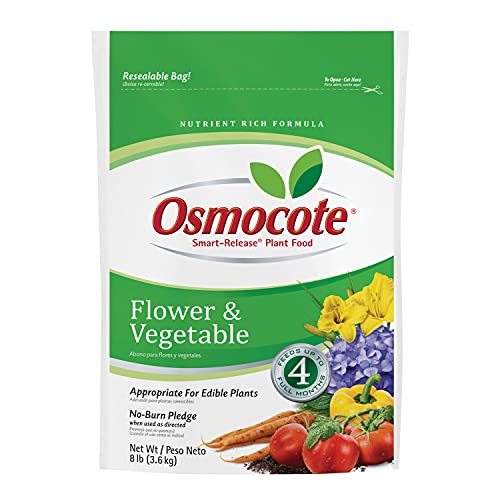
Best for reliable, long-term feeding in vegetable beds. This Osmocote formula uses a 14-14-14 NPK balance and is designed to support strong roots and vigorous top growth. Use the included scoop to apply 1 scoop per 4 sq. ft. and mix into the top 1–3 inches of soil. It’s ideal for outdoor vegetable gardens and mulched areas around ornamentals. The product has decades of testing backing its effectiveness across varied soils and climates.
Who it’s best for: gardeners seeking a proven, all-purpose slow-release option that works with a wide range of vegetables and perennials. Cautions: avoid over-application near established root systems; follow directions to prevent nutrient buildup in sensitive beds.
Miracle-Gro Shake ‘N Feed Tomato, Fruit & Vegetable (4.5 lb)

This product feeds up to 3 months and includes calcium to help form stronger cell walls for better-quality, longer-lasting fruits and vegetables. It nourishes above and below soil and is suitable for in-ground and container plants, including tomatoes, peppers, and other vegetables. The calcium content supports fruit quality, which is a plus for heavy fruiting plants.
Best for: gardeners who want a semi-annual feeding cycle with added calcium for stronger fruit. Use with vegetable and tomato plants in-ground or in containers. Caution: not labeled with a specific NPK mix here; rely on the product’s sustained-release claim and calcium benefits rather than precise nutrient ratios.
Osmocote Smart-Release Plant Food (2 lb)
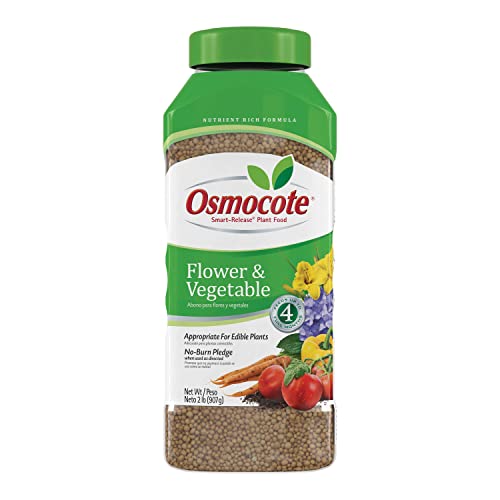
Another Osmocote option with a 14-14-14 formulation, designed for seasonal vegetables and perennials. It covers roughly 40 sq ft per pound and includes directions to mix into the top 1–3 inches of soil. It is ideal for raised beds and mulched plantings, delivering steady nutrients with less frequent applications.
Best for: gardeners who want a compact, easy-to-measure option for smaller plots or container gardens. Better for: established expert setups where predictable, slow release is preferred. Caution: ensure even distribution to prevent pockets of high concentration near roots.
Scotts All Purpose Flower & Vegetable (3 lb)

Scotts All Purpose provides continuous release nitrogen feeding for up to 2 months. It’s suitable for in-ground gardens with a broad range of plant types, including vegetables, flowers, tomatoes, peppers, trees, and shrubs. Its broad labeling makes it a flexible choice for mixed beds and urban allotments.
Best for: gardeners who want a single product to support diverse plantings in a single bed or container garden. Choose this if you need a general-purpose option rather than a crop-specific formula. Limitation: labeling does not specify a precise NPK, which may be less ideal for precise nutrient planning.
Burpee Organic Tomato & Vegetable Granular Plant Food (4 lb)

Burpee’s organic formula delivers nutrients through granules designed for long-lasting feed—up to 3 months. This option is ideal for organic vegetable gardens and tomatoes where synthetic inputs are avoided. It provides a steady nutrient flow without quick-release bursts and supports steady growth throughout the season.
Best for: organic growers seeking a natural, continuous feed for vegetables and tomatoes. Limitation: organic formulas may have slower immediate effects compared to synthetic blends.
Buying Guide: Key Considerations For Slow Release Garden Fertilizers
What kind of fertilizer matches your garden style?
For raised beds and in-ground gardens, granular slow-release formulas like 14-14-14 blends are common. Containers may benefit from lighter applications more frequently or products formulated for pots. Organic options suit organic setups and soil-building goals, while synthetic blends emphasize predictable nutrient release.
Do you need a balanced nutrient mix?
14-14-14 mixes supply nitrogen, phosphorus, and potassium in equal portions, promoting balanced growth. If you want fruit quality and stronger fruit walls, look for calcium-containing blends like Miracle-Gro Tomato formulas. For general landscapes, a universal all-purpose option can simplify feeding schedules.
How long should feeding last?
Most slow-release products aim to feed for several weeks to months. Decide whether you want monthly, bi-monthly, or multi-month intervals. Containers often require more frequent feeding due to faster nutrient leaching.
Is organic gardening a priority?
Organic granular options exist, including Burpee Organic Tomato & Vegetable Granular Plant Food. They support soil biology and avoid synthetic inputs. However, they may release nutrients more slowly than synthetic counterparts and require longer lead times to see results.
What about application ease and coverage?
Coverage depends on bag size and square footage. Read directions to measure scoops and distribution. Equal spread around plant roots helps prevent scorching and ensures even nourishment across beds or pots.
Choosing between in-ground and container use
In-ground setups usually tolerate larger, slower feeds that still reach a broad root zone. Containers benefit from smaller, more frequent applications or products designed for pots, to prevent salt buildup and ensure even root access.
Safety and best practices
Always follow label directions. Water the soil after applying to help release nutrients smoothly. Avoid applying on very dry soil and monitor for signs of over-fertilization, such as leaf tip burn or overall leaf scorch.
Summary of the five recommended products
- Osmocote Smart-Release Plant Food Flower & Vegetable (8 lb) — Strong all-around option for diverse vegetable gardens; long-lasting release.
- Miracle-Gro Shake ‘N Feed Tomato, Fruit & Vegetable (4.5 lb) — Calcium-rich for better fruit quality; feeds up to 3 months.
- Osmocote Smart-Release Plant Food (2 lb) — Compact size for small beds or pots; dependable 14-14-14 formula.
- Scotts All Purpose Flower & Vegetable Continuous Release (3 lb) — Flexible for mixed plantings; up to 2 months of feeding.
- Burpee Organic Tomato & Vegetable Granular Plant Food (4 lb) — Organic option with up to 3 months of feeding.
FAQ
- What is the benefit of slow-release fertilizer for vegetables?
It provides steady nutrients over time, promoting steady growth and reducing the risk of nutrient burn. - Can I use multiple fertilizers in the same garden?
It’s possible, but avoid stacking high-nitrogen products. Space applications and follow label guidelines to prevent over-fertilization. - Is calcium important for vegetable fruit quality?
Yes, calcium helps form stronger cell walls, which can improve fruit quality and storage life. - Are organic options as effective as synthetic ones?
Organic options support soil biology and sustainability, but may release nutrients more slowly and require longer lead times for noticeable effects. - How often should I feed my container tomatoes?
Containers may require more frequent application or a product designed specifically for pots to avoid salt buildup.