Best small aerator options are ideal for homeowners who want targeted soil relief, easier drainage, and healthier grass without a heavy rolling machine. This guide highlights compact, easy-to-use aerators ideal for small yards, edging, and tight spaces. Each selection suits different user needs—from manual precision to quicker rolling action—and each product is described with who it’s best for and why it was chosen. A quick buyer’s table follows to compare core strengths at a glance.
| Product | Best For | Key Benefit |
|---|---|---|
| Saker Manual Lawn Aerator Tool | Small to medium yards; DIY lawn care | High spike count for efficient multi-hole aeration |
| Walensee Lawn Aerator Spike (15 Spikes) | Compact lawns with patchy areas | Three-row layout for better coverage |
| Onadak Lawn Aerator | Efficient aeration with simple setup | 15 sharp spikes for fast soil penetration |
| LawnVigor Manual Core Aerator | Soil plugs for deep aeration in small lawns | Hollow tines for easier plug removal |
| THUNDERBAY 18-Inch Rotary Spike | Quick coverage in small-to-medium lawns | Long spike roller for speed and efficiency |
These options emphasize ease of use, portability, and practical design choices that aid beginners and seasoned gardeners alike. Each product section below explains who benefits most and why it was included in this list.
Saker Manual Lawn Aerator Tool

Best for budget-conscious buyers who want a straightforward, manually powered aerator with multiple spikes. The tool features 15 iron spikes and an adjustable height to suit different users. It is designed to penetrate compacted soil and improve drainage, air circulation, and root access. The dual-layer spring design helps reduce soil clumping during use, supporting a steadier operation. A caution: ensure soil moisture is appropriate before use for optimal results. Best for: small to medium lawns and DIY lawn improvement projects.
Why selected: The Saker model combines a robust spike design with practical handling, making it a solid first choice for homeowners who prefer manual operation and a simple setup. It emphasizes efficiency with 15 spikes per step, which can speed up aeration compared with single-row tools.
Caution: Soft or overly dry soil can affect penetration effort; water the area if soil is too dry before use.
Walensee Lawn Aerator Spike 15 Spikes

Best for small lawns that need targeted soil relief and easier edge work. The Walensee model uses 15 sturdy iron spikes with a three-row layout to cover more ground per step, improving efficiency for patchy areas and lawn edges. It avoids the discomfort of spike shoes and provides steadier footing than some strap-based alternatives. Best for: small lawns, borders, and spot aeration where precision matters.
Why selected: The three-row spike arrangement increases hoe-like coverage, helping users treat uneven patches more quickly. Its straightforward, non-shoe design reduces adjustment hassles during long sessions.
Caution: While efficient, it still requires proper manual effort; areas with very hard soil may need multiple passes.
Onadak Lawn Aerator

Best for users seeking a simplified yet efficient aeration tool with a high spike count. The Onadak Aerator uses 15 sharp metal spikes that penetrate deeply, making it suitable for improving air, water, and fertilizer access to roots. It is designed to reduce soil sloughing and support seeding and plant growth. Best for: small to medium lawns where quick, thorough aeration is desired.
Why selected: The design emphasizes durability with a focus on spike performance, helping you achieve better soil contact without complex setup. It is a practical upgrade for seasonal lawn care routines.
Caution: Assembly order matters; follow the included instructions to avoid misalignment that could hinder operation.
LawnVigor Manual Core Aerator
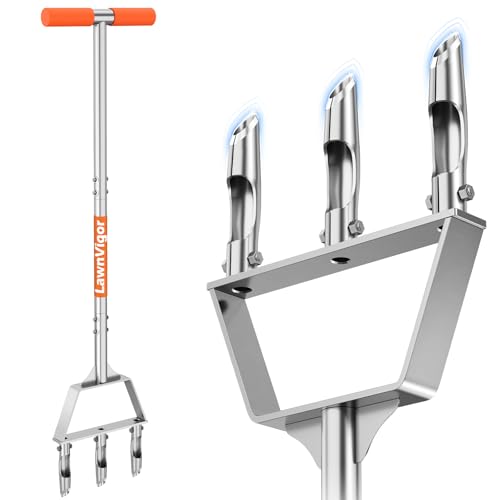
Best for homeowners who want deeper core aeration and easy plug removal. The LawnVigor tool uses three hollow tines, enabling soil plugs to be displaced cleanly, which can improve water infiltration and root access. It is designed to be durable and to maintain penetration depth across use. Best for: small lawns where core aeration is preferred for long-term soil health.
Why selected: Hollow-tine design helps prevent clogging and facilitates deeper penetration compared with solid-tine variants. It is a practical core aerator option for those focusing on soil structure and seedbed preparation.
Caution: Ensure white plastic inserts stay in place to help release soil plugs during operation.
THUNDERBAY 18-Inch Rotary Spike Lawn Aerator

Best for faster coverage in small-to-medium lawns, with a long 18-inch spike roller design. The unit combines a durable steel body with a lightweight rolling mechanism and an extended handle that reduces bending and back strain. Best for: users who want efficient, quick aeration across larger patches without a heavy device.
Why selected: The 18-inch roller spans more ground per pass, which can significantly cut aeration time for typical home lawns. The ergonomic handle design enhances comfort during extended use.
Caution: Heavier use on very compacted soil may require multiple passes to achieve desired penetration depth.
Buying Guide: Key Considerations For Small Lawn Aerators
What yard size and soil type should guide your choice?
Smaller lawns benefit from multi-spike or hollow-tine designs that maximize coverage per push. Softer soils may respond well to any model, while clay or compacted soils perform better with longer spikes or hollow tines for deeper penetration.
Manual vs. rolling aerators: which is right for you?
Manual spike aerators are simple, affordable, and effective for targeted aeration. Rolling models cover ground faster but require more space to maneuver and can be heavier. Choose based on your comfort with bending, space, and how quickly you want results.
Maintenance and longevity considerations
Look for models with durable steel construction, rust-resistant finishes, and removable or replaceable spikes or tines. Hollow tines should come with guidance on plug removal to keep maintenance straightforward.
Safety and ergonomics
Ergonomic handles and padded grips reduce fatigue. Aligning spike length and ensuring stable footing helps avoid slips. For extended sessions, prioritize designs that minimize back strain, such as long handles or rolling systems.
How to use small aerators effectively
Water dry soil before use, trim the lawn to reduce mowing resistance, and aerate in multiple passes or directions for even coverage. Post-aeration care, such as seeding or overseeding, improves results when combined with proper soil moisture and fertilization.
Choosing the right accessory mix
Consider whether you want a model with adjustable height, multi-row spike layouts, or hollow tines. Accessories like gloves, spare spikes, and replacement inserts can extend the tool’s usefulness and comfort during repeated projects.
FAQ
-
What is the main benefit of a 15-spike aerator?
More spikes per pass create multiple air channels, improving drainage and root access in less time.
-
Should I choose a hollow-tine aerator?
Hollow tines remove soil plugs, which can improve seedbed preparation and water infiltration in smaller lawns.
-
Is a rolling aerator better for large patches?
Yes, rolling designs cover more ground quickly and reduce the number of passes needed on larger areas.
-
How do I prevent soil sticking to the spikes?
Water dry soil slightly before aeration, and clean spikes after use to prevent buildup that slows penetration.
-
Can I use these for edges and tight spaces?
Yes, many compact designs are well-suited for lawn edges and small patches where larger tools don’t fit.
-
When is the best time to aerate?
Spring or fall, ideally when the soil is moist but not waterlogged, to maximize penetration and recovery for healthy growth.