Find the right small rototiller for your garden with cordless or corded options designed for tight spaces, raised beds, and small yards. This guide highlights five compact rototillers, detailing who they’re best for and why they fit different gardening needs. Ideal buyers include urban gardeners with limited outlets, hobbyists tending raised beds, and homeowners seeking light soil prep without heavy equipment.
| Product | Brand | Top Use | Why It Stands Out |
|---|---|---|---|
| Saker 22V Cordless | Saker | Small gardens, containers, tight spaces | Cordless convenience, 9″ width, 6.3″ depth |
| Alloyman 20V Cordless | Alloyman | Hard-to-reach spots, lightweight tasks | 2 batteries included, ergonomic design |
| Sun Joe TJ603E | Sun Joe | Lawn and compact beds | 12-Amp power, solid steel tines |
| Muylux 20V Cordless | Muylux | Casual gardening, aeration | Ergonomic grip, 2 batteries |
| POGGT 21V Cordless | POGGT | Seedbeds and raised beds | 2 batteries, folding shaft, safety features |
Saker 22V Cordless Garden Tiller

The Saker Cordless Garden Tiller offers cord-free operation with a compact design ideal for small plots. It features a 9-inch tilling width and 6.3-inch depth, powered by a 360 RPM motor with 4 steel tines. This model suits buyers who want flexibility in tight spaces and backyards without access to a power outlet. The adjustable auxiliary handle improves comfort for extended use. A potential limitation is battery life in larger tasks, requiring planning around charging while working.
Alloyman 20V Cordless Tiller Cultivator
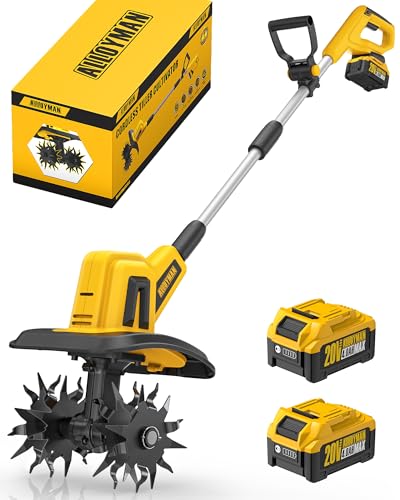
The Alloyman cordless tiller provides mobility for hard-to-reach spots with a 9-inch tilling width and 6-inch depth at up to 360 RPM. It’s best for gardeners who want light, quick soil prep in small gardens or raised beds. The dual-battery setup supports longer sessions, but performance can depend on battery charge and soil hardness. Choose this if you value wire-free operation and compact weight.
Sun Joe TJ603E Corded Tiller

Sun Joe TJ603E delivers robust corded power with a 12-Amp motor and 16-inch tilling width, making it suitable for small- to medium-sized beds and lawn edges. Its 6-steel-angled tines are designed for durability, while the 3-position wheel depth control provides adjustable tilling depth. It’s best for gardeners who have easy access to outlets and want reliable, consistent performance. A limitation is cord management in tight work areas.
Sun Joe TJ604E 16-Inch Corded Tiller

The Sun Joe TJ604E features a 13.5-Amp motor and a 16-inch tilling width with 8-inch depth, offering strong soil turning for medium-duty tasks. The folding handle aids storage and transport, making it appealing for homeowners with limited space. It’s best for those who need a balance of power and manageability. A possible drawback is its heavier corded design compared with compact cordless models.
Muylux 20V Cordless Tiller Cultivator

The Muylux cordless tiller offers a lightweight, ergonomic design with 2 steel tines rotating up to 240 RPM. It’s suitable for quick soil loosening up to 4 inches deep, making it ideal for small beds or garden edging. Best for gardeners who want easy handling and a budget-friendly option. A limitation is shallower tilling depth compared to larger models.
POGGT 21V Cordless Tiller
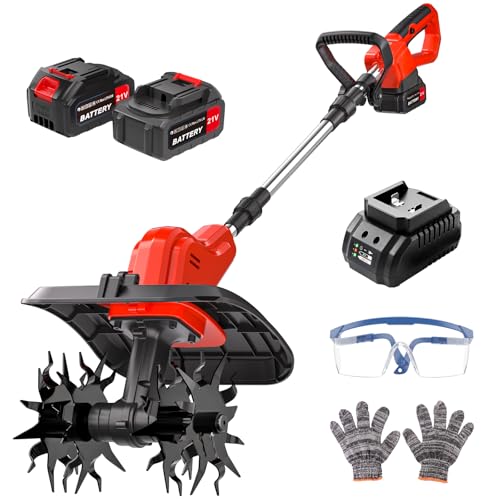
The POGGT model features dual 4.0Ah batteries, a 11.8-inch tilling width, and 6.6-inch depth with a 360 RPM motor. It includes a foldable shaft and a double safety switch, appealing to buyers who prioritize storage ease and safety. Best for gardeners needing longer runtimes and a compact footprint, but battery life can vary with soil conditions and load.
Buying Guide
What matters most when choosing a small rototiller?
- Power source: Cordless vs corded. Cordless models offer freedom to move but depend on battery life; corded units provide consistent power but require outlets and cord management.
- Tilling width and depth: For raised beds and narrow spaces, 9–12 inches wide and 4–8 inches deep usually suffices. Larger beds may require wider tilling but sacrifice compactness.
- Weight and ergonomics: Lighter models reduce fatigue, especially for casual gardeners. An adjustable auxiliary handle and ergonomic grip improve comfort.
- Runtime and battery options: Extra batteries extend sessions; check charge time and expected runtime per task. Foldable handles help with storage.
- Maintenance and durability: Steel tines resist wear and rust. Look for models with easy cleanup and simple tilt/transport features.
Practical Tips for Selection
- Choose cordless if you lack outdoor outlets or need mobility in tight spaces.
- For frequent, larger volume tasks, prefer a corded model with higher torque.
- Raised beds or garden borders benefit from narrower tilling widths to avoid soil disruption outside the beds.
- Detachable or foldable shafts improve storage in small garages or sheds.
Frequently Asked Questions
- What size tiller do I need for a raised bed? A tilling width of 9–12 inches and depth of 4–6 inches is typically sufficient for raised beds and small gardens.
- Are cordless tillers powerful enough for hard soil? Many corded or high-voltage cordless models handle moderately compacted soil, but extremely hard soil may require pre-soaking or a larger unit.
- Can cordless tillers be used in wet soil? Avoid operating in very wet conditions to prevent damage and ensure safety.
- Do tillers with foldable handles save space? Yes, folding handles simplify storage in compact spaces and during transport.
- How many batteries should I own for a cordless tiller? Having an extra battery or two is helpful for longer sessions or heavy-duty tasks, but check the manufacturer’s runtime estimates.
- Is a warranty important for a small tiller? A basic warranty helps cover manufacturing defects and is worth considering when buying any powered garden tool.