Choosing the right terrarium soil is essential for moisture control, drainage, and plant health in enclosed environments. The following selections are formulated to support a balanced terrarium ecosystem, from tropical mini gardens to fairy landscapes. Read on to compare top options, including blends designed for healthy roots, nutrient retention, and microbial balance. Each product is evaluated based on moisture management, drainage, and suitability for closed and open terrariums.
| Product | Brand | Key Benefit |
|---|---|---|
| Terrarium Potting Soil Mix | Soil Sunrise | Drainage and nutrient retention for terrariums |
| ABG Mix Tropical Plant Soil | Josh’s Frogs | Long-lasting, bio-balanced substrate |
| Terrarium Potting Soil Mix | Gardenera | Moisture balance and robust root support |
| Terrarium Bedding | Gardenera | Optimal environment with moisture control |
| Doter Terrarium Potting Soil Mix | Doter | Customized for terrarium moisture needs |
Terrarium Potting Soil Mix By Soil Sunrise

The Soil Sunrise blend is a 100% natural, hand-blended potting mix designed for indoor terrariums and fairy gardens. It is a soilless mix that emphasizes drainage, nutrient retention, and water-holding capacity while promoting toxin breakdown. Its formulation aims to balance moisture so terrarium plants experience steady hydration without waterlogging. This mix is particularly suitable for small closed systems and decorative plant displays that rely on reliable substrate chemistry for longevity.
Josh’s Frogs ABG Mix Tropical Plant Soil

Josh’s Frogs ABG Mix is a trusted, long-lasting substrate designed for tropical plants in terrariums and vivariums. This mix is known for supporting a wide range of plants thanks to its bio-balanced composition that slowly decomposes to maintain structure. It is particularly valued for enabling robust root systems and sustained nutrient availability, helping to sustain microfauna and microbial life essential to a dynamic terrarium ecosystem.
Gardenera Terrarium Potting Soil Mix
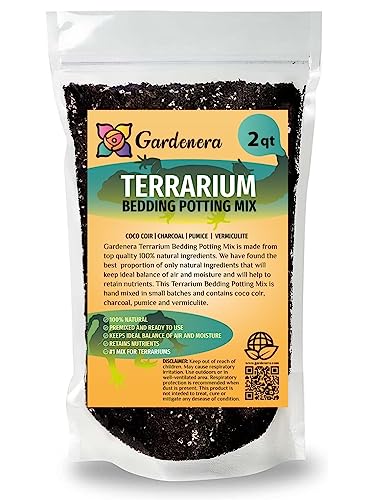
Gardenera’s Terrarium Potting Soil Mix emphasizes a careful moisture balance to prevent both waterlogging and drought stress in terrarium plants. The formulation supports thriving ecosystems by promoting healthy root systems and stable hydration. It is well-suited for both closed-top and open-top terrariums where consistent moisture delivery and aeration are key to plant vitality and overall terrarium health.
Gardenera Terrarium Bedding (Coco Coir Mix)

This Gardenera blend focuses on a premium coco coir-based substrate complemented by charcoal, pumice, and vermiculite to balance air flow and moisture retention. The mix aims to create an optimal habitat by fostering good aeration and moisture control, which supports healthier root systems and resilient plant growth in miniature ecosystems and vertical displays.
Doter Terrarium Potting Soil Mix

Doter’s Terrarium Potting Soil Mix is tailored for terrarium ecosystems, delivering an optimal growth medium with strong moisture balance. The blend is designed to meet the unique needs of plants in enclosed glass environments, promoting healthy foliage and steady hydration without crowding or compaction. It’s a practical option for beginners and experienced hobbyists alike who want reliable performance in small setups.
Buying Guide: Key Purchase Considerations For Terrarium Soils
When selecting terrarium soil, consider these factors to match your enclosure type and plant list. First, assess moisture retention versus drainage: tropical species often require more moisture control, while succulents and moss may need lighter, faster-draining mixes. Second, think about aeration and root health: good pore structure supports robust root systems and microbial life. Third, evaluate compatibility with your enclosure: glass and plastic terrariums may benefit from premium blends designed for high humidity, while open-air setups can tolerate lighter media. Finally, confirm substrate compatibility with your plants: some species benefit from nutrient-rich mixes, others from neutral, inert substrates that reduce salt buildup. Comparing blends by drainage, moisture balance, and long-term stability helps identify the best option for your terrarium project.
Additional perspectives to consider:
- Closed terrariums typically fare better with blends that emphasize moisture retention and slow drainage to prevent drying out between misting cycles.
- Open-top setups benefit from soil with higher aeration and reduced compaction to avoid humidity accumulation that can encourage mold growth.
- Biotic components: some mixes include or support beneficial microorganisms; others are inert and require separate substrates or compost tea for microbial balance.
- Plant compatibility: tropical foliage, ferns, mosses, and air plants have varying root and moisture needs; align your soil choice with the plant roster.
- Maintenance: consider how often you’ll repot or refresh the substrate; blends with longer decomposition cycles can reduce maintenance frequency.