Answer: For heavy, clay-heavy soils, the right soil improver improves structure, drainage, and aeration while fitting different gardening needs. This guide highlights five top options, from plant-based amendments to gypsum and liquid conditioners. The best choice depends on your goals: garden beds, lawns, or container plants, as well as whether you prefer organic methods or faster, liquid results. The following selections suit buyers seeking better root growth, reduced compaction, and longer-lasting moisture management.
Summary table of selected products
| Product | Best For | Key Benefit | Format |
|---|---|---|---|
| Florasoul Clay Breaker Soil Amendment | Organic gardens, veg beds | Plant-based formula; improves drainage & aeration | Powdered/soil amendment |
| MIGHTY109 Red Clay Potting Soil Amendment | Clay soils in beds and pots | Soil structure & moisture retention | 12 oz |
| Down To Earth All Natural Gypsum | Clay soils needing pH-safe loosening | Calcium sulfate; loosens clay without changing pH | 5 lb |
| Espoma Organic Garden Gypsum | Organic-friendly clay loosening | Pelleted gypsum; easy application | 6 lb |
| Monty’s Premium Liquid Soil Conditioner | Lawn and mixed soils | Liquid aeration and moisture retention | 32 oz |
Florasoul Clay Breaker Soil Amendment
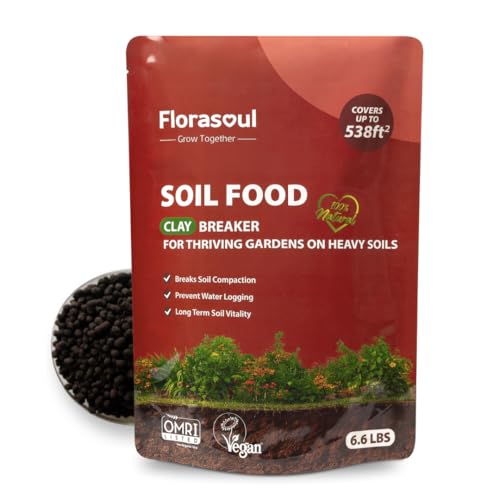
Best for organic gardeners and veggie beds, this plant-based clay breaker uses seaweed and mineral-derived ingredients to soften heavy clay, improve soil structure, and support deeper root penetration. Its vegan formula is suitable for organic practices and vegetative plantings where animal by-products are avoided.
Who it’s for: organic vegetable and flower gardeners who want a chemical-free option that still improves drainage and aeration. Use this if you prefer plant-based amendments over mineral or synthetic compounds.
Limitations: as a plant-based product, results may require longer integration with existing soil biology compared to quick-acting synthetic options.
MIGHTY109 Red Clay Potting Soil Amendment

Best for improving clay soil structure and moisture management, this 12 oz amendment targets soil elasticity and root support. It helps soil retain hydration while promoting a robust root system for healthier plants.
Who it’s for: growers dealing with tight, dense clay in pots or garden beds who want enhanced structure and reduced watering frequency. Choose this when you need a compact, convenient bag with clear soil-stabilizing benefits.
Caution: data suggests improvements in moisture retention; monitor irrigation to avoid overwatering in overly damp zones.
Down To Earth All Natural Fertilizers Gypsum

Best for loosening heavy clay soils with an acid-neutral profile, this gypsum-based amendment supplies calcium and sulfur. It loosens compaction and improves root penetration without altering soil pH.
Who it’s for: gardeners who want a mineral-based solution that is safe for pH-sensitive plants. Use when pH stability is important and clay drainage is a primary concern.
Limitation: gypsum works best if calcium and sulfur needs align with your soil profile; consider a soil test to guide application rates.
Espoma Organic Garden Gypsum

Best for organic gardening, this pelletized gypsum provides a natural method to loosen clay soil and improve root growth. It is mined gypsum with no fillers, designed for easy surface or broadcast application.
Who it’s for: buyers seeking an all-natural, pre-measured product that fits organic gardening practices and allows flexible timing during the growing season.
Limitation: gypsum requires regular applications in heavily compacted soils; results accumulate over time rather than instantly.
Monty’s Premium Liquid Soil Conditioner

Best for lawns and various soil types, this liquid conditioner uses humic acids and organic compounds to improve soil structure, boost moisture retention, and encourage microbial activity. It acts quickly to enhance root growth and overall soil vitality.
Who it’s for: homeowners seeking fast-acting, easy-to-apply solutions for improving clay soils and lawn health. Choose this if you prefer a liquid product for quicker distribution through irrigation or watering.
Limitation: liquids may require more frequent reapplication compared with solid amendments, especially in very dense soils or during drought periods.
Buying Guide: Key Considerations For Clay Soil Improvements
What type of clay soil are you dealing with? Fine, heavy, or compacted clay responds differently to amendments. For quick relief, consider liquid conditioners or gypsum; for longer-term soil biology, plant-based or organic amendments may be preferable.
Should you test your soil first? A basic soil test helps determine pH, calcium, sulfur, and general texture, guiding whether gypsum or organic amendments are best suited to your garden. Tests help avoid unnecessary applications.
Organic vs. mineral-based options: Organic products like Florasoul emphasize plant-based formulations, while gypsum-based products provide mineral nutrients that loosen structure without significantly changing pH. Your choice depends on your preferences and soil needs.
Application timing and method: Gypsum and similar mineral amendments are often broadcast on the surface or tilled in shallowly. Liquid conditioners can be mixed with water for even distribution. Follow product-specific directions for spread rates and reapplication schedules.
Garden type and intensity: For vegetable gardens and flower beds, a combination approach can work—start with a gypsum or mineral amendment to loosen the soil, then use a soil conditioner or compost to build long-term structure and fertility. Lawns may benefit from periodic liquid or granular treatments to maintain even moisture and root health.
FAQ: Quick Answers To Clay Soil Improvement Questions
- Q: Can gypsum be used on all clay soils? A: Gypsum loosens clay by supplying calcium and sulfur, but effectiveness depends on soil chemistry and pH; testing helps confirm suitability.
- Q: Are plant-based amendments better for organic gardens? A: Yes, plant-based formulas support organic practices and reduce reliance on mineral-based additives, though results may vary by soil type.
- Q: How often should I apply these products? A: Frequency depends on soil condition and product type. Gypsum often requires seasonal applications; liquids may need more frequent use; organics may take longer to influence structure.
- Q: Will these products raise soil pH? A: Gypsum typically does not raise or lower pH significantly; it primarily affects structure. Some organic amendments can influence pH slightly over time.
- Q: Is soil testing necessary before buying? A: While not mandatory, a soil test helps tailor applications to your soil’s specific needs and avoids over- or under-treatment.
- Q: Which product is best for lawns? A: For quick improvement, a liquid conditioner like Monty’s can be effective; for long-term structure, gypsum-based or organic amendments may be preferred.