Find the right soil pH test kit for lawns to determine acidity, nutrient availability, and overall soil fertility. This guide highlights five practical options designed for American lawns, ranging from simple at-home strips to professional-style kits. Each pick is paired with a clear reason for who it’s best for, plus a quick note on limitations. Ideal buyers include new lawn owners, homeowners seeking quick readings, and gardeners aiming for precise soil management without lab costs.
| Product | Best For | Why It’s a Good Pick |
|---|---|---|
| Rapitest Soil Test Kit for Gardens, Vegetables, Flowers and Lawns | Beginner homemakers and casual lawn caretakers | Simple capsule system with color comparators; tests pH and major nutrients in a compact kit |
| MySoil Soil Test Kit | Serious lawn enthusiasts wanting lab-like accuracy | Professional-style analysis with 13 plant-available nutrient levels and tailored recommendations |
| SONKIR Soil pH Meter, MS02 | Hands-on testers needing quick 3-in-1 readings | Three-in-one device for moisture, pH, and light without batteries; best for on-the-spot checks |
| Soil Test Kit – 100 Soil pH Test Strips | Budget-conscious testers with many sampling spots | 100 strips covering pH 3.5–9; simple color comparison |
| YAMRON 4-in-1 Soil Moisture Meter | All-in-one digital monitor for moisture, pH, temperature, and light | Clear LCD display and 4-in-1 readings for comprehensive lawn monitoring |
Rapitest Soil Test Kit For Lawns And Garden
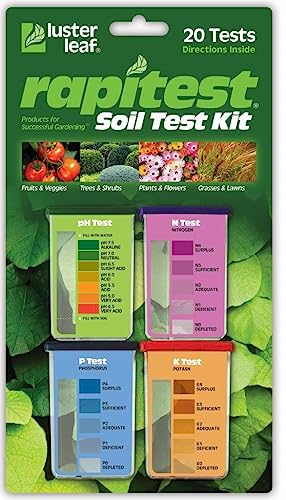
This kit provides quick, at-home results for soil pH and essential nutrients—nitrogen, phosphorus, and potassium. It uses an easy-to-use capsule system and patented color comparators, making it suitable for homeowners seeking fast readings across multiple garden areas. Best for first-time testers who want a straightforward, low-cost option that covers the main soil chemistry variables for lawns and beds.
Best for: Homeowners new to soil testing who need a simple, economical kit that delivers multiple nutrient readings in one go.
Caution: Results rely on proper mixing and color interpretation; misreading color shades can lead to inaccurate conclusions without careful comparison.
MySoil Soil Test Kit

This kit emphasizes a professional-grade analysis with quick turnaround. It claims to provide 13 plant-available nutrient levels and pH, with recommendations tailored to your soil and plant needs. It’s best for lawn enthusiasts who want actionable guidance similar to lab results, without sending samples to a lab. It can be especially useful for lawns with persistent nutrient concerns or poor growth patterns.
Best for: Lawn owners seeking detailed nutrient data and tailored remediation plans to optimize turf health.
Caution: The description notes a 6–8 day turnaround typical of mail-in lab analyses; immediate, same-day actions aren’t possible with this format.
SONKIR Soil Ph Meter MS02 3-in-1

This 3-in-1 device measures soil moisture, pH, and light with no battery required. It’s designed for quick, on-site checks, making it ideal for ongoing lawn maintenance and immediate watering decisions. Best for homeowners who want a compact, multi-function tool without ongoing costs or replacement batteries.
Best for: Homeowners who prefer a battery-free, quick-reference tool for soil moisture and pH in routine lawn care.
Caution: Readouts can be influenced by extremely dry or compacted soil; ensure adequate soil contact and moisture before testing for accurate results.
Dewilde Trading Co. Soil Test Kit – 100 Strips

This set includes 100 soil pH test strips suitable for large yards or multiple sampling points. It measures pH across a broad range (3.5–9) using a simple dip-and-compare method. Best for gardeners who want a budget-friendly option for frequent lawn testing or for projects where color-chart interpretation is straightforward.
Best for: Budget-conscious testers needing many quick checks across a broad area.
Caution: Strips provide pH only and require a color chart interpretation; not a comprehensive nutrient profile.
YAMRON 4-in-1 Digital Soil Tester

This 4-in-1 device measures soil moisture, pH, temperature, and light intensity. The LCD display with backlight makes it easy to read in daylight or darkness. It’s suitable for gardeners who want a single, all-in-one instrument to guide watering, soil amendments, and sun exposure decisions for lawns and landscape beds.
Best for: Lawn owners seeking centralized monitoring of moisture, pH, temperature, and light to optimize irrigation and fertilization decisions.
Caution: Some users may prefer more precise lab-like measurements for pH or nutrient content; this is a quick-reference tool rather than a laboratory substitute.
Buying Guide
What should I look for in a lawn soil pH test kit?
- Scope of measurements: Do you need just pH or a full nutrient profile (N, P, K, etc.)?
- Turnaround time: Do you prefer instant results or lab-like analysis with a delay?
- Ease of use: Are color-based readings acceptable, or do you want digital readouts?
- Budget: How many testing spots do you plan to sample, and is a multi-kit option better?
Choosing by lawn type and lawn-care goals
- New lawns: Start with a basic pH test to determine lime or sulfur needs for better root development.
- Established lawns: A comprehensive kit helps diagnose nutrient imbalances causing thinning or patchiness.
- Vegetable beds adjacent to lawns: A kit with a broader nutrient panel assists in balancing border soil.
Readiness and accuracy considerations
- At-home test strips are quick and inexpensive but less precise than lab analysis.
- Digital meters provide easier interpretation, but battery maintenance or calibration may be required.
- Mail-in or lab-style kits offer more data (often 13+ nutrients) but with a delay.
Water, soil, and testing best practices
- Collect samples from multiple spots across the lawn for a representative reading.
- Avoid testing immediately after heavy rain or drought; consistent moisture gives more reliable results.
- Follow instructions for sample preparation and timing to ensure accurate readings.
FAQ
- What is a good lawn soil pH range?
Most lawns thrive when soil pH is between 6.2 and 7.0, allowing better nutrient availability.
- Should I test pH or nutrients first?
Test pH first to determine lime or sulfur needs; then assess nutrient levels for targeted amendments.
- How often should I test my lawn?
Test at least once per growing season, plus after major weather changes or soil disturbances.
- Can I rely on DIY test strips for precision?
DIY strips are good for trends and general guidance but may not match professional lab accuracy.
- Do these kits replace professional soil analysis?
They provide actionable data for routine care; for complex problems, consider a lab-based test.