Answering the need for precise, actionable soil data, this guide highlights reliable soil sensors for agricultural use. It targets farmers, greenhouse operators, and hobby growers who want better irrigation decisions, healthier crops, and smarter garden management. Each featured product is chosen for clear data, practical deployment, and relevance to common farming setups. Below is a quick summary table of the five selected sensors, followed by detailed sections that explain who each model best serves and why it stands out.
| Product | Brand | Best For |
|---|---|---|
| MTDELE 10Pcs 3.3V Capacitive Soil Moisture Sensor Module | MTDELE | Small-scale Arduino/Raspberry Pi projects; 3.3V systems |
| YAMRON 4-in-1 Soil Moisture Meter | YAMRON | All-in-one home garden or small farm readings (moisture, pH, temp, light) |
| THIRDREALITY Smart Soil Moisture Sensor Gen2 3-Pack | THIRDREALITY | Zigbee-based networks; stable, multi-sensor monitoring |
| Soil Moisture Meter 12-Zone Wireless | Vodeson | Larger garden beds and raised beds with centralized display |
| AITRIP 10 Pack Capacitive Soil Moisture Sensor | AITRIP | Multiple sensor deployments; corrosion-resistant and flexible power |
MTDELE Capacitive Soil Moisture Sensor Module

Best for small, voltage-sensitive projects that run on 3.3V systems. This capacitive moisture sensor module is compatible with Arduino and Raspberry Pi setups, with a compact size of about 98 x 23 mm and an output voltage range of 0-3.0V DC. It helps monitor soil moisture without relying on resistive probes that corrode over time. Choose this when you need a cost-effective, straightforward moisture readout for hobbyist or light commercial uses.
Best for: hobbyists or small farm tasks using 3.3V microcontroller boards. It’s also suitable for quick prototyping where sensor longevity and simplicity matter. Caution: data accuracy can vary with calibration and soil type; plan to calibrate to your soil profile for best results.
YCCMSM13 7-in-1 Soil Sensor

This multiparameter kit combines moisture, temperature, humidity, EC, pH, and more into a single RS485 Modbus-ready sensor. It’s best for growers who want centralized data streams across larger installations or integrated control systems. The RS485 interface supports reliable long-distance communication, making it a better fit for commercial greenhouse layouts. Caution: integration requires compatible RS485 hardware and software, which may add setup complexity.
Best for: larger operations or researchers needing 7-parameter soil data with robust communication. Better for: systems that require distance-friendly, wired networking. Avoid: simple, single-parameter monitoring where a basic moisture probe would suffice.
YAMRON 4-in-1 Soil Moisture Meter

Designed as a versatile, all-in-one tester, this model measures soil moisture, pH, temperature, and light intensity. Its large LCD with backlight makes readings easy to read in daylight or low-light conditions. It’s suitable for home gardens, nurseries, and small farms where quick, visible feedback matters. Caution: while convenient, it may not offer the precision of professional lab-grade sensors for critical agronomic decisions.
Best for: home gardeners and small commercial operations needing quick, multi-parameter feedback. Choose this if you value a single handheld tool for fast decisions. Avoid: scenarios that demand long-term, high-accuracy soil chemistry data without calibration.
THIRDREALITY Smart Soil Moisture Sensor Gen2 Pack
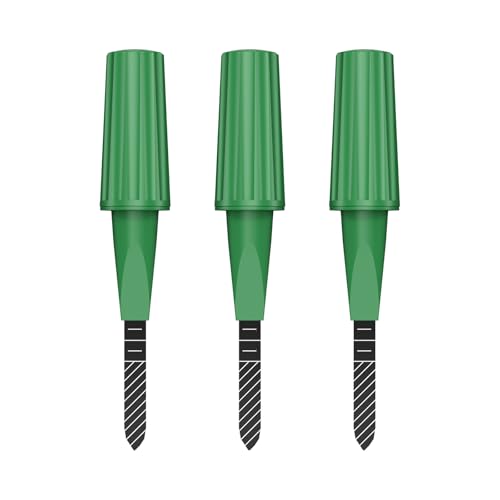
Gen2 sensors emphasize stronger, more stable wireless performance in Zigbee-based networks. They are capacitive, reducing measurement drift due to soil salinity and pH. This makes the trio best for reliable, distributed monitoring in gardens, greenhouses, nurseries, or farms using Zigbee hubs. Caution: a Zigbee hub is required to collect data and integrate with smart systems.
Best for: users already running Zigbee ecosystems (SmartThings, Home Assistant, Hubitat, etc.). Better for: reducing data fluctuations in variable soils. Choose this if you need scalable, stable wireless monitoring and already have a compatible hub.
Vodeson 12-Zone Wireless Plant Monitor

This 12-zone wireless system centralizes monitoring with an LCD display, ideal for larger garden beds, raised beds, or multiple pots. The system lets you set moisture thresholds and receives alerts to prevent over- or under-watering. It also doubles as a soil temperature reader for improved germination timing. Caution: expandability depends on included sensors and the display’s range, so plan layout accordingly.
Best for: larger garden projects requiring centralized oversight. Better for: reducing guesswork across many zones. Avoid: small, single-zone setups where a handheld meter is more cost-effective.
AITRIP 10 Pack Capacitive Soil Moisture Sensor
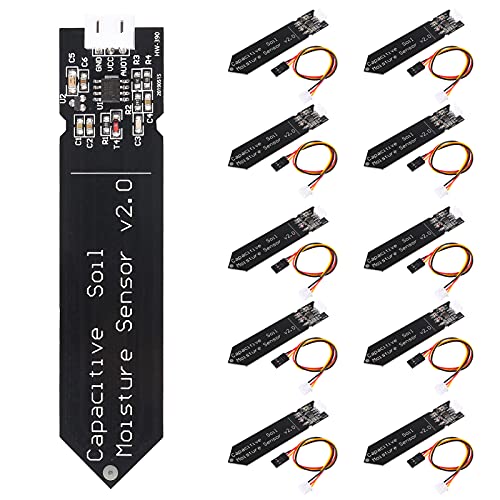
This set uses capacitive sensing to avoid corrosion issues common with resistive sensors, offering extended life in diverse soils. A built-in voltage regulator supports 3.3–5.5V operation, and it can work with 3.3–5.5V Arduino-compatible boards. It’s well-suited for multi-sensor installations in gardens or educational projects where durability and broad compatibility matter. Caution: external ADC or interface may be needed for some configurations like Raspberry Pi.
Best for: bulk deployments and extended-life in varied soils. Better for: projects needing corrosion resistance and flexible voltage operation. Choose this if you plan to scale sensors across a medium-to-large area and want reliable longevity.
Buying Guide: Key Considerations For Choosing Soil Sensors
How to pick the right soil sensor for agriculture depends on scale, integration needs, and data goals. Consider the following questions to align a sensor with your operation.
- What is the size of the area you need to monitor? Small plots may only need a handheld or single probe, while larger fields benefit from multi-zone or wireless systems.
- What data do you require? Moisture alone is sufficient for basic irrigation, but many operations require temperature, pH, EC, or NPK readings for precise cultivation.
- What communication method fits your setup? USB, RS485, Zigbee, or Wi-Fi each serve different networks. Ensure your hub or controller supports the sensor protocol.
- Power and durability? Capacitive sensors tend to resist soil salinity and corrosion better than resistive probes. Power options (battery, USB, or external supply) influence deployment flexibility.
- Calibration and maintenance? Some sensors require soil-specific calibration and periodic maintenance or replacement due to probe wear.
FAQ
- What is a capacitive soil moisture sensor good for?
It reduces corrosion and often lasts longer in varied soils compared with resistive probes, providing more durable moisture readings. - Do I need a Zigbee hub for ThirdReality Gen2 sensors?
Yes, a Zigbee hub is required to collect and route data in compatible smart home or farm networks. - Is multi-parameter sensing worth it for a small garden?
If you want deeper insights and proactive care, a 4-in-1 or 7-in-1 unit can be convenient, but choose based on budget and data needs. - Can I use these sensors with a Raspberry Pi?
Many require an ADC or interface module for Raspberry Pi in addition to a microcontroller like Arduino. - How do I interpret moisture readings for irrigation?
Set a target moisture threshold for your crop type and adjust based on plant stage, weather, and soil properties. - Are Wireless sensors better than wired for large fields?
Wireless sensors are easier to deploy across wide areas, but ensure reliable range and battery life for maintenance planning.