Need to know exactly what your lawn needs to thrive? The top soil test kits for grass provide clear measurements of pH and essential nutrients, helping you tailor fertilization and watering. This guide compares five strong options, highlighting who each kit is best for and where to choose one over another. Ideal for lawn enthusiasts, DIY landscapers, and homeowners aiming for a greener, healthier yard.
| Product | Best For | Key Benefit |
|---|---|---|
| MySoil Soil Test Kit | Lawn fans who want lab-grade accuracy | 13 plant-available nutrients with fast results |
| Rapitest Soil Test Kit (Luster Leaf) | Budget-conscious home gardeners | Easy capsule system and color comparators |
| Soil Test Kit 140 Tests (Dewilde Trading Co) | Comprehensive, long-term monitoring | 40 total tests for holistic fertility |
| NewTest Soil Test Kit 4 Parameters | Beginner to intermediate gardeners | 40 tests across four nutrients with clear guides |
| AKSBTEC 2026 NEW Soil Test Kit 4-in-1 | Repeatable use across different lawn areas | 10 tests per nutrient for 40 total tests |
MySoil Soil Test Kit, Complete & Accurate Nutrient and pH Analysis

Best for homeowners who want lab-grade analysis without guesswork. This kit measures 13 plant-available nutrient levels and pH with recommendations tailored to soil and plant needs. Results typically arrive in 6–8 days via mail-in laboratory analysis, offering a higher level of precision than basic at-home kits. Suitable for lawns, turf, vegetable gardens, and ornamental plantings that require careful fertility planning. A clear advantage is the ability to guide long-term soil management rather than quick fixes.
Best for: homeowners seeking precise, lab-verified nutrient data for lawn and garden planning. Limitations: longer turnaround than quick at-home tests; requires mailing samples.
Rapitest Soil Test Kit for Gardens, Vegetables, Flowers and Lawns
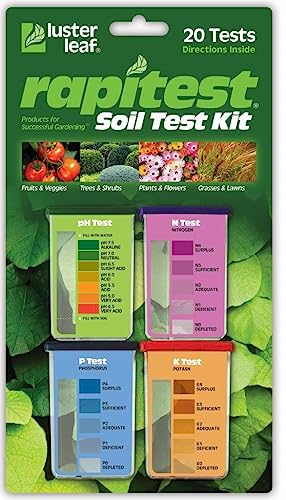
Best for quick, under-$20 testing with straightforward results. This kit uses a capsule system and patented color comparators to estimate pH, nitrogen, phosphorus, and potassium. It includes enough components for up to 20 tests, making it a solid option for seasonal lawn checks or small gardens. Suitable for beginners and budget-minded gardeners who want fast feedback and easy interpretation.
Best for: budget-conscious gardeners needing rapid, simple results. Limitation: not lab-verified; results are color-based and subjective to interpretation.
Soil Test Kit 140 Tests (Dewilde Trading Co)

Best for comprehensive, ongoing soil fertility tracking. This kit provides a broad suite of measurements including pH, ammonia, nitrogen, phosphorus, and potassium. With 140 tests designed for repeated use, it supports long-term lawn and garden fertility management. Ideal for larger lawns, multi-zone landscapes, and gardeners who want a thorough overview to inform fertilizer strategies while avoiding over-fertilization.
Best for: users who want extensive data for ongoing soil health. Limitation: more complex than simple kits, requiring careful reading of results and recommended fertilization plans.
NewTest Soil Test Kit 4 Parameters

Best for beginners who want a straightforward approach to essential nutrients. The kit covers pH, nitrogen, phosphorus, and potassium with 40 tests total, plus a clear guide to step-by-step use. Designed for lawns, gardens, and potted plants, it is a practical choice for homeowners managing moderate-sized landscapes. The emphasis on user-friendly instructions helps reduce testing errors.
Choose this if you want a simple, four-parameter kit with a moderate test count and easy-to-follow directions. Limitation: fewer parameters than full laboratory panels, but adequate for regular lawn care.
AKSBTEC 2026 NEW Soil Test Kit 4-in-1

Best for repeatable use across multiple lawn areas with a clear 4-in-1 focus. This kit measures pH, nitrogen, phosphorus, and potassium, offering 40 total tests (10 per nutrient). It’s well-suited for homeowners who test different zones over time to tailor fertilization plans. The straightforward color-based readout makes it accessible for both beginners and seasoned gardeners seeking consistent results.
Better for: regular monitoring across several lawn sections. Limitation: like other color-based kits, results depend on proper color interpretation and timing of tests.
Buying Guide
- Accuracy vs. convenience: Lab-based analyses (like MySoil) provide precise nutrient data but require mailing samples and waiting. Quick at-home kits (Rapitest, NewTest, AKSBTEC) deliver faster results but may rely on color interpretation and provide fewer data points.
- Scope of nutrients measured: If you only need pH and a few nutrients, 4-parameter kits (NewTest, AKSBTEC) are sufficient. For detailed lawn care and long-term planning, multi-parameter or lab-based options are better.
- Number of tests and reusability: Larger test counts (144–140) support repeated testing across zones or seasons, which is ideal for larger lawns or multi-area landscapes.
- Turnaround time: In-house kits offer immediate results, while mail-in kits trade speed for precision. Consider how quickly you need data to act on lawn tasks like fertilization or liming.
- Ease of use: Beginner-friendly kits provide step-by-step instructions and interpretive guides, reducing user error. Professional or advanced users may prefer detailed charts and color matching.
- Best for lawn type and size: For small-to-medium lawns, at-home kits are usually sufficient. For large lawns or complex landscapes with diverse soil zones, a lab-based or high-test-count kit is more practical.
FAQ
- What’s the difference between a lab test and a home test? Lab tests provide more precise measurements across more nutrients, while home tests offer quick insights and easier handling.
- How often should I test my lawn soil? For established lawns, test annually or after major renovations; for new lawns, test more often during establishing years.
- Which kit is best for beginners? A four-parameter kit or a basic Rapitest kit offers simplicity and clear guidance for first-time testers.
- Do these kits measure micronutrients? Most consumer kits focus on macronutrients (N, P, K) and pH; some lab options include a broader nutrient panel.
- Can I use results to adjust fertilizer exactly? Yes, use results to guide fertilizer type and rate, reducing waste and environmental impact. Follow the kit’s recommendations or consult local lawn care guidelines.
- Is pH the only factor that matters? pH influences nutrient availability; balanced nitrogen, phosphorus, and potassium levels are also essential for turf health.