Choosing the right soil test kit helps you tailor nutrients for thriving vegetables, vibrant greens, and rich harvests. The following five kits offer reliable at-home or near-lab style insights into pH and essential nutrients, with easy procedures and clear guidance for gardeners in American yards and plots. Below you’ll find concise product highlights and practical usage notes to compare options quickly.
Summary of Selected Products
| Product | Brand | Key Benefit | Sample Use |
|---|---|---|---|
| Rapitest Soil Test Kit | Luster Leaf | Fast at-home results; color comparators | pH, N, P, K in 20 tests |
| MySoil Soil Test Kit | My Soil | Professional-level lab-style analysis | 13 nutrient levels; 6–8 day results |
| NewTest Soil Test Kit | NewTest | 40 tests for four parameters | pH, N, P, K with detailed steps |
| Premium Soil Test Kit | Dewilde Trading Co | Long-lasting kit for multiple tests | 40 tests; color guide and tubes |
| Pawfly 4 in 1 Soil Test Kit | Pawfly | Comprehensive 4-parameter kit | 20 strips; 40 tablets; quick results |
Rapitest Soil Test Kit for Gardens
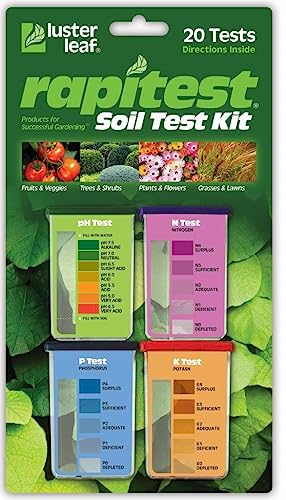
The Rapitest kit from Luster Leaf is a compact, widely used option for at-home soil testing. It provides quick results for soil pH, nitrogen, phosphorus, and potash using a capsule system and color comparators. The kit typically includes all components needed for 20 tests, with five tests per parameter. Its straightforward design suits hobby gardeners who want immediate feedback before planting vegetables or starting a new bed. Results are color-matched to a chart, minimizing guesswork for first-time testers.
Typical usage involves collecting soil from multiple spots, mixing with a provided solution, and comparing the color to the reference scale. While it offers convenience and speed, users should be aware that the results are approximate indicators rather than laboratory-precision measurements. This kit shines for quick planning and routine maintenance, helping you decide when to adjust soil amendments like lime or sulfur, or to adjust fertilization schedules based on overall soil fertility.
For gardeners focused on vegetable beds, Rapitest provides a practical baseline tool. However, if you need highly precise data across multiple soil layers or unusual soil types, pairing with a professional analysis service or a more comprehensive kit may be beneficial.
MySoil Soil Test Kit
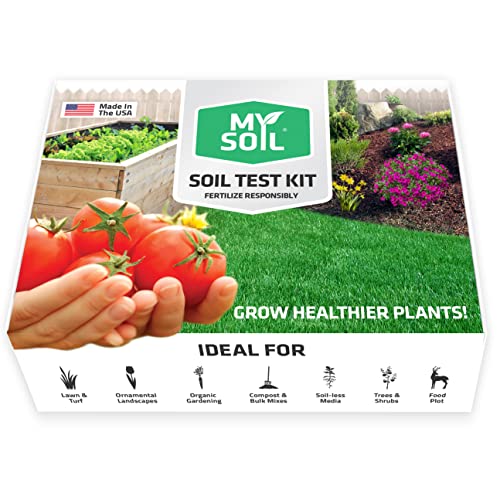
MySoil positions itself as a professional-grade at-home testing option with a focus on accuracy and actionable recommendations. Unlike basic color-changes, this kit emphasizes lab-grade analysis of 13 plant-available nutrients and pH. The results typically arrive as a detailed report within 6–8 days, making it suited for gardeners who want a deeper understanding of soil biology before major planting cycles.
Designed to accommodate various growing scenarios—from vegetable plots and turf to orchards and containers—the MySoil kit aims to inform precise fertilization plans and soil amendments. The inclusion of tailored recommendations helps you translate test data into practical steps, such as adjusting pH to the optimal range for tomatoes, peppers, leafy greens, or root crops. If accuracy and targeted guidance are priorities, this kit offers a robust option for steady soil management.
Keep in mind that the service requires sending samples to a professional lab, so this is less instantaneous than some at-home kits. For ongoing vegetable garden projects where you want to optimize long-term soil health, MySoil provides data-driven insights that can guide season-to-season improvements.
NewTest Soil Test Kit

NewTest markets a 40-test, four-parameter soil testing solution that emphasizes professional-grade accuracy for home gardeners. With ten tests allocated to each parameter—pH, nitrogen, phosphorus, and potassium—the kit is designed for repeated use across a growing season. It includes clear, step-by-step instructions to simplify testing for beginners while maintaining reliability for experienced gardeners.
The kit’s value proposition centers on delivering uncomplicated data that can be interpreted without lab-grade equipment. It’s relevant for those who want to map nutrient trends over time, identify limiting factors, and implement timely amendments. NewTest also positions itself as a practical stepping stone for those who may eventually pursue more comprehensive soil analysis, offering robust testing capacity without professional lab cycles.
Soil Test Kit – 140 Test

Dewilde Trading Co’s 140-test kit offers a comprehensive parameter set for overall soil fertility, focusing on pH, ammonia nitrogen, phosphorus, and potassium. The 4-in-1 design targets broad soil health concerns, enabling lawn, garden, and vegetable plots to gauge fertility levels across multiple yards or beds. Included components typically cover testing strips, tubes, tablets, and a color reference to help users interpret results quickly.
For vegetable gardens, this kit can be valuable for planning season-long nutrient management. The breadth of tests supports tracking changes after lime applications or organic matter additions. Additionally, the kit’s large test count provides ongoing monitoring flexibility, making it suitable for hobbyists who value repeat testing without purchasing multiple smaller kits. Users should be prepared to follow the color guides carefully to translate results into practical amendments.
Pawfly 4 in 1 Soil Test Kit

Pawfly’s 4-in-1 test kit covers essential soil metrics—pH, nitrogen, phosphorus, and potassium—with 20 testing strips and 40 tablets included. The kit is designed for regular monitoring of lawns, gardens, and vegetable plots, offering fast results in minutes. The range on the test strips is set to detect typical home-garden soil variations, and the kit is marketed toward both indoor and outdoor plants.
For vegetable gardeners, Pawfly provides a balanced combination of affordability and practicality, enabling frequent checks without a remote lab or specialized equipment. Its quick turnaround makes it useful for adjusting feeding schedules during growth spurts or after soil amendments. As with other at-home kits, results are best used as guides for general fertility and not as absolute measurements for every plant species in a diverse garden.
Buying Guide: Key Purchase Considerations
- Purpose and precision: Choose a kit whose data resolution matches your gardening goals. If you want quick, actionable steps, a basic color-mimic kit suffices. If you need detailed nutrient profiles for informed fertilization, consider professional-grade or mail-in options.
- Parameters covered: The most common needs are pH and macronutrients (N, P, K). Some kits add ammonia, micronutrients, or extensive nutrient panels. Match the kit to your crop types and soil conditions.
- Testing frequency: For vegetable gardens, regular checks throughout the season help guide amendments. Kits with more tests or easier re-testing support ongoing monitoring.
- Ease of use: Look for clear instructions, minimal mess, and straightforward interpretation. Color charts, quick guides, and included tools influence how easily you can test and act.
- Turnaround time: At-home kits provide results in minutes, while professional lab-based analyses take days. Consider whether rapid feedback or lab-grade accuracy is your priority.
- Cost and value: Compare the number of tests provided, the longevity of components, and whether refills are needed. Long-term kits can be more economical for serious vegetable gardening.
- Environmental considerations: Some tests emphasize avoiding over-fertilization and environmental impact. Favor kits that help you tailor precise fertilizer plans and reduce waste.
When selecting a soil test kit for a vegetable garden, consider how you plan to act on the results. A kit that aligns with your planting schedule, soil type, and crop rotation will yield the most meaningful improvements. For many home gardeners, using a combination of at-home testing for routine checks plus occasional professional analysis for deeper nutrient insight strikes a practical balance.