Answering the common buyer need: a solar electric fence is a low-maintenance way to deter garden pests and protect delicate plants without running electrical outlets. This guide focuses on garden-friendly options, highlighting who each product is best for and why it stands out. It’s especially helpful for homeowners with vegetable beds, decorative gardens, or small patio setups seeking humane, low-noise deterrents. The top picks below emphasize portability, reliability in sun-rich spaces, and adjustable power for different garden sizes and pest types. A quick summary table follows to compare core specs at a glance.
| Product | Best For | Coverage | Output |
|---|---|---|---|
| Gallagher Garden & Backyard Kit | Small to medium gardens | Up to 200 ft | 0.25-0.5J typical |
| Zhangmengge 10 Miles Solar Fence Charger | Dogs, poultry, gardens | Up to 10 miles | 0.16J |
| FarmNix 30 Miles Solar Fence Charger | Larger gardens & livestock adjacents | Up to 30 miles | 0.3-1.5J (adjustable) |
| Epoify 1.2J Stored Energy Charger | Large gardens with deer risk | Up to 45 miles | 1.2J stored energy |
| COVECO 3-in-1 Solar Fence Charger | Multi-species, variable property | 14-20+ miles (varies) | 8k-10kV (adjustable) |
Gallagher Garden & Backyard Pet Protection Kit

This all-in-one kit provides a ready-to-install solution for protecting a small garden. It includes solar energizer, posts, polywire, and a ground rod to form a 200-foot perimeter. The design emphasizes safety and humane deterrence, making it suitable for protecting garden beds from deer, raccoons, and other wildlife while keeping pets safe. It’s best for homeowners seeking a complete, simple setup rather than a modular add-on system.
Best for: small to medium garden plots where a turnkey kit can be deployed quickly. Use this if you prefer an all-inclusive package with clear assembly steps. Caution: ensure full sun exposure for reliable charging, as with most solar-powered kits.
Zhangmengge 10 Miles Solar Fence Charger
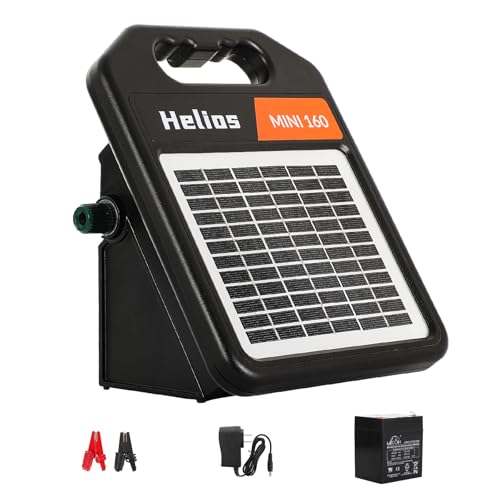
Compact, portable, and designed for strip grazing or small garden boundaries, this model energizes up to 10 miles of fence. It features a built-in solar panel and an internal gel battery, supporting 24/7 protection with day/night operation. This is a solid pick for gardeners who want a lightweight unit that is easy to move between sections of a property.
Best for: gardeners needing a mobile, easy-to-install charger for multiple garden zones or seasonal fencing. Choose this if you value portability and a compact footprint. Limitation: coverage depends on fence efficiency and sun exposure; performance can drop in extended cloudy periods.
FarmNix 30 Miles Solar Electric Fence Charger
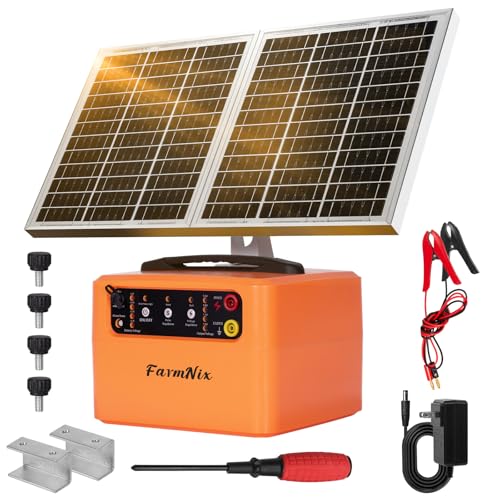
This model targets larger garden plots or adjacent livestock boundaries, offering adjustable output in the 6-12kV range and energy pulses up to 1.5 joules. It is designed for extended coverage and year-round protection with a 15W solar panel and a sealed lead-acid battery. It’s best when more aggressive deterrence is needed to protect crops and perimeter zones.
Best for: large gardens or property lines with a higher risk from larger wildlife. Choose this if you need flexible voltage settings and longer fence coverage. Caution: higher output requires careful placement to avoid accidental contact with non-target animals or pets.
Epoify Solar Electric Fence Charger (1.2J)

This ranch-grade unit delivers real stored energy at 1.2 joules with a high pulse output of 7–11kV, designed for large pastures and multi-zone fencing. It uses a robust solar panel and battery system intended to deliver uninterrupted operation through nights, storms, and difficult weather. It can cover up to 45 miles under optimal conditions.
Best for: larger yards or properties where deer, bears, or other sizeable wildlife threaten gardens. Choose this if you need high energy pulses and long-range deterrence. Limitation: real-world coverage can vary with sun and grounding quality; ensure proper installation for best results.
COVECO 3-in-1 Solar Fence Charger

This model features dual smart alarms (short circuit and improper installation) with a 110 dB detachable siren. It offers adjustable voltage options (8kV, 9kV, 10.2kV) and a substantial 14-day battery backup. It is designed to protect larger perimeters and to provide real-time alerts when the system is compromised.
Best for: gardeners needing robust security features, real-time alerts, and adjustable output for different animals. Choose this if you want audible warnings and a longer catchment during cloudy weather. Caution: the alarm is loud and may require proper mounting to avoid nuisance triggers near human activity areas.
Buying Guide
What garden size and pest type should guide my choice?
For small decorative or vegetable gardens, a kit like Gallagher’s all-in-one solution often provides the simplest setup. For larger plots or mixed wildlife (deer, raccoons, smaller predators), higher-output models such as FarmNix or Epoify are preferable. If you need mobility across seasonal beds, consider Zhangmengge’s portable options.
What about sun exposure and maintenance?
Solar systems rely on daily charging. Ensure full sun exposure for the panel and a reliable grounding system. Look for units with larger panels, higher-capacity batteries, and features like day/night modes to optimize performance in variable weather.
How important are alarms and safety features?
Some models include audible alarms to indicate short circuits or improper installation, which helps maintain perimeter security. If you have curious pets or neighboring wildlife, a model with adjustable voltage and alarms can prevent accidental shocks while keeping predators at bay.
What is a realistic expectation for coverage?
Coverage depends on fence length, animal size, and ground conditions. Most units listed here work best within their stated ranges under ideal sun and proper grounding. For gardens, plan for a perimeter that matches the effective range and consider multi-zone setups for larger yards.
What should I consider when installing?
- Place the charger in a sheltered, sunlit spot.
- Create a strong ground connection to maximize shock effectiveness.
- Follow manufacturer wiring guides to ensure safety.
- Test the system after installation and periodically during seasonal changes.
FAQ
- Q: Can I use a solar fence charger for garden beds that are close to pets?
A: Yes, but choose a lower output setting and monitor pets around the fence to prevent accidental contact. - Q: Do solar fence systems require ongoing maintenance?
A: Minimal maintenance is needed; check solar panel cleanliness and battery health occasionally. - Q: Will weather affect performance?
A: Yes. Extended cloudy periods reduce charging; some units include larger batteries to mitigate this. - Q: How long can a charger power a fence overnight?
A: Most units are designed to store energy for night operation; reliability depends on battery capacity and sun exposure. - Q: Is this safe for children and pets?
A: Most garden-oriented chargers use humane pulses designed to deter, not harm. Always install away from play areas and follow safety guidelines. - Q: Can I use these for deer-proofing a garden?
A: Yes, higher-output models and longer-range units are effective for deterring deer when properly installed.