Finding reliable off-grid power for a refrigerator is essential during outages, camping trips, and remote living. This guide highlights five top solar generators that balance capacity, efficiency, and safety to keep a fridge running when you need it most. Each option pairs strong battery chemistry with solid output, fast charging, and practical features designed for refrigeration loads. Use the buying guide to compare capacities, charging speeds, and expandability so you pick the right fit for your cooling needs.
| Product | Capacity | Continuous Output | Best For | Battery Type |
|---|---|---|---|---|
| Jackery Solar Generator 1000 v2 | 1070Wh | 1500W | Off-grid fridge runs, emergencies | LiFePO4 |
| EF ECOFLOW Delta 2 | 1024Wh | 1800W | Home backup and RV fridge | LiFePO4 |
| Jackery Explorer 2000 v2 | 2042Wh | 2200W | Home backup and travel | LiFePO4 |
| Jackery HomePower 3000 | 3072Wh | 3600W | Essential backup for home fridge | LiFePO4 |
| Hepway P1300 | 1154Wh | 1300W | Refrigerator mode for long trips | LiFePO4 |
Below, each product is examined for refrigerator-friendly performance, including capacity sufficiency, UPS behavior, recharge speed, and expandability. Real-world fridge loads vary by model, but the units listed here provide a robust starting point for keeping perishable food safe during outages.
Jackery Solar Generator 1000 v2 with 200W Panel

The Jackery Solar Generator 1000 v2 combines a 1,500W continuous AC output with a 1,070Wh LiFePO4 battery, designed to power a standard household fridge during outages. Its 3,000W surge allows brief, higher-demand loads without tripping, while the compact 23.8 lb chassis makes it portable for camping, RV trips, and emergencies. One-hour fast charging via dedicated protocols helps restore power quickly, and the LifePO4 chemistry supports extended cycle life, stabilizing performance for long-term use. Ideal as a core fridge backup in smaller homes or mobile setups.
Key considerations for refrigerators
- Fridge startup surges can be high; the 3,000W surge handles initial compressor spikes.
- 1070Wh capacity suits mid-size to compact fridges for several hours to a day, depending on efficiency and ambient temperature.
- Lightweight design supports portability but requires plan for extended outages via solar or grid recharging.
Jackery HomePower 3000 Portable Power Station

With 3,600W continuous output (7,200W surge) and a 3,072Wh LiFePO4 battery, the HomePower 3000 is designed to back up essential home loads, including refrigerators, during outages. Its high wattage makes it a strong option for larger appliances or longer outages, while the UL-listed UPS capability offers seamless switchover within 20 milliseconds, maintaining fridge operation and other critical devices without interruption. The system is well-suited for a home that wants robust, near-seamless power resilience, especially during storms or grid instability.
Key considerations for refrigerators
- UL UPS ensures minimal interruption during power transitions for sensitive equipment.
- Large capacity supports longer fridge runs as part of a broader home backup plan.
- Multiple outlets enable simultaneous charging of devices and appliances beyond the fridge.
Jackery Explorer 300, 293Wh Backup

The Explorer 300 offers a compact 293Wh battery with 300W continuous output, useful for smaller fridges or to supplement power for a higher-energy fridge when combined with energy-conscious usage. It weighs about 7.1 pounds, prioritizing portability for campers and travelers. The unit includes two pure sine wave outlets and USB-C/USB-A ports, enabling efficient charging of devices and small appliances. Its 60W USB-C input/output and rapid recharge options help restore power between uses, though it’s best for light fridge loads or as a supplementary power source in a multi-unit setup.
Key considerations for refrigerators
- Lower capacity means shorter fridge runtime; pair with solar or use in conjunction with other power sources for longer outages.
- Two AC outlets support essential cooling plus additional device charging during an outage.
- Lightweight design enhances transportability for remote locations.
EF ECOFLOW Delta 2 Portable Power Station

The Delta 2 provides 1,024Wh of LiFePO4 capacity and up to 1,800W continuous output, with a surge capacity suitable for a refrigerator startup. The unit is designed for rapid charging, expands easily, and supports multiple expansion batteries to scale up capacity for longer outages. With 15 outlets for powering a wider range of devices and appliances, it’s a strong choice for households seeking a versatile, scalable backup system that includes a fridge as a core load. It combines dependable power delivery with the safety and longevity of LiFePO4 chemistry.
Key considerations for refrigerators
- Expandable capacity is a major advantage for longer outages or larger refrigerators.
- Recharge speed is competitive, reducing downtime between outages and durations away from the grid.
- Reliable pure sine wave AC outlets help preserve compressor health and efficiency.
OUPES Mega 1 Portable Power Station
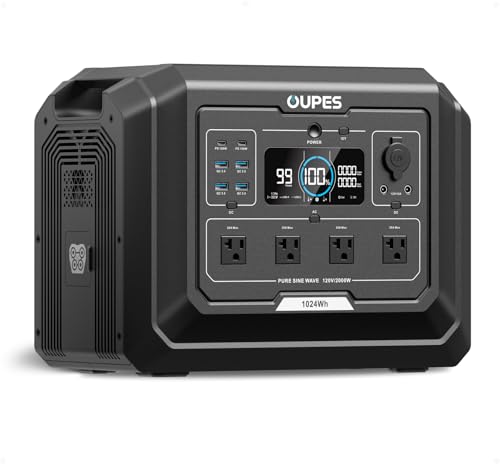
The OUPES Mega 1 delivers 2,000W continuous output (4,500W peak) and 1,024Wh of LiFePO4 capacity, with expandable options to 5kWh through additional batteries. This makes it a strong choice for refrigerators in larger homes or for RV setups where a reliable, scalable solution is needed. It supports rapid charging modes and up to 6 hours of fast solar recharging in ideal conditions, depending on solar input and battery state. The expandable design targets long-term outages and high-demand appliances with confidence.
Key considerations for refrigerators
- Scalability to 5kWh addresses longer outage scenarios and larger fridge loads.
- High surge tolerance supports compressor start-up without immediate shutdowns.
- CTB-like construction and LiFePO4 chemistry favor long service life in outdoor conditions.
ZeroKor Portable Solar Generator

The ZeroKor 300W model offers a compact 300W rating with 280Wh capacity, including a 60W solar panel, ideal for light fridge loads or supplementing power during moderate outages. It provides multiple charging outlets, including AC, DC, and USB ports, plus built-in SOS and flashlight modes for outdoor use. While it’s not designed for long-term fridge operation, it serves as a portable, quick-recharge option for smaller refrigeration devices or as a backup power layer in an ensemble setup.
Key considerations for refrigerators
- Limited capacity means fridge runtime is short; best used as a supplementary unit.
- Included solar panel helps keep it charged in sunny conditions and reduces generator run time.
- Multiple outputs support a small ecosystem of devices during outages.
Buying Guide: Key Purchase Considerations And Comparisons
When selecting a solar generator for a refrigerator, consider capacity, output, and runtime. A fridge typically draws a startup surge far above its running load, so choose a unit with a high surge rating and pure sine wave AC output to protect compressor components. Battery chemistry matters: LiFePO4 offers longer life and stability under frequent charge-discharge cycles, which is valuable for emergency use. If you expect longer outages or want to power more appliances, look for expandable systems or higher-capacity models that remain portable.
Charging speed and source versatility are also important. Models with fast charging, UPS features, and multiple recharging methods (AC, solar, car) minimize downtime. Solar panel compatibility and expandability can dramatically extend run-time in off-grid settings. Assess the number of outlets and whether you need USB-C PD for fast device charging. In RVs or small homes, a balance between core fridge support and portability is often ideal, while a stationary home backup may justify larger capacities and UPS protection.
For fridge-centric use, prioritize:
- Surge capability that comfortably clears compressor startup currents
- Capacity that aligns with fridge size and expected outage duration
- UL-listed or equivalent safety features and robust battery chemistry
- Expandable capacity options for longer outages or larger appliances
- Reliable cooling for multiple days in adverse conditions
In practice, the Jackery, EF ECOFLOW, and Hepway options provide a range from compact and portable to high-capacity home backup. Your choice will depend on fridge size, outage duration, and whether mobility or stationary power is your priority. The combination of capacity, surge handling, and UPS performance will determine how effectively a solar generator keeps your refrigerator running during emergencies.