Protecting your garden from birds, squirrels, deer, and other animals is essential for a fruitful season. This guide highlights five top netting options that balance strong protection with garden-friendly design. Each pick is best for different garden sizes, plants, and animal pressure, helping you choose the right solution without harming wildlife.
Buyer snapshot: the table below compares the five selected products on size, material, and notable features to help you decide at a glance.
| Product | ||||
|---|---|---|---|---|
| Feitore Deer Fence Netting | 7 ft x 100 ft; 3/4 inch mesh | PP (polypropylene) | Medium to large garden beds with deer pressure | 10 nails, 50 cable ties |
| Bird Netting for Garden – RIFNY | 13 ft x 40 ft; 5/8 inch mesh | HDPE | Fluctuating weather; birds, poultry, small animals | Includes ties; landscape staples |
| Ruolan Bird Netting | 13 ft x 20 ft; 0.8 inch x 0.8 inch | Polypropylene | Small to mid-size plant protection | DIY-friendly, reusable |
| Sukh Garden Netting | 13 ft x 33 ft; ~0.8 inch mesh | Polyethylene | Flexible sizing, general bird and animal exclusion | Cuttable to size |
| FEED GARDEN Deer Fence Netting | 7 ft x 100 ft; 3/4 inch mesh | Polyethylene | Comprehensive garden protection in one kit | Stakes and zip ties included |
Feitore Deer Fence Netting For Garden

Best for moderate deer pressure in larger garden beds. The Feitore deer fencing offers a durable polypropylene construction with a 3/4 inch mesh that provides a secure barrier while allowing light, air, and water to reach plants. It includes installation nails and cable ties for quick setup. Best for gardeners who want a reusable, weather-resistant solution that also functions as bird or small animal netting when needed.
Who it’s best for: home gardeners facing deer or larger pest pressure, seeking a reusable barrier that can span long garden borders. Caution: heavy wind or corner sagging can occur without proper staking.
Bird Netting for Garden – RIFNY

Best for varied weather and long-lasting outdoor use. The RIFNY netting uses HDPE material engineered for UV resistance and high/low temperature tolerance, ensuring durability in harsh climates. The 5/8 inch mesh guards fruit trees and vegetables from birds, small mammals, and poultry without limiting growth. It is lightweight, easy to cut, and designed to be reused year after year.
Who it’s best for: gardeners needing a sturdy, weather-resilient barrier in regions with extreme temperatures. Caution: larger pests may require tighter mesh or additional support in windy sites.
Ruolan Bird Netting For Garden
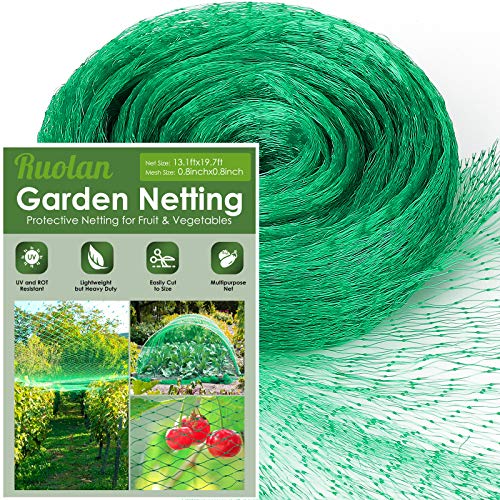
Best for compact projects or single plants. Ruolan’s netting comes in a 13×20 ft size with a 0.8 inch mesh, offering a balance between protection and sunlight penetration. It is reusable and easy to DIY, letting gardeners cut to fit around trees, shrubs, or raised beds. The polypropylene material resists tearing and reduces tangling during deployment.
Who it’s best for: smaller gardens or individual trees where precise shaping is needed. Caution: mesh size is larger than ultra-fine nets, so very small pests may slip through if not properly configured.
Bird Netting for Garden 13x33ft – Sukh

Best all-around value for general bird and animal exclusion. The Sukh net measures 13×33 feet with a 0.8 inch mesh that provides ample sunlight and water passage while discouraging birds, deer, squirrels, and poultry from accessing plants. It’s easy to cut to size and strong enough to withstand regular outdoor use.
Who it’s best for: gardeners wanting a large, adaptable barrier without complex installation. Caution: larger pests may require reinforcement or additional height to prevent lifting at the edges.
FEED GARDEN Deer Fence Netting Kit

Best comprehensive protection in one package. This kit includes a 7×100 ft deer net with 3/4 inch mesh plus 10 stakes and 50 zip ties, designed for easy installation and dependable, multi-season use. The material is UV-protected polyethylene, ensuring that sunlight, water, and air still reach garden plants while providing a durable barrier against deer, birds, squirrels, and rabbits.
Who it’s best for: larger gardens or users who want a full setup ready to install with minimal extra purchases. Caution: longer nets can be cumbersome to handle in small spaces without proper anchoring.
Buying Guide: Choosing The Right Garden Netting
- Size and coverage: Assess your garden area and select a mesh size that balances barrier strength with plant health. Larger nets cover more area but may be harder to manage in tight spaces.
- Mesh size: For birds and small mammals, 0.8 inch to 3/4 inch mesh works well. Smaller pests require finer mesh, but ensure adequate airflow and light.
- Durability and weather: UV protection and material strength extend life in sun, rain, and snow. HDPE and UV-stabilized polyethylene offer good outdoor durability.
- Ease of installation: Kits with included stakes, ties, and hoops speed setup. DIY-friendly options help with irregular layouts or raised beds.
- Reusability: Consider nets that resist tearing, tangling, and rust to reduce replacement frequency and overall cost.
- Plant growth and access: Ensure the netting does not overly restrict air, water, or sunlight. Easy cutting and adjustable edges help protect specific plants without harming growth.
- Animal scope: If deer pressure is high, prioritize sturdier, longer nets with secure anchoring. For birds and squirrels, mesh size and edge design can make a big difference.
Frequently Asked Questions
- What mesh size is best for protecting fruit from birds? Answer: A mesh around 0.8 inch to 3/4 inch typically blocks many birds while allowing light and water to pass.
- Can these nets harm wildlife? Answer: Reputable nets are designed to be non-toxic and non-restrictive to larger wildlife; always ensure the netting is properly installed to avoid entanglement.
- Do nets require maintenance? Answer: Periodic checks for tears or loose ties help maintain protection and extend the net’s life.
- Are nets reusable after weather exposure? Answer: Many nets are UV-stabilized and intended for multi-season use; inspect for wear before reuse.
- Which option is best for raised beds? Answer: Garden netting kits with hoops or frames (like Monirsen or Alphatool variations) provide adjustable coverage over raised beds.
- How do I choose between a full kit vs. standalone netting? Answer: If you want quick setup with included hardware, choose a kit; for a custom layout, select a standalone netting with DIY accessories.