Whether you’re growing herbs on a balcony or starting a compact veggie patch in a sunny corner, stacking planter towers save space and boost yields. This guide highlights top 5 stackable planters ideal for strawberries, herbs, flowers, and small vegetables. Designed for patios, decks, or indoors, these towers balance roots, drainage, and airflow. The best pick depends on space, mobility, and how many tiers you want to stack.
The following table summarizes the featured products to help you compare at a glance.
| Product | |||
|---|---|---|---|
| VECELO 5 Tier Vertical Garden Planter | 5 | Balcony gardens and strawberries | Wheels |
| GameXcel Vertical Planter Tower (Red) | 5 | Indoor/outdoor mixed use, compact spaces | 4 lockable wheels |
| Pure Garden 3-Tier Stacking Planter | 3 | Herbs, flowers, compact decorative stacks | Static (not wheels) |
| Umigy 7-Tier Stackable Tower | 7 | Large herb/flower setups and varied heights | Wheels included |
| VIVOSUN 5-Tier Vertical Planter (2-Pack) | 5 | Beginner-friendly multi-plant setups | Static/optional hanging |
VECELO 5 Tier Vertical Garden Planter

VECELO’s 5-tier stackable planter is designed to maximize compact spaces. The self-watering and drainage features help maintain soil moisture and prevent overwatering, making it suitable for strawberries and herbs in small patios or indoor setups.
Best for: Small patios or indoor spaces where you want a tall, decorative yet productive herb or strawberry tower. The built-in wheels facilitate repositioning on decks or balconies.
Why selected: Five stacked levels provide substantial plant capacity without occupying a wide footprint. It’s especially helpful when you must optimize vertical space while keeping watering simple.
Limitation: The design relies on proper drainage planning; ensure surface drainage or tray placement to manage excess water during heavy rain or overwatering scenarios.
GameXcel Vertical Planter Tower (Red) 5 Tier
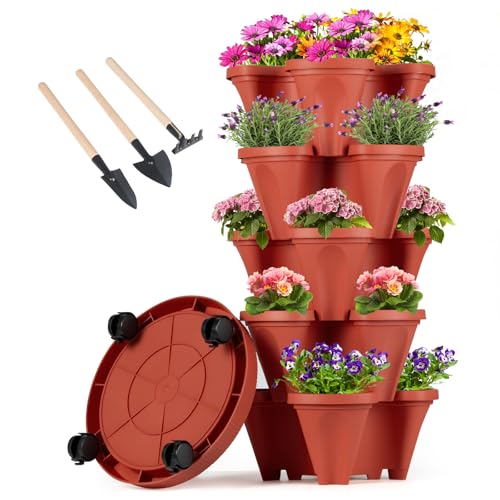
This red GameXcel model stacks five levels on a compact base with four lockable wheels for easy mobility. It features bottom drainage holes to prevent overwatering while keeping pots breathable for roots.
Best for: Gardeners who need mobile vertical planting with reliable drainage to avoid waterlogged soil, especially in multi-season setups.
Why selected: The 360° mobility allows reconfiguring layouts as light shifts, which is helpful for maximizing sun exposure on balconies or near windows.
Limitation: Some users may need to add additional irrigation planning for larger plantings, as the built-in drainage is basic and not a full irrigation system.
GameXcel Vertical Planter Tower (Gray) 5 Tier

This gray variant repeats the five-tier, wheeled design with similar drainage features. It’s best for readers who prefer a neutral look that blends with outdoor furniture and railings.
Best for: Neutral-toned spaces where aesthetics matter alongside function, especially a shared balcony or porch garden.
Why selected: It offers the same practical benefits as the red version, giving you flexibility without compromising space efficiency.
Limitation: Both GameXcel towers assume a stable surface; avoid placing on uneven ground without adjusting feet or bases for level support.
Pure Garden Stacking Planter Tower (3-Tier)
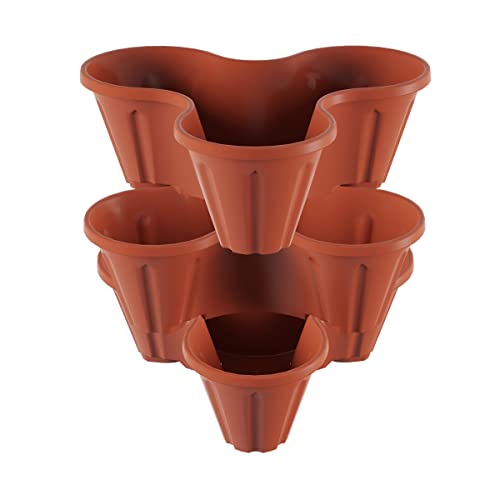
Pure Garden offers a 3-tier stackable design that can hold up to nine plants when fully composed. Made from sturdy plastic, it supports a range of herbs, flowers, and compact vegetables both indoors and outdoors.
Best for: Beginners or gardeners who want an affordable, eye-catching vertical display without wheels for fixed setups.
Why selected: The compact three-tier arrangement is a versatile starting point for creating layered plantings and testing different combinations.
Limitation: Lacks built-in irrigation or mobility features, so water management relies on external watering practices and stable placement.
Umigy 7-Tier Vertical Planter Tower

Umigy provides a taller seven-tier stackable unit, designed to accommodate a broader mix of herbs, flowers, and small vegetables. It includes wheels and tools with the package for easier setup and maintenance.
Best for: Serious space-savers who want a tall, varied planting arrangement and included upkeep tools for efficient gardening.
Why selected: The higher tier count expands creative planting options and allows a staged design for different plant heights and sun exposure patterns.
Limitation: Taller stacks can require stronger supports and careful balance, especially on uneven surfaces or windy spots.
VIVOSUN 2-Pack 5-Tier Vertical Planter

VIVOSUN’s 2-pack offers five-tier vertical stacking with flexible configuration. It emphasizes reuse of durable PP material and suitability for both indoor and garden settings. It supports various stacking combos for multiple plant types.
Best for: Home gardeners starting with vertical gardening who want a scalable solution with the option to configure multiple towers.
Why selected: The dual-pack setup provides a cost-effective way to create larger vertical displays or regional grouping of plants in limited spaces.
Limitation: Some users may need to secure the towers to a stable base or wall for windier outdoor locations to prevent tipping.
Buying Guide: Stacking Planter Essentials
What should you consider when choosing a stacking planter tower?
How many tiers do you need?
More tiers increase plant capacity but require more vertical height and potentially stronger support. For beginners, a 3- to 5-tier model covers a wide range of herbs and compact vegetables. If you have very limited space or want a dramatic display, a 7-tier unit can maximize plant count in a small footprint.
Mobility vs. fixed setups
Wheeled towers offer flexibility to adjust sun exposure and reposition for seasonal light shifts. Static towers are simpler and usually lighter. If you need to move the entire planter frequently, prioritize models with wheels and solid locking mechanisms.
Drainage and moisture management
Effective drainage prevents root rot and overwatering. Look for bottom drainage or built-in channels that funnel excess water away from soil. Self-watering features can help maintain even moisture, especially in hot climates or sunny balconies.
Material durability and maintenance
Sturdy plastic (PP) is common and typically weather-resistant. Some designs use thicker trays or reinforced rims for outdoor use. Reusability and fade resistance are important for long-term color and structure, particularly in exposed sun or rain.
Installation and space planning
Measure your space before purchase. Consider sunlight patterns, surface levelness, and how many plants you’d like to run in a single column. Towers that fit within railings or deck corners maximize usability without crowding walking paths.
Safety and stability
Ensure bases are stable and the structure is balanced, especially for taller towers. If you live in windy areas, secure the base or place on a sheltered surface to reduce tipping risk.
Frequently Asked Questions
- What plants grow best in stacking planters? Herbs (basil, thyme, oregano), leafy greens, strawberries, cherry tomatoes, peppers, and compact flowers perform well in vertical stacks that provide good airflow and drainage.
- Do these planters require special irrigation? Not always. Many have drainage holes or self-watering features. Pair with a light watering schedule and monitor soil moisture to prevent drying or oversaturation.
- Are stackable planters durable for outdoor use? Yes, most are made from weather-resistant plastics designed for outdoor exposure, though placement on stable surfaces and away from strong winds is advised.
- Can I customize the layout of a tower? Yes. Many towers are modular, allowing you to stack, rearrange, or add more tiers as your garden expands.
- Is a wheeled planter better than a fixed one? Wheels provide mobility to chase sun and shade, but fixed towers tend to be simpler and lighter to move occasionally.
- How do I prevent soil from leaking or spilling? Use trays or containment beneath the tower and ensure the potting mix is appropriate for vertical applications to reduce washout during watering.