Answering the common buyer question: sticky traps are a low-toxicity, preventative option for flea beetles and other flying plant pests. They’re best for gardeners seeking toxin-free containment or early-season monitoring. These traps are ideal for potted houseplants, balcony containers, and outdoor garden beds. Below are five well-suited options, each chosen for ease of use, effectiveness against flea beetles and related pests, and practical features like twist ties or stake deployment. A quick buying table follows to highlight key distinctions.
- Best for outdoor gardens with frequent pest activity
- Better for small-to-medium indoor plant collections
- Choose this if you want a larger, multi-pack supply
| Product | Best For | Notes |
|---|---|---|
| Gideal 20-Pack Dual-Sided Yellow Sticky Traps | Homes and patios with flying insects | Includes twist ties; 6×8 inches; non-toxic |
| MAXGUARD 30 Pack Yellow Stake Traps | Organic gardens and container plants | Dual-sided glue; garden-themed stake; easy insertion |
| Garutom 20-Pack Dual-Sided Traps | Indoor/outdoor plants and balconies | Includes twist ties and holders; 6×8 inches |
| Gideal 50-Pack Dual-Sided Traps | Bulk use in larger gardens | More traps; non-toxic; 6×8 inches |
| Gideal 30-Pack Dual-Sided Traps | Balanced supply for mixed indoor/outdoor use | Twist ties included; effective pest capture |
Gideal 20-Pack Dual-Sided Yellow Sticky Traps

Best for: homeowners with a mix of indoor potted plants and outdoor containers. These 6×8 inch traps use bright yellow to attract flying insects including flea beetles, whiteflies, and thrips. They are non-toxic, suitable for indoor and outdoor use, and come with twist ties for easy placement. Limitation: a smaller package size may require more frequent replacement in high-infestation areas.
MAXGUARD 30 Pack Yellow Stake Traps

Best for: organic or low-toxicity pest control in gardens. These traps use a dual-sided, thick glue stake that’s easy to insert into pots or hang on trees. They are designed to interrupt breeding cycles of pests like fungus gnats and whiteflies. Caution: ensure placement away from non-target pollinators, as bright stickers attract many flying insects.
Garutom 20-Pack Dual-Sided Traps

Best for: gardeners needing convenient deployable traps with twist ties and holders. These 6×8 inch traps attract a broad range of flying pests including flea beetles, fruit flies, and aphids. They’re non-toxic and suitable for indoor and outdoor use. Limitation: effectiveness depends on consistent renewal; consider setting a replacement schedule during peak pest seasons.
USKICH 96PCS Fruit Fly Sticky Traps

Best for: bulk monitoring in larger spaces or for long-term tracking. These traps are waterproof and designed to stay in place, making them useful for gardens, kitchens, or greenhouses. Caution: primarily marketed for fruit flies and gnats; verify compatibility with flea beetle control as pest behavior varies by species.
Gideal 30-Pack Dual-Sided Yellow Sticky Traps

Best for: gardeners seeking a mid-size, versatile pack that targets flying plant pests including flea beetles. The traps are non-toxic and suitable for both indoor and outdoor use. Limitation: the 6×8 inch size may require multiple units for larger garden beds or dense canopies.
Catchmaster GRO Yellow Traps
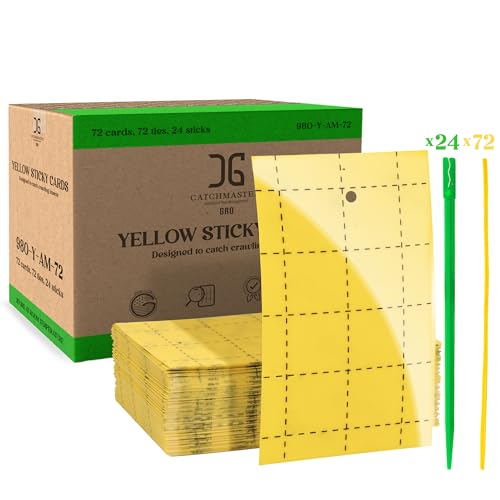
Best for: comprehensive protection in homes, farms, and hydroponic setups. These traps are designed for extended use and can be placed along walls or near plant bases. They’re versatile for different environments. Caution: these are general-purpose traps; verify that flea beetles respond well to the yellow attractant in your specific setting.
Buying Guide: Key Considerations For Flea Beetle Traps
What to look for when choosing sticky traps for flea beetles:
- Size and coverage: 6×8 inch traps offer balance between visibility and placement flexibility; larger fleets are better for big beds.
- Number of traps: Bulk packs reduce replacement frequency and support ongoing monitoring across multiple containers or beds.
- Deployment method: twist ties, stakes, or simple hanging options affect ease of use in pots, balconies, or garden rows.
- Adhesive strength and safety: non-toxic formulations are ideal for homes with pets and children; waterproof or outdoor-ready versions help in varying weather.
- Target scope: while many traps catch multiple flying pests, confirm compatibility with flea beetles and your specific plants.
- Placement strategy: position traps near infested plants, entry points, and along pathways where flea beetles are active.
- Maintenance: replace traps at planned intervals or when they are fully covered to maintain effectiveness.
FAQ: Flea Beetle Traps
- Q: Do yellow sticky traps really work against flea beetles?
A: They attract flying pests with color cues and capture them on adhesive surfaces, helping reduce adult beetle activity near plants. - Q: How often should traps be replaced?
A: Replace when they become fully covered or after a defined interval based on outdoor exposure and pest pressure. - Q: Can I use sticky traps indoors?
A: Yes, especially for potted houseplants or kitchen herbs; keep them away from pets and children. - Q: Are these traps safe around food crops?
A: They are non-toxic and stay away from direct contact with edible parts when placed properly. - Q: Will traps affect beneficial insects?
A: Traps attract many flying pests; place away from flowering plants to minimize impact on pollinators if possible. - Q: Should I combine traps with other control methods?
A: Yes. Traps are a monitoring and suppression tool; combine with cultural practices like crop rotation and proper sanitation for best results.