Answering the common question, these surfactants are designed to improve coverage, penetration, and effectiveness of herbicides and weed sprays. They’re best for DIY lawn care enthusiasts, landscapers treating large turf areas, and gardeners aiming to reduce spray waste. The top picks below are chosen for their non-ionic compatibility, strong wetting properties, and ability to help sprays stick to leaf surfaces. A quick buyer’s table follows to compare key points at a glance.
| Product | Best For | Key Benefit | Notes |
|---|---|---|---|
| 32oz 4X Non Ionic Surfactant | General weed spraying and tank-mix sessions | Highly concentrated, makes 250+ gallons | Great value; nonionic formula |
| Southern Ag Surfactant for Herbicides Non-Ionic | Herbicide sprays with broad weed targets | 80% non-ionic surfactant content | Widely compatible with common herbicides |
| Concentrated Surfactant for Herbicides Non-Ionic 8oz | Smaller spray batches or spot treatments | Increases coverage and penetration | Compact bottle; lean usage |
| Eco Living Solutions Non-Ionic Surfactant | All tank mixes in lawn and garden care | Designed for easy measurement and use | Satchel format simplifies dosing |
| Adios! Spray Boost Surfactant for Herbicides | Maximize existing herbicides, reduce usage | Boosts adhesion to leaves, saves product | Available in multiple sizes |
Below you’ll find product sections with practical buying guidance. Each entry includes who it’s best for, why it was chosen, and a caution to note based on the data available.
32oz 4X Non Ionic Surfactant

Best for: homeowners and DIY lawn care users needing high efficiency with minimal product use. Why: this 4X concentrated nonionic surfactant makes 250+ gallons, offering strong coverage per application and supporting better penetration of herbicides. It’s ideal when you want to stretch your spray solution and improve spread across leaf surfaces.
How it helps: improves product effectiveness by enabling deeper, more even penetration and enhances coverage by lowering surface tension. Caution: highly concentrated formulas require careful dilution; always follow mixing guidelines to avoid oversaturation.
Southern Ag Surfactant for Herbicides Non-Ionic, 128oz
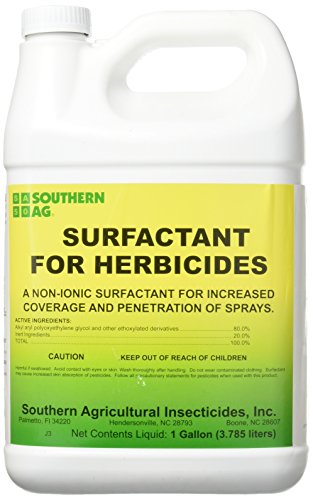
Best for: weed control programs using common herbicides like Trimec, Atrazine, and 2,4-D Amine. Why: with 80% non-ionic surfactant content, it’s designed to increase coverage and penetration of herbicide sprays, helping products reach target plants more effectively.
How it helps: reduces surface tension to improve spread and leaf contact. Caution: check compatibility with your herbicide mix; some formulations may require different surfactant levels.
Concentrated Surfactant for Herbicides Non-Ionic 8oz

Best for: small-batch herbicide applications and spot weed treatments. Why: a compact 8oz concentrate that increases product coverage, penetration, and overall effectiveness—great for targeted weed management.
How it helps: lowers surface tension to improve spread and absorption. Caution: dosing accuracy matters; avoid over-dilution which could reduce effectiveness.
Eco Living Solutions Non-Ionic Surfactant

Best for: gardeners seeking a simple dosing method for all tank mixes. Why: this non-ionic surfactant improves coverage and spray efficiency across a range of applications, and is designed for easy measurement with a satchel format.
How it helps: enhances leaf contact and adhesion of spray mixtures. Caution: ensure you use the recommended 10 ml per gallon to maintain effectiveness.
Adios! Spray Boost Surfactant for Herbicides
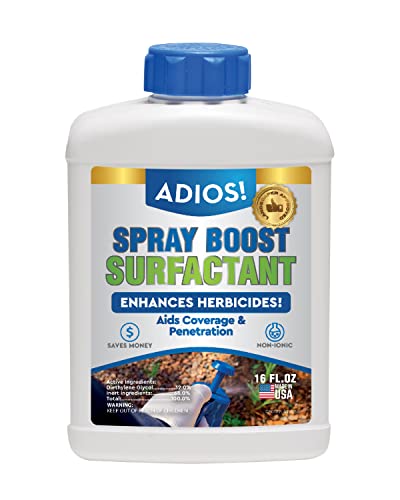
Best for: users wanting to maximize the performance of existing herbicides while reducing the amount of product needed. Why: one bottle can boost effectiveness by enabling better adhesion and absorption, potentially reducing reapplications.
How it helps: acts as a true wetting agent that binds to plants, lowers surface tension, and helps solution stay on leaves. Caution: formulation strength varies with volume; confirm compatibility with your spray volume and target weeds.
Adios! Spray Boost Surfactant for Herbicides 8oz
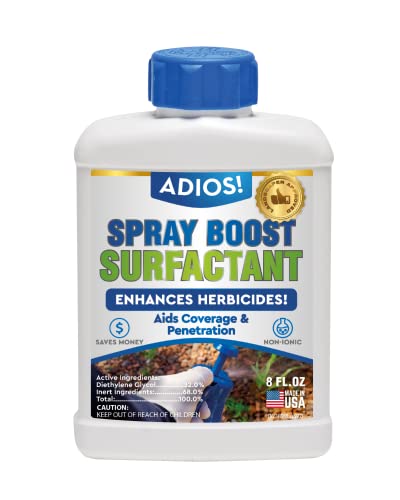
Best for: smaller projects where a compact bottle size is preferred. Why: the 8oz bottle makes about 25 gallons, offering a cost-effective way to improve spray performance on lawn and weed applications.
How it helps: provides enhanced wetting and adhesion, enabling better coverage per spray. Caution: ensure you’re not using more surfactant than recommended, which can lead to excessive spread or run-off.
Buying Guide: Surfactants For Spraying Weeds
What is a surfactant and why add it to herbicide sprays?
A surfactant reduces the surface tension of the spray solution, helping it spread more evenly across leaf surfaces and adhere longer. This can improve penetration and coverage, which may lead to better weed control outcomes when used with herbicides or weed sprays.
Key considerations when choosing
- Non-ionic vs ionic: Non-ionic surFACTants are compatible with many herbicides and less likely to react with salts or certain formulations.
- Concentration and dilutability: Higher concentrates can save money per gallon but require precise mixing.
- Volume and bottle size: Larger volumes are suited for big lawns; smaller bottles fit spot treatments or portable sprayers.
- Compatibility: Verify that the surfactant works with your specific herbicide or tank mix.
- Coverage vs penetration: Some products emphasize spreading; others improve leaf wetting and uptake. Consider your target weed species and spray goal.
How to use effectively
- Follow mixing instructions exactly; add the surfactant after water, before the herbicide, when possible.
- Test a small area first to ensure there’s no phytotoxic reaction on desirable plants.
- Use the recommended dose per gallon; avoid over-application which can lead to run-off or plant damage.
Comparison snapshot
- Best for large-volume needs: 32oz 4X Non Ionic Surfactant (high concentration, makes 250+ gallons).
- Best for compatibility with common herbicides: Southern Ag Surfactant Non-Ionic (high practicality across herbicides).
- Best for small batches: 8oz Concentrated Surfactant (compact and precise).
- Best for simple dosing: Eco Living Solutions Satchel format (easy to measure).
- Best for boosting existing herbicides: Adios! Spray Boost (adhesion and uptake emphasis).
FAQ
- Do surfactants work with all herbicides? Most non-ionic surfactants are compatible with a wide range of herbicides, but always check the label for compatibility with your specific product.
- Can I mix surfactants with fertilizer sprays? Yes, but verify compatibility and avoid combinations that may cause leaf burn or phytotoxicity.
- Is more surfactant always better? Not necessarily. Excess surfactant can cause run-off, drift, or leaf spotting; follow recommended use guidelines.
- Should I test on a small area first? Yes, test a patch to observe any adverse reactions before broader application.
- Are these products safe for ornamental plants? Most are designed for weed control on turf and non-edible landscapes; keep away from desirable plants and consult product labels for safety guidance.
- Do these surfactants boost all herbicides equally? They improve spread and penetration generally, but the magnitude of benefit may vary by herbicide formulation and weed type.