Need reliable temperature monitoring for compost piles? This guide highlights top options that measure core temperatures accurately, with long probes designed for deep readings. Best for backyard composters, community garden beds, and serious hobbyists who want consistent decomposition and reliable activity readings.
The following table summarizes the five selected models, highlighting their best-fit scenarios and notable strengths.
| Product | Best For | Key Benefit | Pro Tip |
|---|---|---|---|
| STOWBERRY Compost Thermometer 20 Inch | Large compost piles, garden bins | Deep 20″ probe for core readings; clear 2″ dial | Use for full-depth activity zones: Steady, Active, Hot |
| Wirezar Compost Soil Thermometer 16 Inch | General soil and compost monitoring | Sturdy 16″ stem; waterproof design | Ideal for outdoor use in varied weather |
| Garden Weasel 36-Inch Dial Thermometer | Deep compost heaps, professional-grade data | Longest probe in this list; battery-free | Great for large piles where depth matters |
| Yogyro Backyard Compost Thermometer 16 Inch | Home compost piles and garden beds | Color-coded display for quick interpretation | Visual cues speed up decision-making |
| Deep piles and professional-grade readings | Very long stem; clear 2″ dial | Choose for very deep or dense piles |
STOWBERRY Compost Thermometer 20 Inch
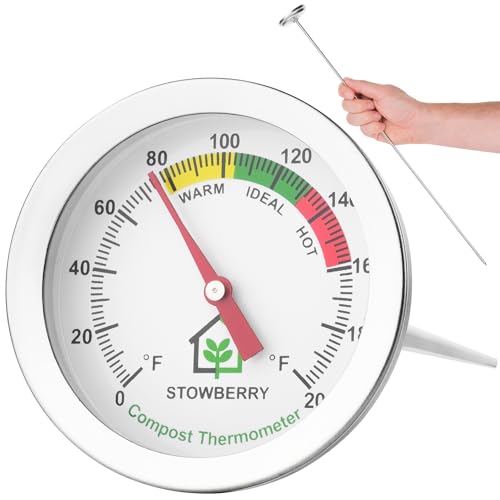
The STOWBERRY 20 Inch stainless steel probe provides accurate core readings for large compost piles. Its long, corrosion-resistant stem reaches deep into bins, tumblers, and heaps. The 2-inch dial displays Fahrenheit temperatures with clearly marked zones for compost activity—Steady, Active, and Hot—facilitating quick interpretation. Best for enthusiasts managing sizable piles where depth is critical. Caution: the long probe may be less convenient for small raised beds or shallow piles.
Wirezar Compost Soil Thermometer 16 Inch

The 16-inch stainless steel stem makes this Wirezar thermometer a versatile choice for monitoring soil temperatures and compost piles. The design emphasizes durability and outdoor reliability, with a waterproof build that withstands rain and moisture. Best for gardeners who want a dependable tool for both garden soil and active compost readings. Choose this if you need a mid-length probe that remains readable in wet conditions. Limitation: not the deepest option among long-stem models.
Garden Weasel 36-Inch Dial Thermometer

The Garden Weasel 36-Inch thermometer stands out for its exceptionally long probe, offering deep readings essential for large compost piles and worm compost setups. It is battery-free and praised for its professional-grade construction and durability. Best for those managing substantial heaps who need a reliable, battery-free option. Caution: the long stem may be less practical in small spaces or shallow beds.
Yogyro Backyard Compost Thermometer 16 Inch
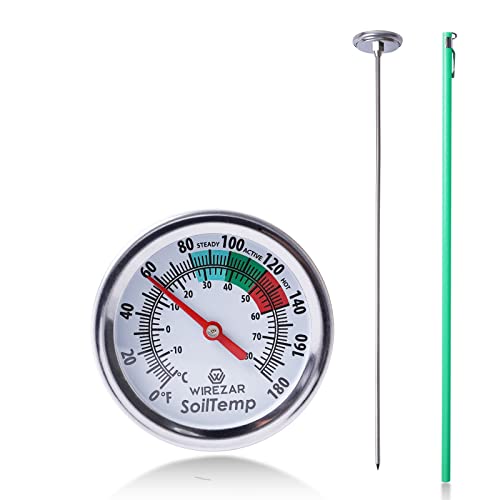
This 16-inch thermometer by Yogyro emphasizes readability with an intuitive, color-coded dial, offering quick status checks of compost activity. Its fully waterproof and fog-resistant dial remains legible under sun, rain, or humidity. Best for home composters who want at-a-glance readings and a corrosion-resistant build. Limitation: color-coding provides quick cues but may require user familiarity with the scale for precise interpretation.
Tellegloww Compost Thermometer 39.4 Inch

The Tellegloww thermometer extends to about 39.4 inches, delivering robust performance for deep or dense compost piles. The 2-inch dial, Fahrenheit and Celsius readings, and a waterproof, corrosion-resistant stainless steel build support reliable measurements in challenging environments. Best for serious composters who need to monitor deep layers. Caution: longer length can raise handling difficulty for smaller gardens.
Buying Guide
Key factors to consider when choosing a compost thermometer:
- Stem length: How deep are your piles? Choose longer probes for deep cores; shorter stems work for raised beds and shallow piles.
- Dial readability: Bigger dials and clear color zones speed interpretation, especially when quick decisions are needed.
- Material durability: Stainless steel that resists rust and moisture performs best in outdoor composting.
- Waterproofing: Outdoor moisture demands waterproof or fog-proof dials to prevent fogging and corrosion.
- Reading speed: Some models provide readings in about 30 seconds; others may take longer. Consider your workflow and whether hourly checks are needed.
- Battery dependence: Battery-free models are low-maintenance and reliable where power access is limited.
- Coverage: For large piles, a longer stem ensures the core temperature is captured rather than surface readings.
How to use a compost thermometer effectively
- Insert the probe into the center of the pile for a core reading.
- Take multiple readings across different areas to assess uniformity.
- Track temperature trends over time to gauge activity and decomposition pace.
- Use zone indicators (e.g., Steady, Active, Hot) to determine when to turn or amend the pile.
Frequently asked questions
- What temperature range indicates active composting? Typical active compost ranges are roughly 100–160°F (38–71°C) for microbial activity, with higher ranges indicating vigorous activity.
- Do I need a waterproof thermometer for compost? Yes, outdoor use benefits from waterproof or fog-proof dials to prevent readings from moisture exposure.
- Is a longer stem always better? Not always; choose a stem length appropriate for your pile depth and available space. Very long stems are ideal for deep piles but may be cumbersome in small locations.
- Should I rely on a digital thermometer? Digital models can be useful, but battery-free analog thermometers offer reliable readings without power concerns in damp environments.
- How many readings should I take? For accurate assessment, take multiple readings across the pile on several days to monitor consistency and trends.
- Can these thermometers double as garden soil thermometers? Yes, most are designed for garden soil and compost, providing versatile utility for planting and maintenance.