For buyers seeking reliable soil insights, the right soil sampling tool makes desktop lab results easier to interpret. This guide presents five top probes suitable for lawns, gardens, and smallfarms, explaining who benefits most from each option and why they stand out. Each product is chosen for durable materials, practical design, and ease of use in field conditions.
Buyer summary table
| Product | Best For | Key Advantage |
|---|---|---|
| Lichtund Soil Probe 12 Inch | Home gardens and potted plants | Two reusable bags, rust-resistant stainless steel |
| Sukiise Soil Sample Probe 12 Inch | Soil profile assessment in clay or loam | Special tube tip design prevents clogging |
| AUZEKER 12 Inch Soil Sampler Probe | General lawn and garden testing | Ergonomic T-handle, durable steel |
| SturdyShape Premium Soil Probe 12 Inch | Consistent sampling across varied soils | Durable stainless steel construction |
| HiHydro 12 Inch Stainless Steel Probe | Soil moisture and composition checks | Two reusable bags for quick labeling |
Lichtund Soil Probe 12 Inch

Material is stainless steel, ensuring rust resistance and durability for repeated use. The T-handle design provides a comfortable grip during sampling, while two reusable bags let you segregate soil cores for lab submission or field notes. Best for home landscapes and plant care where portability matters.
Best for: Home gardeners and hobbyists who value a simple, durable tool with convenient sample storage. Consider this if you want a reliable 12-inch probe with built-in bags for on-site labeling.
Caution: The two bags are reusable but should be cleaned between samples to avoid cross-contamination.
Sukiise Soil Sample Probe 12 Inch
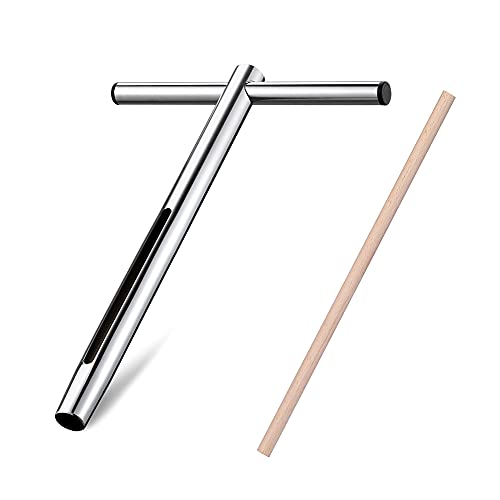
Features emphasize easy extraction from tubes with a design that helps prevent soil compaction and clogging, preserving original soil layers for accurate testing. The probe handles a variety of soil types, including clay and loamy soils, and supports efficient field sampling with a disassemble T-handle for compact storage.
Best for: Field workers and homeowners who need precise soil profiles and minimal disturbance during sampling. Prefer this if your soil varies between clay and loam and you value straightforward tube extraction.
Caution: The description notes a compact form factor; ensure you have enough reach for deep cores in dense soil.
AUZEKER 12 Inch Soil Sampler Probe
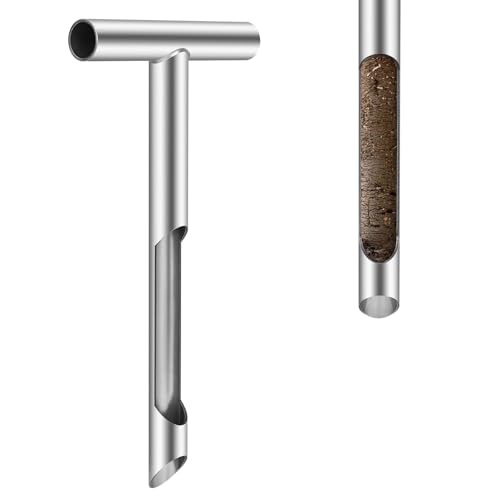
This stainless steel core sampler focuses on accurate soil cores for testing and monitoring. The ergonomic T-handle provides good leverage for manual operation, making sampling more efficient for lawns, gardens, and farms alike. Best for users who want a straightforward tool with strong build quality.
Best for: Gardeners and small-farm operators seeking durability and a comfortable grip for longer sampling sessions. Choose this if you value a robust stainless steel core with a reliable T-handle.
Caution: No additional sample bags are described in some listings, so plan to provide your own containers if your lab requires bags.
SturdyShape Premium Soil Probe Sampler Kit
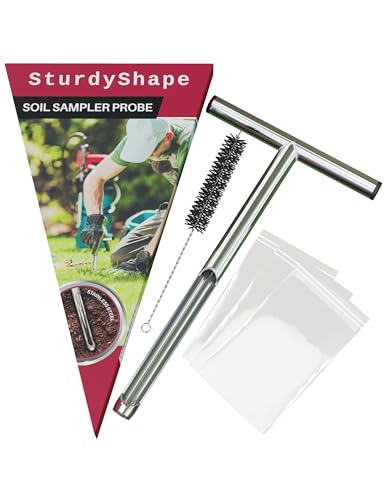
Built from high-grade stainless steel, this 12-inch probe emphasizes longevity and durability for regular soil sampling in yards and gardens. Its tapered tube design facilitates efficient soil core collection, reducing disruption during collection and increasing the likelihood of representative samples for testing.
Best for: Professionals or serious hobbyists who require a sturdy, long-lasting tool with precise core extraction. Opt for this if you prioritize durability and repeatable performance across varied soils.
Caution: The kit’s focus is on durability; buyers who want built-in sample bags should verify whether bags are included in this listing.
AUZEKER 40 Inch Soil Sampler Probe

Designed for deeper sampling with a longer reach, this stainless steel probe includes a T-handle and a foot pedal feature on some variants, enabling less bending and easier deeper insertion. It also notes a handy approach for removing plant roots and debris with an attached tool to improve sample cleanliness.
Best for: Users needing deeper soil cores and enhanced control for large lawns, farms, or plots. Choose this if you require longer reach and more robust removal assistance during sampling.
Caution: The extended length may be more cumbersome for very small beds or dense, compacted soils where maneuverability matters.
Lichtund 35 Inch Soil Probe with Pedal

This model extends reach to 35 inches, combining a T-handle with a side foot pedal for deeper testing without excessive bending. It includes two reusable soil sample bags, enabling on-site labeling and easy transfer for lab analysis. It’s designed for robust field use where long cores are needed.
Best for: Professionals conducting comprehensive soil surveys or large-scale garden testing that require deep cores and hands-off depth control. Choose this if you need maximum reach and a pedal-assisted method.
Caution: The longer length may be heavy to transport and may not be ideal for small containers or tight beds.
Buying Guide
What diameter and length should I choose?
For most home gardens, a 12-inch probe provides sufficient depth to sample typical root zones. Longer models (24–40 inches) are better for larger plots or deeper root zones but can be harder to maneuver in tight spaces.
Is a built-in sample bag important?
Two reusable bags help keep samples organized and labeled for lab submission. If you test multiple locations, bags support clean, separate sample handling and reduce cross-contamination.
What material should I look for?
Stainless steel is preferred for durability, rust resistance, and repeated use. It maintains integrity in varying moisture conditions and across many seasons.
Are ergonomic features worth paying for?
Ergonomic T-handles, pedal-assisted designs, and comfortable grips reduce strain during extended sampling sessions and can improve accuracy by allowing steadier cores.
What else should I consider?
Consider the availability of accessories such as interchangeable tips, tubes or clips, and whether the kit includes replacement parts. Cleaning and maintenance requirements are also important for long-term accuracy and tool longevity.
FAQ
-
What is the main purpose of a soil sampler probe?
To core out a representative sample of soil from different depths for testing soil composition, moisture, and nutrient content.
-
How deep should I sample in a typical lawn?
Aim for 6 to 8 inches in most lawn areas to assess root-zone conditions; deeper sampling may be needed for soil testing programs or specific crops.
-
Do I need two sample bags?
Two bags help keep samples separate and labeled, improving lab submission accuracy and traceability between site locations.
-
Can I use any soil probe for all soil types?
While many probes handle multiple soils, clay soils can clog tubes. Probes with special tube tips or easy extraction designs help mitigate this issue.
-
How do I maintain a stainless steel soil probe?
Clean after use, dry thoroughly to prevent rust, and store in a dry place. If needed, lightly oil moving parts to prevent corrosion.
-
When should I choose a longer probe?
Choose a longer probe when you need deeper cores or sampling across large plots where bending is impractical.