Need a reliable pump to move water for draining pools, rain barrels, or irrigation? This guide highlights five effective transfer pumps, each suited to different users such as homeowners, DIY enthusiasts, and hobbyists. Read on to compare flow rates, lift heights, and practical limits to choose the right model for your task. The table below offers a quick snapshot of the top picks.
| Product | Best For | Key Benefit |
|---|---|---|
| FIDISP Water Transfer Pump | General home drain and ponds | Durable metal build with a 42 ft lift and 5.5 GPM |
| TecHome Water Transfer Pump (5/201) | Lightweight, portable pumping | Includes suction hose and can remove water down to 1/8 inch |
| KITLUCK Water Transfer Garden Pump | Garden irrigation and small drainage | 1000 GPH with 150 ft lift; durable stainless steel body |
| ECO-WORTHY 33-Series | RV, boats, or remote water applications | Smart pressure switch and automatic on/off at 50 PSI |
| VEVOR Cast Iron Water Transfer Pump | Heavy-duty draining and large volumes | Up to 1600 GPH and 120 ft pumping height |
FIDISP Water Transfer Pump — 115V 1/10HP

The FIDISP pump is designed for reliability in residential draining tasks. It operates at 115V with a 1/10 HP motor and includes two 6-foot hoses for flexible setup. It can move up to about 330 gallons per hour and can lift water up to 42 feet, depending on head height. A built-in waterproof switch provides safe on/off operation, and its metal construction enhances durability in routine use. Best for: homeowners needing a compact, sturdy option for rain barrels, hot tubs, pools, or aquariums. Limitation: performance declines with higher lift requirements.
TecHome Water Transfer Pump — 330 GPH

The TecHome 115V unit provides a compact, portable solution with a 330 GPH maximum flow and a 6-foot suction lift. It ships with a 6-foot suction hose and a water suction strainer, plus an impeller replacement kit for maintenance. It is non-submersible, so avoid wetting the motor. Best for: quick, small-to-medium water transfers in basements, gardens, or temporary setups. Choose this if you need a light device with a short setup that handles shallow water removal.
KITLUCK Water Transfer Garden Pump — 1.6HP
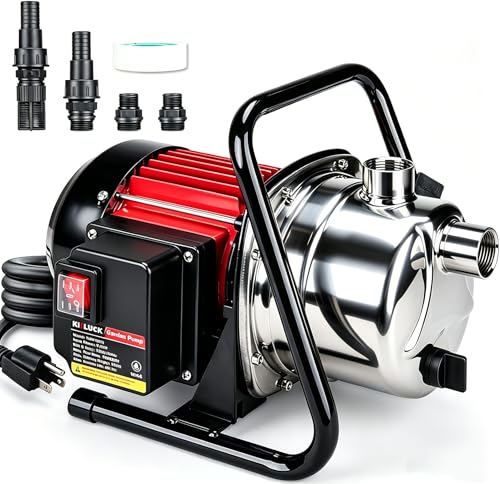
The KITLUCK model is built for higher performance with a 1.6 HP motor and up to 1000 GPH flow, capable of lifting water as high as 150 feet. The housing is stainless steel with an aluminum body for durability and corrosion resistance. It includes extra fittings, such as inlet adapters and a filter with a non-return valve, to reduce clogging. Best for: garden irrigation and larger-scale drainage where reliability over long runs matters. Limitation: heavier than common plastic units, which may affect portability.
ECO-WORTHY 33-Series Diaphragm Pump
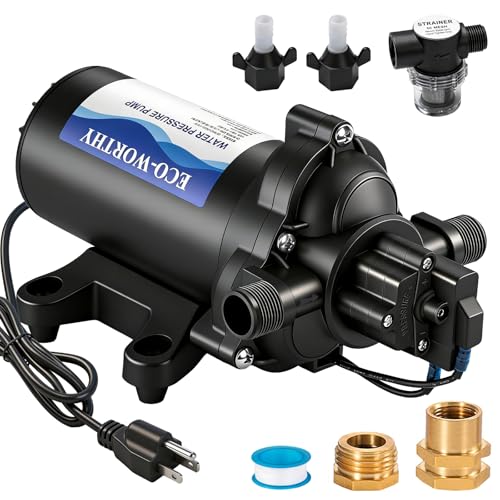
The ECO-WORTHY diaphragm pump uses a 110V AC supply and offers 4.0 GPM with a 50 PSI switch that turns on and off automatically as water is used. It features a self-priming design, a 9.8 ft max priming height, and a maximum lift of 131 ft. Built-in thermal protection helps prevent motor damage under heavy use. Best for: RVs, boats, or remote projects where automated pressure-based control is valuable. Limitation: diaphragm pumps can be less forgiving with very dirty water compared to impeller models.
VEVOR Cast Iron Water Transfer Pump — 1600 GPH

VEVOR’s unit uses a cast-iron body for durability and a 1/2 HP motor capable of moving up to 1600 GPH with a 120 ft pumping height. It includes a practical on/off switch and brass connectors, designed for heavy-duty applications such as pools, ponds, rain barrels, and hot tubs. Best for: more demanding projects that require higher flow and stronger build. Caution: heavier weight may reduce portability and require stable placement during operation.
Buying Guide
What to consider when choosing a water transfer pump
- Flow rate vs. head: Higher GPH is beneficial for quick transfers, but head height determines how high you can lift water. Match the pump to your required lift and volume.
- Power and portability: Heavier models deliver power at the expense of portability. If you need mobility, prefer lighter units with adequate flow.
- Construction materials: Cast iron and stainless steel offer durability in outdoor or wet environments, but may be heavier than aluminum or plastic housings.
- Submersible vs. non-submersible: Submersible pumps are designed to operate underwater; non-submersible units require the water level to be kept above the motor.
- Automatic features: Diaphragm pumps with pressure switches can turn on/off automatically; consider if you need automated control for irrigation or boating uses.
- Included fittings: Hoses, adapters, and filters help prevent clogging and simplify setup. Look for models with compatible hose sizes and readily available spare parts.
- Maintenance: Pumps with replaceable impellers, seals, and screens are easier to service and extend life in dirty or debris-laden water.
Frequently Asked Questions
- What is the typical lifetime of a water transfer pump?
Answer: Lifetime depends on usage, maintenance, and build quality; durable metal pumps tend to last longer under regular use. - Can these pumps run for continuous use?
Answer: Many are designed for intermittent operation; check manufacturer specifications for continuous-duty ratings and thermal protections. - Do I need a filter or strainer?
Answer: A filter or strainer reduces the chance of clogging, especially in sediment-heavy water. - Are these pumps safe for outdoor use?
Answer: Most are designed for outdoor use, but ensure electrical safety and waterproof switches are intact before operation. - Which pump is best for outdoor ponds?
Answer: For ponds, a pump with higher GPH and corrosion-resistant materials (like stainless steel or cast iron) is preferable. - What does “self-priming” mean?
Answer: Self-priming means the pump can evacuate air and start pulling water from a source without manual priming.