Protect fruit trees, vegetables, and ornamental plants from birds and other pests with durable, easy-to-install netting. This guide compares top tree netting options to help you choose the right one for your needs, whether you’re protecting a single mature tree or a whole orchard. The best choice depends on target animals, tree size, installation ease, and weather durability. Below, five strong contenders are highlighted for different use cases, from large fruit trees to small blueberry bushes.
Product Snapshot: Quick Comparison Of Top Picks
| Product | Best For | Key Benefit |
|---|---|---|
| Bird Netting For Garden – 13×40 FT (RIFNY) | Large garden trees or multiple plants | Long, wide coverage with HDPE-style durability |
| 1 Pack 13x13ft Fruit Tree Netting (puobao) | Single large fruit tree | Double zipper and drawstrings for easy access |
| Bird Netting For Garden 13x33ft (Sukh) | Medium-to-large trees and plant rows | Lengthy fencing with breathable mesh |
| 15ft x 15ft Netting Cover (Homoda) | Large fruit trees, post-hickory setups | Extra-large coverage with zipper and drawstring |
| 12×12 Large Fruit Tree Netting with Zipper (EaseThrift) | Big fruit trees and shrubs | Durable, breathable, and secure |
Bird Netting For Garden – 13 x 40 FT Heavy Duty Anti Bird Netting

The RIFNY 13×40 FT garden netting uses HDPE materials designed for extreme temperatures and UV exposure. It is lightweight enough to handle easily and durable enough to resist tearing and tangling. It blocks birds and other small animals while allowing sunlight, air, and moisture to reach plants. It’s best for gardeners needing wide, continuous coverage across multiple plants or larger trees and rows.
Who it’s best for: Gardeners with extended planting beds or several fruit trees seeking a single, wrap-around protection solution.
Why selected: The large 13×40 ft footprint covers more area with a relatively light net, reducing the number of panels you need to install. The 5/8 inch mesh size balances pest blocking with plant airflow.
Caution/Limit: While the mesh is tough, very sharp branches may wear edges over time; inspect edges and adjust tension to avoid friction points.
1 Pack 13x13ft Extra Large Fruit Tree Netting

This netting provides extra-large coverage for a single fruit tree, such as apple, peach, fig, or cherry trees. It features double zippers and double adjustable drawstrings for 360° access without removing the net. The heavy-duty mesh blocks birds, squirrels, deer, rabbits, and small insects, reducing crop losses over the season.
Best for: A single mature tree where full coverage and easy fruit inspection are priorities.
Why selected: The dual-zipper system and drawstrings offer flexible access while maintaining a snug fit around trunks or supports.
Caution/Limit: Larger nets can be more cumbersome to drape; ensure your tree is sturdy enough to support the net without tearing at the attachment points.
2Pcs Large Fruit Tree Netting With Drawstring And Zipper

These 8×8 ft nets come in a 2-pack, designed for one or two trees or a row of shrubs. The material is HDPE with a 60-mesh design, optimized to keep birds, cicadas, and other pests away while allowing adequate airflow and light. A side zipper combined with drawstrings makes installation and adjustments straightforward and wind-resistant.
Best for: Small orchardists or gardeners protecting several smaller trees or bushes like blueberries and young fruit trees.
Why selected: The dual-access design (zipper and drawstring) makes watering, pruning, and harvesting simpler without removing the entire net.
Caution/Limit: The 8×8 ft size may require multiple nets to cover larger trees; plan to combine nets with anchors along the bottom perimeter.
Bird Netting For Garden 13x33ft – Sukh Garden Netting Mesh

With a 13×33 ft footprint and a 0.8 inch mesh, this netting offers ample coverage while maintaining good light and air flow for plants. It is described as durable polyethylene material that resists knotting and tearing, and it can be cut to fit specific shapes or sizes. This makes it a flexible option for longer tree rows or garden beds.
Best for: Gardeners needing a longer net to cover a line of trees or a larger perimeter without creating a lot of seams.
Why selected: The large, single-piece net minimizes gaps where birds could squeeze through.
Caution/Limit: The mesh size is slightly larger than ultra-fine options, so extremely small pests may still pose a minor risk; complement with targeted barriers if needed.
Ruolan Bird Netting for Garden 13x20Ft
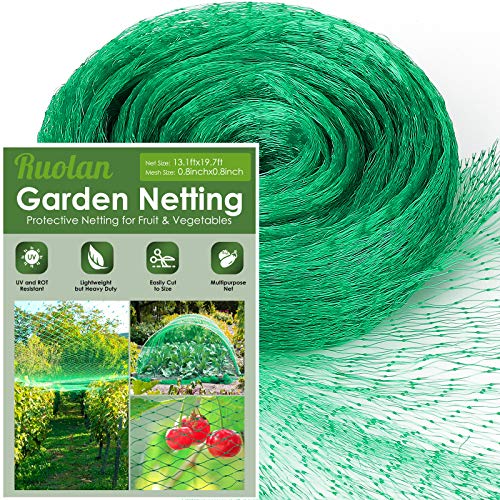
This 13×20 ft netting is a practical mid-size option, offering 0.8 inch mesh for good airflow and light. It is described as reusable and easy to DIY install, with polypropylene mesh that can be fixed to stakes or posts. The netting protects fruit trees and garden plants from birds, deer, squirrels, and other animals.
Best for: Gardeners who want a customizable size that can be cut and secured around multiple plants or a single larger tree.
Why selected: Reusability and DIY-friendly installation make it a versatile pick for evolving garden layouts.
Caution/Limit: Ensure the net is securely anchored to prevent wind from displacing it and exposing plants along the bottom edge.
15ft x 15ft Fruit Tree Netting Cover

The Homoda 15×15 ft netting covers large fruit trees and plants with extra-large coverage. It includes a zipper and drawstring closure, enabling easy access for harvesting while keeping pests out. The construction emphasizes durability for outdoor use and multi-season protection.
Best for: Gardeners with one or several large fruit trees needing complete coverage with easy fruit access.
Why selected: The combination of large area coverage and built-in access features makes it a straightforward option for high-yield orchards.
Caution/Limit: Larger nets require careful anchoring to prevent wind lofting; ensure the bottom edge is securely weighted or staked.
Buying Guide: Key Considerations For Choosing Tree Netting
What size best fits your trees? Measure trunk diameter and canopy spread to decide whether a single large net or multiple smaller nets work best. Look for mesh size that blocks birds and small mammals but still allows light, air, and moisture to reach foliage and fruit.
Do you need easy access for pruning and harvest? Nets with zippers and drawstrings simplify routine maintenance and fruit picking without removing the entire net.
Is weather durability important? Choose nets designed for UV resistance, heat, and cold tolerance if you live in extreme climates. Reusability matters for long-term budgeting.
How easy is installation and removal? Consider nets that can be cut to fit irregular shapes or that come with anchors, ties, or adjustable straps for secure,wind-resistant installation.
Should you pair nets with other deterrents? Some setups benefit from complementary strategies such as garden covers, scare devices, or selective netting to address specific pests in different seasons.
Practical Shopping Tips
- Verify that the mesh size balances pest exclusion with plant growth needs.
- Plan for future growth; choose nets that can accommodate tree height increases or expansions in planting beds.
- Store nets properly when not in use to prevent tangling and material degradation.
Buying Guide — Frequently Asked Questions
- What size netting is best for fruit trees? Choose a netting that fully covers the canopy with some overlap around the trunk, typically 8×8 ft to 15×15 ft for standard home trees; larger trees may require larger covers or multiple nets.
- Can netting harm plants? When properly installed, netting prevents damage from pests without blocking essential sunlight, air, or moisture.
- Do nets need maintenance? Inspect edges and attachment points for wear, especially in windy areas; tighten drawstrings and reseal as needed.
- What’s the best option for blueberries? Look for smaller mesh with secure drawstrings to prevent access by birds while allowing sufficient airflow and light to berries.
- Are nets reusable? Most garden bird nets are designed for multiple seasons but check material quality; proper storage extends life.
- How do I install a net on a winding tree? Start at the top trunk and work outward, securing with stakes or ties along the bottom edge to prevent displacement by wind.