If you’re seeking reliable solutions to prevent overwatering or underwatering, a water checker for plants is your best ally. These moisture meters help you read soil moisture levels deep in the root zone, guiding when to water and how often. They’re ideal for indoor potted plants, outdoor gardens, and raised beds. The right meter fits different plant types, pot sizes, and watering routines. Here are five top options that balance accuracy, ease of use, and value for typical American households.
Summary table of selected products
| Product | Best For | Why Pick It |
|---|---|---|
| XLUX Long Probe Deep Use Soil Moisture Meter | Deep pots and large plants | Long 14 cm probe reaches root zone; immediate readings; clear dial |
| XLUX Soil Moisture Meter (Upgraded Design) | Beginner and seasoned gardeners | No batteries; durable 304 stainless steel; 10-scale color dial |
| Censinda Soil Moisture Meter | Low-maintenance indoor/outdoor use | No battery needed; quick, direct dry/moist/wet reading |
| Antonki 2 Pack Soil Moisture Meter | Frequent use for multiple plants | Two-pack value; color-coded dial; fast instant reading |
| UNIWA 2-Pack Soil Moisture Meter | Compact, battery-free versatility | Two-pack; battery-free; clear dashboard with easy read |
XLUX Long Probe Deep Use Soil Moisture Meter

The XLUX Long Probe Deep Use Soil Moisture Meter provides quick, direct readings of soil moisture deep within pots or garden beds. It uses a 14 cm probe to reach the root zone, making it especially effective for large containers. The dial shows three moisture zones across ten scales for straightforward decision-making. This model is best for buyers with larger pots or deep soils where surface checks aren’t enough. A caveat: the metal tip may corrode if left in soil for extended periods, so use with short insertions and remove after reading.
Who it’s best for: home gardeners with deep pots, outdoor planters, or raised beds who want an immediate, surface-independent moisture read. Why selected: its extended probe targets the root zone directly and its large dial is easy to interpret at a glance. Caution: avoid leaving the probe in soil for long durations to limit corrosion.
XLUX Soil Moisture Meter (Upgraded Design)
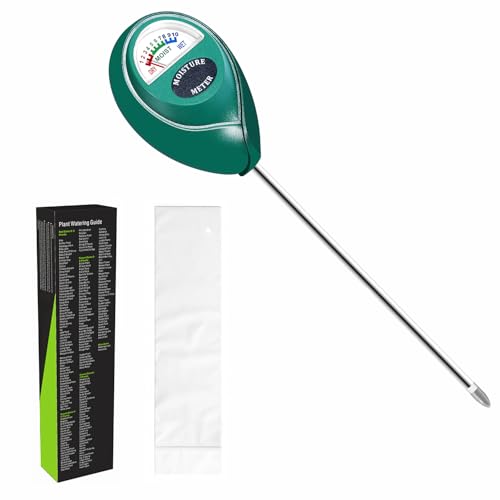
This upgraded XLUX meter emphasizes long-term reliability with a durable 304 stainless steel probe and a color-coded dial featuring 10 scales (Dry–Moist–Wet). It requires no batteries and provides instant readings, making it a staple for both indoor and outdoor plants. This model is well-suited for beginners and veteran gardeners who want a reliable, battery-free tool that consistently reveals root-zone moisture levels.
Who it’s best for: households seeking a proven, battery-free option with a long-standing reputation. Why selected: the combination of a robust probe, immediate feedback, and clear dial messaging helps prevent watering mistakes. Caution: some users may prefer a more compact or aesthetically minimal meter for small containers.
Censinda Soil Moisture Meter
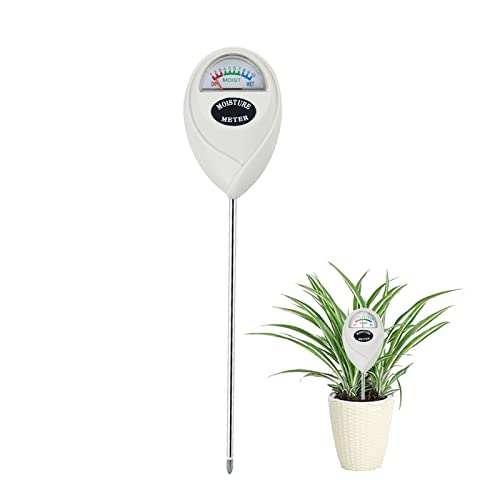
The Censinda meter emphasizes a simple, battery-free operation to help prevent overwatering. It measures soil moisture by direct probe contact to the root zone and instantly displays dry, moist, or wet conditions. It’s a straightforward option for households that want quick guidance without ongoing maintenance.
Who it’s best for: indoor plant owners and outdoor gardeners who want a no-fuss, quick-read meter. Why selected: no batteries needed and fast readings align with simple care routines. Caution: might be less precise for very dry or very wet extremes; use with additional context for edge cases.
Antonki 2 Pack Soil Moisture Meter

The Antonki meters deliver instant, accurate moisture readings with a color-coded dial (red = DRY, green = MOIST, blue = WET) across 10 scales. This two-pack provides value for households tending multiple plants. It’s especially useful for people who manage several containers or garden zones.
Who it’s best for: families or apartment gardens with multiple pots needing frequent checks. Why selected: the two-pack option supports multi-plant care while offering quick, at-a-glance interpretation. Caution: some users report variance in readings across units; use as a guide rather than an absolute measure in extreme conditions.
Buying Guide: How To Choose The Right Plant Water Meter
- Depth of soil: Choose a meter with a longer probe if you have deep pots or large containers.
- Battery-free vs. battery-powered: Battery-free options are low-maintenance but may have limited features; battery-powered models can offer added functionality but require replacement batteries.
- Dial readability: A large, color-coded dial speeds decision-making for beginners and seasoned gardeners alike.
- Number of units: A two-pack is beneficial when caring for multiple plants or zones, reducing the need to move meters around.
- Material durability: Stainless steel probes resist corrosion longer, ideal for outdoor use.
- Root-zone accuracy: Look for meters designed to reach the root zone, not just surface readings, to prevent overwatering and root rot.
How to Use A Plant Water Meter Effectively
Insert the probe into the soil near the plant’s root zone, then read the dial immediately. Compare readings over several days to establish a watering pattern for each plant type. Remove the meter after testing to avoid prolonged exposure to moisture, which can compromise the tip.
Maintenance and Care
Clean the probe after use with a dry cloth to remove soil residue. Do not leave the meter in the ground for extended periods, especially if advised against prolonged exposure on the product label. Regular checks help maintain accuracy over time.
FAQ
- Q: Do these meters work for all plant types?
A: They work for most common houseplants, outdoor shrubs, and garden beds. Very sandy or highly mineral soils may require more frequent checks. - Q: Are battery-free models less precise?
A: Not necessarily. They provide direct readings of the root-zone moisture and are often sufficient for regular care, though some models may have fewer features than battery-powered variants. - Q: How deep should I insert the probe?
A: Insert until the probe tip reaches the root zone, typically a few inches into the soil, depending on pot depth. - Q: Can I use these meters for outdoor use year-round?
A: Yes, but in extreme weather protect the device from direct rain exposure when not actively measuring to extend life. - Q: How often should I read moisture levels?
A: Check when you notice visible soil changes or new growth, then calibrate your watering schedule based on readings across multiple days. - Q: What should I do if readings are inconsistent between meters?
A: Compare readings from different spots in the same pot, ensure good root-zone contact, and consider replacing meters if readings are consistently odd.