Answering the question “what is the best water diverter for my yard?” this guide highlights practical options to control water flow, divert rainfall, and protect property. The top picks below suit homeowners facing minor floods, heavy rain drainage needs, or simple irrigation setup. Each product is described for who it’s best for, plus a clear reason for selection and any important caveats.
The following table provides a quick snapshot of five selected products to help you compare at a glance.
| Product | Best For | Why It Stands Out | Limitations |
|---|---|---|---|
| Quick Dam QD610-1 Water Activated Flood Barrier | Temporary flood barriers for doorways and low-lying areas | Fast setup; grows to 3.5″ high when activated; flexible shapes | Requires exposure to water to activate |
| Quick Dam Water Activated Flood Barrier 5 Feet 2-Pack | Wider openings and doorways needing flood protection | Long, flexible design; water-activated height gains up to 3.5″ | Bulkier than single-barrier units |
| Sabary 5 Pcs Water Barrier (5 ft x 6.5 in) | Affordable, reusable flood barriers for DIY setups | Lightweight, easy storage, quick activation | Capacity may vary by water level and surface |
| NAACOO Gutter Downspout Extensions | Redirecting rainwater away from foundations | Flexible pipe extension up to 8.2 ft; no deep trenching | Best used with existing drainage to avoid pooling |
| RAINPOINT Garden Hose Splitter | Split water flow for irrigation and purification tasks | Metal body for durability; 1.9″ handle for easy control | May require compatible hoses for optimal seal |
Quick Dam QD610-1 Water Activated Flood Barrier

Best for: homeowners needing fast, portable flood protection around entryways and low-lying spaces. This barrier activates with moisture, expanding to 3.5 inches high in minutes, enabling quick deployment during sudden rainfall. It’s flexible enough to form along irregular edges, making it useful for temporary setups. A limitation is that it requires a water source to activate, so it’s not a passive barrier.
Quick Dam Water Activated Flood Barrier 5 Feet 2-Pack

Best for: larger entrances, garages, or patios where more extensive flood control is needed. The 5-foot length provides longer coverage, and the same water-activated height expansion helps seal a wider opening. Caution: handling multiple barriers can require careful storage and organization in non-rainy seasons.
Sabary Water Barrier 5 Pcs (5 ft Each)

Best for: homeowners seeking an affordable, reusable option for quick flood defense around doors and garages. The five-piece set expands to 3–4 inches high when activated and stores compactly. Limitation: performance can depend on water availability and surface texture, so test ahead of heavy rain events.
NAACOO Gutter Downspout Extensions
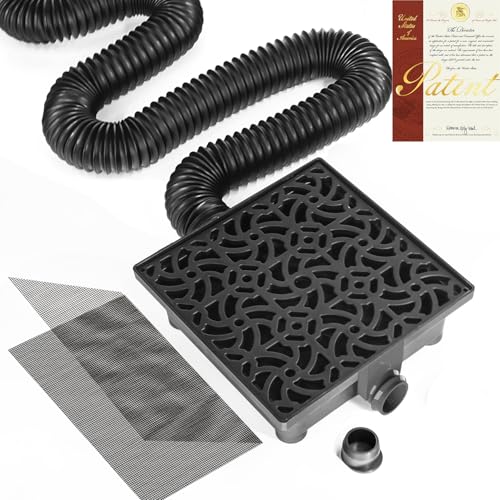
Best for: protecting foundations by redirecting roof runoff away from walls. The flexible pipe extension scales from 2.5 ft to 8 ft, and double-drain design improves drainage efficiency. Choose this if you want adjustable drainage without heavy trenching. A limitation is that buried installation may require planning for underground routing to avoid blockages.
RAINPOINT Garden Hose Splitter

Best for: gardeners and homeowners needing reliable water division for irrigation or multi-task watering. The 100% metal body with a long handle delivers durability and easier control under cold or hot weather. Limitation: some setups may require compatible hoses or adapters to achieve maximum leak protection.
Buying Guide: Key Considerations For Water Diverters
What type of water diverter fits your yard needs? Evaluate flood barriers versus drainage extensions and hose splitters based on your property layout, climate, and typical rain events.
- Purpose: Choose barriers for flood protection around doors or low areas, and drainage extensions for redirecting roof runoff away from foundations.
- Activation vs. passive: Water-activated barriers provide rapid rise in height but require moisture exposure; passive barriers need no water to deploy.
- Storage and reuse: Reusable, foldable barriers save space and are practical for seasonal use; consider weight and portability for frequent relocation.
- Material and durability: Metal hose splitters resist corrosion and heavy use; flexible barriers are easier to shape but may have limited capacity.
- Surface compatibility: Smooth surfaces, textured concrete, or grass can affect seal integrity; test fit and edge contact before heavy rainfall.
- Scale and coverage: For wide openings, longer barriers or multiple units ensure better coverage and reduce gaps.
- Installation effort: Some products demand quick setups, while others require careful placement or trenching in the yard.
Practical Setup Tips
- Test barriers during dry days to understand how they expand and seal on your surfaces.
- Plan storage locations that minimize exposure to harsh weather and allow rapid access during rain events.
- Combine barriers with drainage extensions for a more comprehensive protection strategy near foundations.
FAQ
- What is a water-activated flood barrier?
A device that expands when wet, creating a temporary wall to block floodwater. - Are flood barriers reusable?
Yes, many are designed to be redeployed after rainfall or a flood event. - Which product is best for doors?
Long barrier options like the 5-foot Quick Dam pair provide wider coverage for doors and entryways. - Do I need tools to install a hose splitter?
Most splitters are tool-free and use threaded connections, but ensure compatible hose sizes. - Can downspout extensions prevent basement flooding?
They help direct water away from foundations but may need additional drainage planning. - How should I store flood barriers when not in use?
Clean and dry them, then fold or roll for compact storage in a dry space.