Answer: For reliable farm irrigation, choose a submersible or surface pump with enough flow (GPM) and head (ft) to cover your fields, plus durability for outdoor use. This guide highlights five top Amazon picks suited to different farm sizes, water sources, and power availability. Best for small plots use deep-well or shallow-well pumps; best for remote sites pick gas-powered units; best overall balance for varied crops is a jet pump with a pressure tank. The following table summarizes the featured products and their primary strengths.
| Product | Best For | Key Strength |
|---|---|---|
| WASSERMANN 4″ Deep Well Pump | Small to mid-size farms with 4″ wells | High head, stainless steel, integrated control box |
| VEVOR Gas Powered Water Pump, 4 in | Remote locations and power-outage scenarios | No electricity required; strong lift |
| PANRANO Water Transfer Pump 110V | Garden-to-field transfer and shallow wells | Compact, automatic protection, corrosion-resistant |
| Aquastrong 115V Shallow Well Garden Pump | Home gardens and small farms | Integrated pressure switch, 164 ft head |
| FOTING 1.5HP Shallow Well Pump w/Pressure Tank | Domestic irrigation and small farms | Pressure tank system, automatic control |
WASSERMANN 4″ Deep Well Pump Submersible
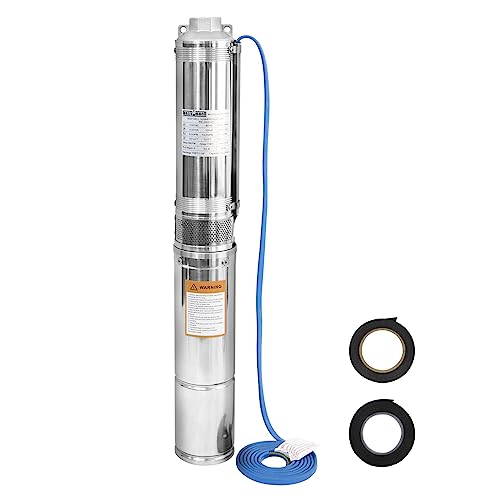
Best for: Farms with access to 4″ well casings that require a robust deep-well solution. This submersible pump is rated at 1/2 HP, delivers up to 28 GPM, and can reach a head of 179 ft. It features a stainless steel body and SS304 head for durability in irrigation-heavy environments. The built-in control box reduces the need for external wiring, simplifying installation in farm sheds or near well sites. The motor is copper-based and oil-immersed, providing strong power in a compact form factor.
Why chosen: High head capability suits elevated fields or distant storage tanks. Stainless construction helps resist corrosion from irrigation chemicals and sediment. The integrated control box and 2-wire operation streamline setup for farms without a dedicated electrician on site.
Caution: Check well depth and casing compatibility; this model targets 4″ and larger casings and may not prime well in very deep or narrow wells without appropriate accessories.
VEVOR Gas Powered Water Pump, 4 in

Best for: Remote farms or work sites without reliable electricity. This 4″ semi-trash transfer pump is gas-powered, delivering strong flow (up to 422 GPM) and high head lift for elevation shifts on hills or farther storage points. It includes a 25 ft discharge hose and a rugged frame, making it suitable for irrigation, drainage, ponds, and temporary water transfer tasks.
Why chosen: The no-electricity design provides independence from power grids, making it ideal for field irrigation during outages or in off-grid locations. The engine-driven operation sustains performance under load, which is useful for moving water across uneven terrains.
Caution: Gas-powered units require fuel management and regular maintenance; ensure safe storage and ventilation, especially in barns or enclosed areas.
PANRANO Water Transfer Pump 110V

Best for: Gardeners and small farms needing a reliable shallow-well transfer pump. It offers 1800 GPH at up to 164 ft of lift with a stainless steel pump head and aluminum motor housing for durability. The 110V design suits most farm sheds with standard electrical outlets.
Why chosen: The combination of strong suction, automatic thermal overload protection, and corrosion resistance makes it a practical all-around transfer pump for irrigation, ponds, and small-scale watering systems. The rear cooling vents help maintain performance during long transfer runs.
Caution: Not a self-priming pump; fill with water or priming material before operation to ensure immediate startup and avoid air lock.
Aquastrong 115V Shallow Well Garden Pump

Best for: Home gardens and small farms that need a compact, automatic water booster. This 1.6 HP unit provides up to 164 ft of head with a maximum flow of 1320 GPH. Its stainless steel housing and aluminum motor housing offer corrosion resistance and durability for outdoor use.
Why chosen: The integrated pressure switch enables automatic on/off cycling between 20–40 psi, which helps maintain consistent irrigation without constant manual intervention. A compact pressure tank and a gauge allow simple pressure monitoring on site.
Caution: This model is not self-priming; it requires priming to start pumping from a dry source. Noise level is typical for this class; plan for outdoor installation with some sound considerations.
FOTING 1.5HP Shallow Well Pump With Pressure Tank

Best for: Home gardens and small farms seeking a balanced pump with automatic pressure control. It offers 1340 GPH at up to 164 ft lift and ships with a 5-gallon pressure tank and a preset switch for stable operation.
Why chosen: The unit combines a sturdy thermoplastic build with an iron tank and a carbon ceramic seal to help prevent leaks and wear. The automatic pressure switch contributes to consistent irrigation without manual intervention, while the gauge enables straightforward monitoring.
Caution: The system requires proper priming and appropriate power supply; ensure the electrical setup matches the 115V specification and that the switch range is suitable for your irrigation plan.
Buying Guide
Key questions and considerations to tailor a pump choice to your farm:
- What is my water source and well depth? Deep-well pumps work best for tall water columns, while shallow-well and transfer pumps suit surface water or near-surface sources.
- Is electricity available where the pump will operate? For off-grid sites, consider gas-powered options; for sunny or wired sites, 110-120V electric pumps are typical.
- What flow rate and head are required? Match GPM to crop irrigation needs and plan for elevation changes; ensure the pump head exceeds the highest head in the field to avoid pressure loss.
- Do I need automatic operation? Pumps with pressure tanks and switches reduce manual intervention by maintaining target pressure ranges.
- Durability and maintenance: Look for stainless steel or corrosion-resistant housings for long life in outdoor, dusty, or wet environments; consider seals and motor type for reliability.
- Portability and installation: If you move pumps across fields or temporary sites, consider weight, handles, and mounting options; check alignment with hose sizes and adapters.
FAQ
- What determines the best pump for farm irrigation?
- Will a gas-powered pump work in a power outage?
- What is head and flow, and why are they important?
- Are automatic pressure tanks necessary?
- Is self-priming important?
- What maintenance should I expect?
The best pump depends on water source, head requirement, flow needs, electrical access, and whether automatic pressure control is essential for your irrigation schedule.
Yes. Gas-powered units operate without electricity, making them ideal for outages or remote sites without grid access.
Head is the vertical distance water must be pumped; flow (GPM) measures how much water moves per minute. Both determine whether a pump can reach the intended irrigation area and deliver enough water.
Automatic pressure tanks with switches simplify operation by turning the pump on and off to maintain consistent pressure, reducing manual adjustments.
Self-priming pumps are convenient but not universal. Some models require priming before use; plan accordingly if your source can run dry.
Regular inspection of seals, motor condition, and electrical connections; clean intake screens; ensure cooling and ventilation around the motor; follow manufacturer guidelines for servicing.