When growing tomatoes, consistency matters more than intensity. The right watering system keeps soil evenly moist at the root zone, reduces leaf diseases from splashing, and helps fruit set. This guide highlights five Amazon products that suit different tomato-growing styles—from DIY drip setups to self-watering terracotta spikes—so you can pick the best option for your garden, balcony, or indoor pots.
Overview at a glance: the table below compares the featured tomato watering solutions by type, best use case, and ideal setup. Use it to quickly decide which approach aligns with your space, travel frequency, and plant density.
| Product | Type | Best For | Notes |
|---|---|---|---|
| REMIAWY Plant Watering Devices 6 Pack | Terracotta spikes | Small to medium pots; frequent travelers | Auto water release; fragile spikes—handled gently |
| Back to the Roots Self-Watering Terracotta Olla Pot (Pack of 3), 700mL | Terracotta ollas | Two large plants; weekend trips | One-week precision watering; weather-proof stopper |
| HolyMaji Tomato Watering Ring | Root irrigation rings | Tomatoes and vegetable beds | Direct root-zone watering; durable PET |
| Self Plant Watering Spikes 12 Pack | Self-watering spikes | Indoor plants; quick setup | Adjustable control; bottle-friendly |
| MIXC Drip Irrigation System Kit (two products) | Drip irrigation kit | Larger gardens; multi-plant layouts | Wide tubing, adjustable nozzles; scalable |
REMIAWY Plant Watering Devices 6 Pack
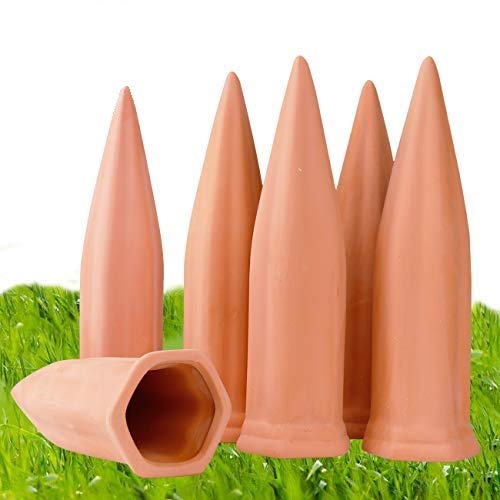
Best for: gardeners who prefer a straightforward, low-tech water-delivery method for mixed tomato containers or small beds. This set uses terracotta spikes connected to refillable water bottles, delivering slow, steady moisture to the root zone. It’s a simple, economical option for those who want a travel-friendly system without complex setup.
Why it’s selected: Terracotta material provides gradual water release as the soil draws moisture. The 6-pack increases coverage and helps maintain consistent soil moisture when bottles are topped up. Use long-neck bottles for better control, and insert most of the stake into soil to avoid breakage. Water delivery scales with the number of spikes in the soil.
Best for travel and ease of use, with a caveat: the spikes are fragile on arrival, so handle gently and insert firmly to prevent cracks. For heavier bottles, you may need to insert more of the stake into soil to prevent bending or breakage.
Key considerations:
- Recommended use with long-neck wine or plastic bottles.
- Purposeful spacing into soil yields more uniform moisture.
- Best when you can monitor bottle levels every few days.
Back to the Roots Self-Watering Terracotta Olla Pot (Pack of 3)

Best for: tomato growers with two larger plants or busy weekends who want a simple, self-contained solution. The 700 mL olla pot provides precision watering by releasing moisture directly into the root zone, reducing the need for daily attention during short trips.
Why it’s selected: The 18-inch diameter coverage helps support larger plantings, and a weather-proof rubber stopper minimizes evaporation when not in use. This system is low-profile and unobtrusive, making it suitable for garden beds or larger containers. The capacity supports longer intervals between fills.
Limitations to note: ollas require correct burial depth and soil contact to work efficiently. If you plant in extremely dry or compacted soil, still monitor moisture and adjust fill frequency accordingly.
Best practices: bury the olla so the top is just below soil level, and refill before the reservoir runs dry for consistent results.
HolyMaji Tomato Watering Ring

Best for: tomato enthusiasts seeking targeted root-zone irrigation with a visible, reusable ring that directs water to the root area. This product suits vegetable beds and container gardens where precise watering reduces runoff and promotes steady growth.
Why it’s selected: The red color aids visualization for light-absorption effects, potentially supporting robust growth. The PET material resists tearing and UV degradation, ensuring durability across a growing season. The design focuses water delivery where tomatoes need it most and reduces surface runoff.
Caution: ensure the ring fits the intended bed or pot size and that water delivery aligns with plant spacing to avoid overwatering in crowded areas.
Self Plant Watering Spikes 12 Pack

Best for: indoor plant lovers or office setups who want an easy, scalable watering method across multiple pots. The 12-pack provides coverage for several containers with a simple installation that works well for frequent travelers or people who prefer automation.
Why it’s selected: These spikes offer an adjustable control valve and compatibility with common bottle openings (1.1 inch mouth), making them versatile for various bottle types. They support consistent moisture while reducing manual watering tasks.
Caution: check that the bottle mouth matches the spike’s design; not all bottle types fit perfectly. For larger planters, plan on multiple spikes to maintain even moisture distribution.
MIXC 230FT Quick-Connect Drip Irrigation System Kit

Best for: larger gardens or setups needing scalable irrigation with multiple zones. This kit supports complex layouts, up to 32 emitters, and offers long-term flexibility for varied plantings beyond tomatoes.
Why it’s selected: The kit includes 1/4″ tubing, 1/2″ tubing, and a range of connectors to create customized watering runs. Quick-connect technology makes setup faster, and the 360-degree adjustable brass nozzles enable diverse watering patterns for drip, misting, or targeted irrigation in raised beds or pots.
Caution: assembly requires careful planning to avoid leaks and ensure even coverage across all plants. For beginners, start with a smaller subsection to dial in flow before expanding.
Buying Guide
What should you consider when choosing a tomato watering system?
- Garden size and plant count: Drip kits scale well for larger gardens, while spikes and ollas fit smaller setups.
- Soil type and drainage: Sandy soils drain quickly; terracotta may release water faster in drier soils. In heavy soils, use larger reservoirs or multiple delivery points.
- Water source and accessibility: If you use bottles, verify mouth size and compatibility with your chosen spikes or rings.
- Maintenance and durability: Terracotta can crack; PET rings resist UV but may require cleaning to prevent mineral buildup.
- Travel frequency: For frequent travel, consider self-watering spikes or ollas that provide longer intervals between refills.
- Installation complexity: Ollas and full drip kits require more setup but offer precise irrigation; spikes are quick to deploy with minimal tools.
Frequently Asked Questions
- What is the most water-efficient approach for tomatoes?
– Drip irrigation systems with root-zone targeting generally minimize evaporation and runoff, improving efficiency. - Can I mix these systems in one garden?
– Yes. A mixed approach (drip lines for beds and spikes for containers) can optimize water delivery across different zones. - How often should I water during the growing season?
– It depends on climate, soil, and plant size. Aim for soil moisture that is consistently moist but not soggy, checking every few days in hot weather. - Are terracotta devices safe for edible crops?
– When used as designed, terracotta devices are safe for irrigation. Ensure proper installation and avoid cracking to prevent soil contamination. - Do these systems require electricity or batteries?
– Most listed solutions are manual or gravity-fed and do not require electricity or batteries. - Which option is best for busy travelers?
– Self-watering spikes or ollas are best for longer intervals between refills, depending on bottle size and soil type.