For tackling Japanese knotweed and other stubborn weeds, select a broad-spectrum or targeted herbicide designed to reach the roots and prevent regrowth. This guide highlights five effective options and explains who each product is best for, along with practical cautions. Ideal buyers include homeowners managing driveways and beds, landscapers treating rough weed infestations, and agricultural users needing spot or broad-area control. Below is a quick comparison table to help you decide at a glance.
| Product | Best For | Key Note |
|---|---|---|
| Precision Foam Weed Killer Kit for Tough Weeds | Spot treatment for stubborn weeds in ornamental areas | Foam formula for precise application |
| 41% Glyphosate Super Concentrate Weed & Grass Killer | Large areas like driveways, sidewalks, and fences | Broad-spectrum systemic; high coverage |
| Agrisel GlyPhoSel Pro Weed Killer (32 oz) | Spot treatment in gardens and turf | Low-odor, easy mixing |
| Alligare Triclopyr 4 Herbicide (1 QT) | Broadleaf weeds and brush | Effective on woody plants |
| Bonide KleenUp 41% Weed & Grass Killer (1 quart) | General weed and grass control | Concentrate with 41% glyphosate |
Note: Knotweed is notoriously tough to eradicate and may require repeated applications or integrated methods beyond chemical control. Always read label directions for safe and effective use.
Precision Foam Weed Killer Kit for Tough Weeds

The Precision Foam Weed Killer Kit targets tough weeds with a foam delivery system designed for precise placement. Best for small, sensitive areas where drift must be minimized and where you need to apply directly to weed leaves without affecting nearby plants. Suitable for homeowners dealing with pocketed knotweed patches around paths or garden edges. A limitation is the kit’s suitability for larger infestations, where broader applications may be more efficient.
41% Glyphosate Super Concentrate Weed & Grass Killer
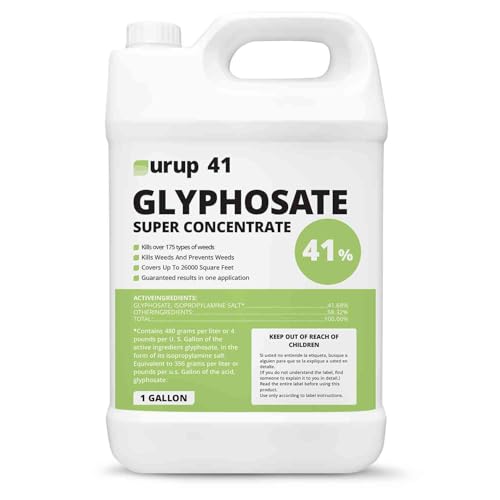
This concentrate delivers broad-spectrum control, reaching down to the roots to prevent regrowth. It’s well suited for large, open areas such as driveways, sidewalks, and fence lines where knotweed outbreaks may spread along the edges. Best for users needing fast, wide-area coverage. A potential limitation is handling and mixing concentration safely; follow label instructions precisely to avoid over-application or environmental impact.
Agrisel GlyPhoSel Pro Weed Killer (32 oz)

Agrisel GlyPhoSel Pro Weed Killer emphasizes superior vegetation control with low-odor and easy mixing. It’s a practical option for ornamental gardens and turf where spot treatment is preferred to avoid broad surface damage. Best for users needing a user-friendly formula with reduced odor. Caution: application on large surfaces may eliminate all vegetation if not carefully restricted to problem areas.
Agrisel GlyPhoSel Pro Weed Killer (128 oz)

This larger volume variant of GlyPhoSel Pro is designed for frequent or larger-area needs, offering the same low-odor, easy-mix benefits with an expanded coverage option. Best for gardeners who routinely treat multiple spots or larger beds. Use caution to avoid treating non-target plants and to adhere to label directions for safe handling.
Agrisel GlyPhoSel Pro Weed Killer (320 oz)

Presented in an extra-large container, this option suits extensive property management or landscape contractors who need substantial on-hand supply. Best for long-term knotweed control plans and broader weed management in larger plots. Limitations include handling weight and storage considerations; ensure appropriate storage and dilution per label guidance.
Alligare LV 6 2,4-D Selective Weed Killer Concentrate

This 2,4-D rich formulation targets broadleaf weeds and is designed for use in crops like corn and soybeans, as well as rights-of-way. It’s best for users who want selective control that minimizes grassy crop damage. For knotweed, consider this option for spot treatment to avoid broad-spectrum impact on non-target grasses. Caution: not ideal for woody or highly invasive knotweed in dense stands; may require other modes of control.
Buying Guide
What should I consider when choosing a knotweed-related weed killer?
- Target area: Small patches vs. large infestations will guide whether a spot-treatment foam, a concentrate, or a ready-to-use solution is best.
- Weed type and growth stage: Broadleaf vs. grassy weeds; knotweed requires products with systemic action and root reach for best results.
- Application method: Foam and targeted sprays reduce drift; concentrates require proper dilution and protective equipment.
- Environmental impact: Choose low-odor formulas if applying near ornamentals or pets; read label for drainage and runoff cautions.
- Safety and storage: Large-volume concentrates save time but need secure storage and handling.
How can I improve knotweed control with these products?
- Follow label timing and repeat treatments as recommended; knotweed often requires multiple applications for lasting control.
- Combine chemical control with mechanical methods and containment to prevent spread.
- Apply on actively growing plants during the appropriate season for best systemic uptake.
What are practical application tips?
- Use protective gear and avoid mixing chemicals not specified on the label.
- Avoid treating wet leaves or during heavy rainfall to maximize absorption.
- Test on a small area first to observe any adverse effects on desirable plants.
FAQ
- Can these products completely eradicate knotweed?
- Is glyphosate safe for use near ornamental plants?
- Should I mix multiple products?
- What is the best option for a homeowner with a small knotweed patch?
- Are these products safe for pets?
- How long does it take to see results?
No herbicide guarantees complete elimination in a single treatment. Knotweed is usually managed through repeated applications and integrated methods.
Glyphosate-containing products can affect non-target plants. Use targeted application methods and follow label directions to minimize collateral damage.
Do not mix products unless the label explicitly allows it. Mixing incompatible chemicals can cause unsafe reactions and reduce efficacy.
A precision foam or a spot-treatment concentrate is often most practical for small patches and edging along paths.
Many formulas are low-odor and designed with reduced risk after drying, but always follow label precautions and re-entry times before pets return to treated areas.
Most products show yellowing within days and dieback within 1–3 weeks, with complete control often taking longer depending on growth and environmental conditions.