If you’re seeding or renewing a lawn, choose weed killers that protect grass seed while targeting common lawn weeds. The top products below are selected for safety around newly planted or thin turf, with clear guidance on who they’re best for and potential limitations. This guide helps homeowners, new seeders, and those restoring a lawn quickly decide which option fits their yard.
| Product | Best For | Notes |
|---|---|---|
| Sunday Weed & Green | Shrub-free, iron-boosted lawns; post-emergent and pre-emergent use | Great for quick greening and broad weed control; use as directed for newly seeded lawns |
| Spectracide Weed Stop For Lawns | Many common broadleaf weeds; established lawns | Root-killing formula; ensure proper labeling for new seedings |
| Southern Ag Atrazine St. Augustine Weed Killer | St. Augustine and centipede grasses | Specialized for warm-season grasses; check compatibility with your seed |
| Roundup Dual Action Weed & Grass Killer Plus 4 Month Preventer | Hardscapes and mixed landscapes; long prevention window | Effective on existing weeds and prevents new ones; use with caution around new seedings |
| Atticus Torocity Herbicide | Lawns and turf with flexibility for pre- and post-emergent control | Mesotrione-based; broad-spectrum with timing forgiveness |
Sunday Weed & Green – All-in-One Weed Control for Lawns

Features: Powerful 5-in-1 weed control tackles dandelion, oxalis, white clover, chickweed, thistle, plantain and more while greening up the lawn. Can be applied to the whole lawn or as a spot treatment. The iron-based formula promotes deep green color and thicker turf. Designed for hose-end application with no mixing required. Covers up to 1,250 sq ft.
Best for: Homeowners seeking convenient, all-in-one weed control that also boosts lawn color, especially when overseeding or maintaining a dense seedling stand. Choose this if you want a single product that both kills weeds and strengthens newly seeded areas.
Caution: Larger, established weeds may require multiple applications. Avoid over-application to prevent turf stress in very young seedings.
Spectracide Weed Stop For Lawns Concentrate

Features: Kills more than 200 types of weeds without harming most lawns when used as directed; targets major broadleaf weeds like dandelion, chickweed, and clover, with root-kill action and overnight results.
Best for: Lawn owners dealing with a wide weed spectrum in established turf who want a reliable root-kill effect. Choose this if you need broadleaf coverage without sacrificing turf health, while monitoring for use around newly seeded areas.
Caution: As with any broadleaf herbicide, follow label directions around new seedings and recently mowed lawns to minimize stress on tender grass.
Southern Ag Atrazine St. Augustine Weed Killer

Features: Treats up to 3,720 sq ft per quart; controls weeds in St. Augustine and centipede grasses. Light tan formulation appropriate for certain warm-season lawns.
Best for: Homeowners with St. Augustine or centipede lawns seeking weed control that aligns with their grass type. Select this if your seed bed will transition into these warm-season grasses and you need targeted control.
Caution: Atrazine products are grass-type specific; avoid use on non-target turf species or newly seeded turf until compatible with the label guidance.
Roundup Dual Action Weed & Grass Killer Plus 4 Month Preventer
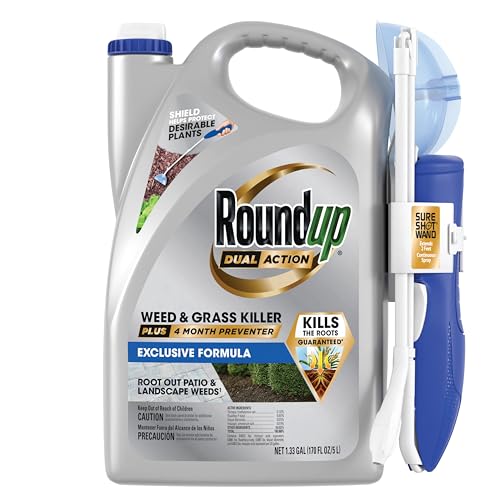
Features: Kills existing weeds and grass to the root; provides up to 4 months of prevention. Rainproof in as fast as 30 minutes and shows visible results in around 6 hours. Suitable for hardscapes, driveways, sidewalks, fences, mulched beds, and around established plants.
Best for: Lawns with mixed areas or adjacent hardscapes where a fast, lasting preventive effect is desired. Choose this if you want a strong barrier against new weed growth while treating current weeds.
Caution: Not ideal for sensitive seedings near newly laid turf; apply with care around young, tender grass or newly seeded zones to minimize turf risk.
Roundup Dual Action Weed & Grass Killer Plus 4 Month Preventer Concentrate

Features: Concentrate formula for existing weed and grass killing plus 4-month prevention; rainproof quickly and fast-acting results within hours. Applicable to cracks and crevices, driveways, patios, and around plant bases.
Best for: Those who want a concentrated option to tailor dosing and coverage in larger areas or around landscape features. Useful when precise mixing is feasible and extended prevention is needed.
Caution: Concentrates require accurate mixing; misuse can lead to turf damage on tender new seedings or non-target plants if applied improperly.
Atticus Torocity Herbicide
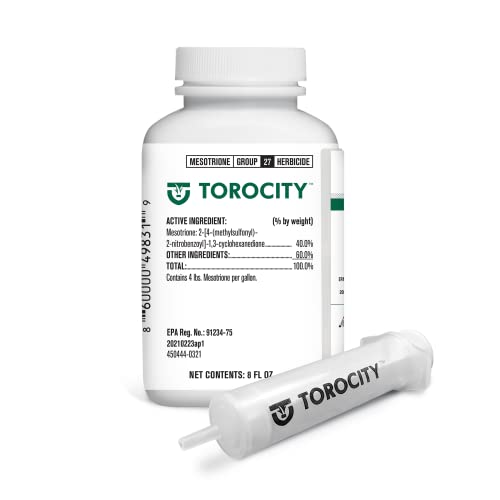
Features: Mesotrione-based concentrate with pre- and post-emergent control; designed for flexible timing and broad-spectrum weed control in lawns and turf.
Best for: Lawn owners needing a versatile control option that handles emerging weeds across seedings and established turf. Choose this if you want timing flexibility and a strong, broad-spectrum result.
Caution: Mesotrione-based products should be used with care around newly seeded areas until the turf is well established and label recommendations are followed.
Southern Ag Atrazine – St. Augustine Grass Weed Killer, 1 Gallon

Features: Kills many broadleaf weeds and is also used in centipede grass; provides suppression of crabgrass in compatible grass types.
Best for: Those with warm-season lawns seeking a broad approach to weed suppression that remains compatible with St. Augustine or similar grasses. Select this if your lawn is transitioning to or already uses these grasses.
Caution: Ensure compatibility with your specific lawn species and follow label directions to avoid harming desirable warm-season turf.
Buying Guide: Weed Killers Safe For Grass Seed
- What to consider when seeding: Avoid products that are harsh on germinating seeds. Look for pre- and post-emergent options that explicitly mention safety around newly seeded grass or that offer targeted weed control with minimal turf stress.
- Weed spectrum: Identify the weeds you’re fighting (dandelion, clover, crabgrass, oxalis, etc.). Choose products with proven activity against those weeds, and consider a combination approach when necessary.
- Grass type compatibility: Some herbicides are formulated for specific grass families (cool-season vs warm-season). Verify that the product suits your lawn species, especially when seed is involved.
- Application timing: Pre-emergent products help prevent germination, while post-emergents kill visible weeds. Timing around seeding is critical to avoid injury to young grass.
- Mode of application: Hose-end sprayers offer convenience but may deliver uneven coverage. Concentrates allow precise mixing but require careful measurement.
- Safety and labels: Always read the label for application rates, safe zones, irrigation windows, and re-entry intervals. Follow directions to protect people, pets, and edible plants nearby.
- Environmental considerations: Prefer products with lower runoff potential and label guidance to reduce impact on non-target plants and waterways.
FAQ
- What does “safe for grass seed” mean in weed killers?
It means the product is labeled or recommended for use around newly seeded turf without causing excessive damage to germinating or young grass, when applied as directed.
- Can I apply weed killers immediately after seeding?
Generally no. Most products require the lawn to be established or for the seed to reach a certain growth stage. Always follow the label’s timing guidance.
- Should I use pre-emergent or post-emergent for a newly seeded lawn?
Pre-emergents prevent weeds from germinating, while post-emergents target visible weeds. In a new seed, pre-emergents are commonly used with caution or avoided if they interfere with seed germination; consult the product label.
- How do I choose between heat-tolerant vs cool-season weed killers?
Match the product to your grass type and local climate. Warm-season grasses may respond differently to certain herbicides than cool-season grasses.
- Are there organic options that are safe for grass seed?
Some products offer OMRI-listed or organic-compatible formulations. Review the label for organic certifications and any restrictions around new seedings.
- What should I do if I see lawn discoloration after application?
Rinse or water the area as instructed and avoid applying during extreme heat. If damage persists, consult the product’s customer service or consider alternative products safer for seedling turf.