Direct answer: these windmill- or windmill-inspired aeration options are ideal for small to medium ponds, ponds up to a few acres, and decorative setups aiming to improve oxygenation and water quality. The top picks below balance power, reliability, and ease of use for homeowners, hobbyists, and pond managers seeking energy-efficient or solar-powered solutions. Each product is best for a specific setup—useful for comparing wind-powered or wind-themed aeration methods in real ponds.
| Product | Best For | |
|---|---|---|
| Outdoor Water Solutions AWS0011 | Ponds up to 1 acre; durable outdoor installs | High airflow and BalCam tech for longer life |
| Outdoor Water Solutions AerMaster Pro | Medium to large ponds; deep water aeration | Powerful 1/4 HP piston for deep oxygenation |
| Lovskoo Solar Aerator | Sun-exposed ponds; no external power | Solar-powered, floating panel for direct sunlight |
| Locadence Solar Pond Aerator | Solar-powered, low-maintenance setups | No external power; bubble diffusion with stones |
| EasyPro QS2 Quick Sink Diffuser | Subsurface aeration; simple installation | Even air diffusion and compatibility with EasyPro compressors |
Outdoor Water Solutions AWS0011 12-Foot Windmill Pond Aerator
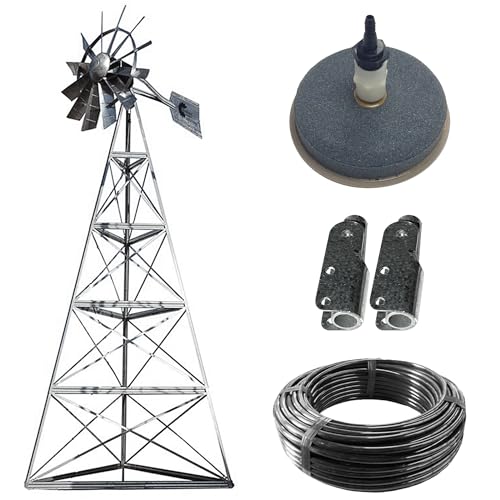
The AWS0011 model emphasizes rugged construction with 18-gauge galvanized steel and a 4.5 CFM airflow at 30 PSI. It uses BalCam technology to reduce bearing fatigue and extend compressor life. This makes it suitable for outdoor installations where long-term service is a priority. It is best for pond owners seeking a durable, heavy-duty aeration solution that can cover ponds up to about one acre.
Best for: homeowners who want reliable, long-lasting operation and a robust metal frame. Better for: outdoor setups with exposure to weather and seasonal use. Choose this if you value a balance of strong airflow and a longer equipment life. Caution: installation requires space and secure mounting; heavy-duty components may need proper anchoring in windy conditions.
Outdoor Water Solutions AerMaster Pro 3 Electric Pond Aerator

The AerMaster Pro features a 1/4 HP rocking piston compressor delivering up to 2.2 CFM at up to 50 PSI. It’s designed for ponds up to 1.5 acres and 40 feet deep, focusing on deep-water oxygenation and microbial activity to reduce muck. It’s best for larger or deeper ponds where consistent spread of air and higher pressure improve overall water health.
Best for: larger or deeper ponds needing stronger aeration. Better for: achieving deeper oxygen diffusion and supporting beneficial microbes. Choose this if you need substantial airflow and can accommodate a larger unit. Caution: higher horsepower means more energy use and potential noise in sensitive locations.
Lovskoo Solar Aerator For Pond

This solar air pump is designed to float on direct sunlight, with a 6W solar panel and a 2200mAh capacity. It does not require batteries; it runs directly from solar energy, stopping when sunlight wanes. It is IP65 waterproof and low-noise, suitable for adding oxygen to small to medium garden ponds, tanks, or hydroponics projects.
Best for: sun-rich pond environments where a simple, off-grid solution is desired. Better for: low-maintenance, solar-powered aeration in daylight. Choose this if you want an easy solar option without external power. Caution: performance depends on consistent sunlight exposure; cloudy days reduce output.
Locadence 20W Solar Pond Aerator

The Locadence unit uses a 20W solar panel to provide aeration without external power. It emphasizes energy efficiency and noiseless operation while maintaining water quality through increased oxygen content. It includes a nozzle and bubble diffusion approach suitable for smaller to mid-sized outdoor water features and ponds.
Best for: solar-powered setups where quiet operation is valued. Better for: smaller to mid-sized ponds with adequate sun exposure. Choose this if you want a compact solar solution that minimizes electricity use. Caution: performance depends on sunlight; presence of shading or overcast days reduces output.
EasyPro+ 2WAY2 Two Way Air Splitter

The EasyPro QS2 Quick Sink Diffuser is designed to diffuse air evenly in water with 1/2 inch tubing connections. It supports airflow from 1.6 to 6 CFM and works alongside EasyPro compressors to increase diffuser efficiency. This product is best for buoyant, subsurface diffusion systems where evenly distributed bubbles improve mixing and oxygen transfer in the water column.
Best for: ponds needing uniform subsurface aeration. Better for: installers using EasyPro compressors seeking efficient diffusion. Choose this if you want a reliable diffuser with straightforward installation. Caution: not a standalone aerator; requires compatible compressor and plumbing in water.
Buying Guide: Windmill-Style And General Pond Aeration Considerations
What size pond are you aerating? Match airflow (CFM) and pump pressure to pond surface area, depth, and stocking. Larger, deeper ponds benefit from higher CFM and robust compressors, while small to mid-sized settings may do well with solar options or compact pumps.
Power source matters. Solar-powered units conserve energy and simplify installation but depend on sun exposure and weather. Electric units deliver consistent performance but require a power source and may use more energy. Consider hybrid setups if your climate varies seasonally.
Durability and weather resistance are essential for outdoor use. Look for galvanized steel or weatherproof housings for longevity. BalCam and similar technology can extend life by reducing component fatigue in some models.
Diffusion method affects water clarity and bottom muck. Subsurface diffusers with evenly distributed bubbles improve oxygen transfer and microbial balance. Diffusers pair well with compatible compressors to maximize efficiency.
Installation needs. Ensure you have adequate mounting space, a stable base, and appropriate tubing and fittings. For large or deep ponds, expect professional help for optimal aeration coverage and tubing routing.
Key decision questions
- Is a solar-powered option feasible year-round in my location?
- Do I prefer a rugged, metal-frame aerator or a lighter solar unit?
- What pond size and depth require the highest CFM and PSI?
- Would a diffuser system improve oxygen distribution in my water column?
- How important is installation simplicity versus long-term durability?
Practical comparison snapshot
- AWS0011: Best for durability and mid-range pond coverage (up to 1 acre); best for weather-resistant outdoor installs.
- AerMaster Pro: Best for deeper, larger ponds needing heavy-duty aeration; higher PSI.
- Lovskoo Solar: Best for fully solar setups with daylight operation and simple placement.
- Locadence Solar Pond Aerator: Best for solar-powered, low-maintenance setups with bubble diffusion.
- EasyPro QS2 Diffuser: Best for even, subsurface air distribution when used with compatible compressors.
Frequently asked questions
- What size pond can windmill-style aerators handle?
Most models in this list handle small to mid-sized ponds, from under an acre to about 1.5 acres, depending on the device and configuration. - Can I use solar and electric aeration together?
Yes. Some setups allow solar units to handle daytime aeration while mains-powered units supplement during low-sun periods. - Do these devices require professional installation?
Basic setups may be DIY, but larger or deeper ponds often benefit from professional installation to ensure even diffusion and proper piping. - Will windmill aerators reduce pond muck?
Aeration supports aerobic microbes that break down organic matter; high-quality compressors and diffusers improve effectiveness. - Are there loud options for quiet environments?
Some units emphasize low-noise operation due to motor design, bearings, and enclosure; always check decibel specifications for your site. - Which is the easiest to maintain?
Solar-powered and diffuser-based systems tend to require less ongoing maintenance, while electric models with metal housings may need periodic checks on seals and valves.